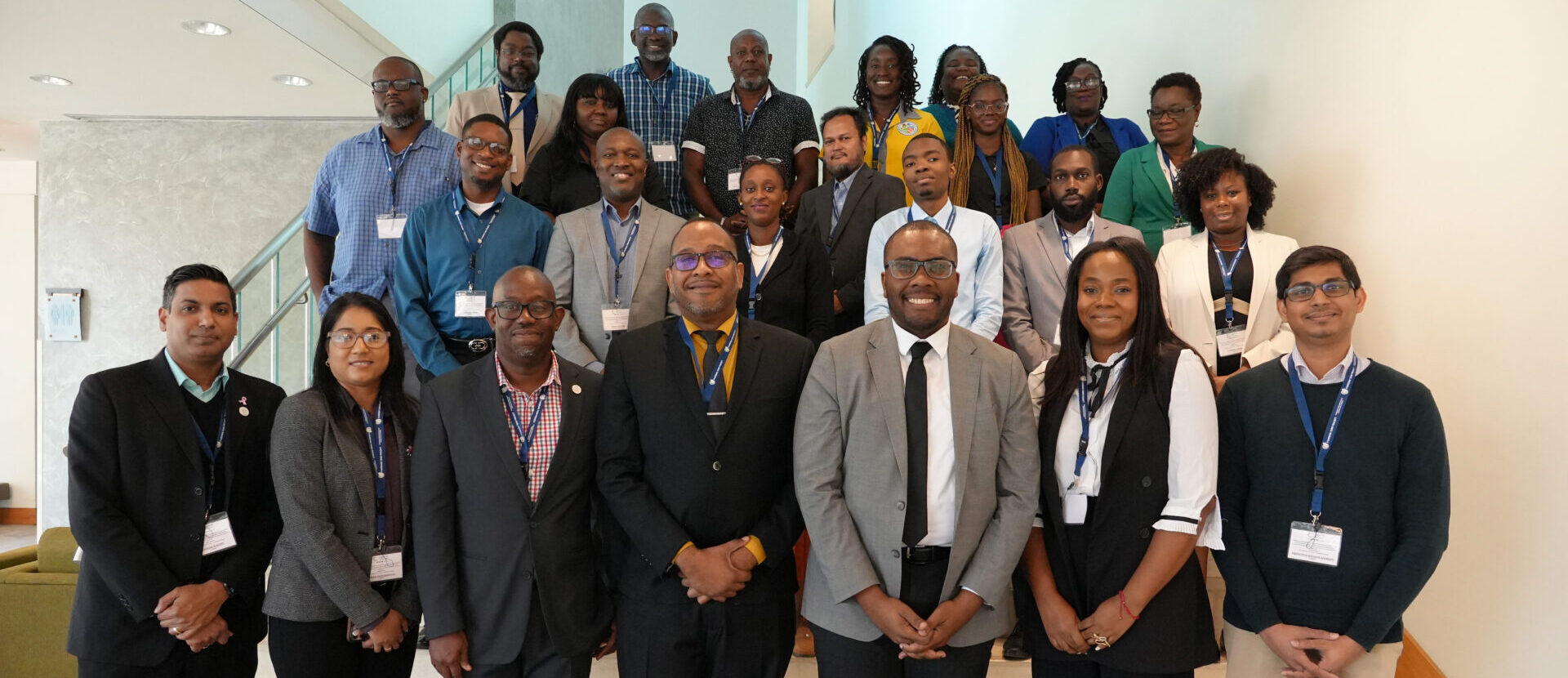
Trinidad and Tobago recently hosted a pivotal regional workshop organized by the Caribbean Public Health Agency (CARPHA), marking a significant advancement in the region’s public health preparedness. The intensive two-day session, “Enhancing Vector-Borne Disease Monitoring via Data Accuracy, Nowcasting, and Risk Matrix Utilization,” brought together seventeen public health specialists from nine Caribbean nations including Dominica, Barbados, Jamaica, and Guyana.
The gathering represented a multidisciplinary coalition of epidemiologists, surveillance officials, statisticians, and environmental health experts working to transform how the region addresses mosquito-borne threats. Dr. Lisa Indar, CARPHA’s Executive Director, framed the initiative’s critical importance: “The same tools that help us anticipate dengue, chikungunya, and malaria are precisely what will enable detection and containment of the next pandemic. This investment in superior data systems and Caribbean-tailored decision tools represents our strategic shift from reactive outbreak response to proactive prevention.”
Building upon foundational work initiated in Barbados last August, the workshop introduced sophisticated nowcasting techniques—innovative epidemiological methods that compensate for reporting delays and data gaps in disease surveillance. This approach provides health authorities with more accurate, real-time understanding of transmission patterns, enabling earlier detection of emerging threats and more reliable risk assessments.
Dr. Horace Cox, CARPHA’s Director of Surveillance, Disease Prevention and Control, emphasized the interconnected nature of public health threats: “While we cannot predict the next pandemic’s timing or origin, we recognize our environment grows increasingly dynamic and risks continue to escalate. Strengthening our data quality and real-time analysis capabilities directly enhances our regional resilience.”
The training featured practical exercises integrating epidemiological, entomological, climate, and laboratory datasets. Participants developed skills to translate early warning signals into concrete operational responses, including enhanced surveillance protocols, verification investigations, and rapid vector control measures. A key focus involved aligning early warning outputs with national standard operating procedures to ensure consistent implementation as threat levels intensify.
Dr. Brian Armour, CARPHA’s Technical Advisor for the Pandemic Fund Initiative, highlighted the regional strategy’s necessity: “Given our geography, population distribution, and tourism dependence, an outbreak in one member state can rapidly evolve into a regional crisis. Pandemic Fund support enables us to develop a comprehensive early warning system integrating indicator-based, laboratory, tourism, and event-based data streams.”
The workshop also demonstrated how vector-borne disease tools interface with CARPHA’s evolving regional surveillance system, developed through the Pandemic Fund Project. Participants explored technical integration methods that preserve national data sovereignty while enhancing regional coordination. These improvements aim to substantially reduce critical time delays between threat detection, notification, and intervention during public health emergencies.
This capacity-building initiative directly supports the Pandemic Fund Project’s overarching objectives: strengthening disease surveillance capabilities, developing workforce expertise in data analysis and risk evaluation, and fostering coordinated regional responses to epidemic-prone diseases with pandemic potential.