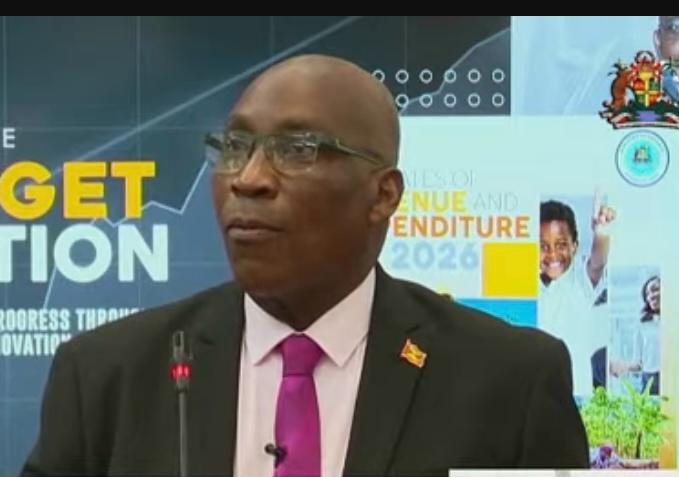
The Government of Grenada has presented a historic EC$1.96 billion budget for fiscal year 2026, marking a significant increase of EC$47.1 million over the previous year’s allocations. Finance Minister Dennis Cornwall characterized this fourth budget of the Dickon Mitchell Administration as a transformative blueprint for national development rather than merely a financial plan.
Presented under the theme “Towards Vision 75: Powering Progress Through People’s Participation and Innovation,” the budget addresses a projected EC$309.8 million deficit through strategic financing mechanisms. The government plans to utilize EC$257.3 million from existing deposits, supplemented by limited domestic and external financing, demonstrating what Minister Cornwall described as “prudent fiscal management and sustainability.”
The budget framework reveals recurrent revenue projections of EC$1.3 billion, with grants totaling EC$37.6 million. Expenditure includes EC$1.1 billion for recurrent costs, EC$370.4 million for capital projects, and EC$206.7 million dedicated to strategic initiatives. Despite the deficit, the government maintains a current account surplus of EC$229.8 million.
Notable initiatives include establishing a dedicated regulatory body for the emerging oil and gas sector, creating a EC$50 million Housing Fund, launching a Youth Empowerment Agency, and implementing new green points for organic waste management. Minister Cornwall emphasized that hydrocarbon development would prioritize environmental assessments, maritime boundary negotiations with Venezuela and Saint Vincent and the Grenadines, and attracting credible investors through transparent frameworks.
The finance minister framed the budget within global uncertainties and regional dynamics, stating it reflects “faith in the creativity and capacity of our people” and represents “a statement of faith in our collective potential.” He emphasized that genuine progress emerges from citizen participation rather than top-down imposition, aligning with the administration’s commitment to building “a Grenada that is not only economically stronger, but socially just, environmentally resilient.”