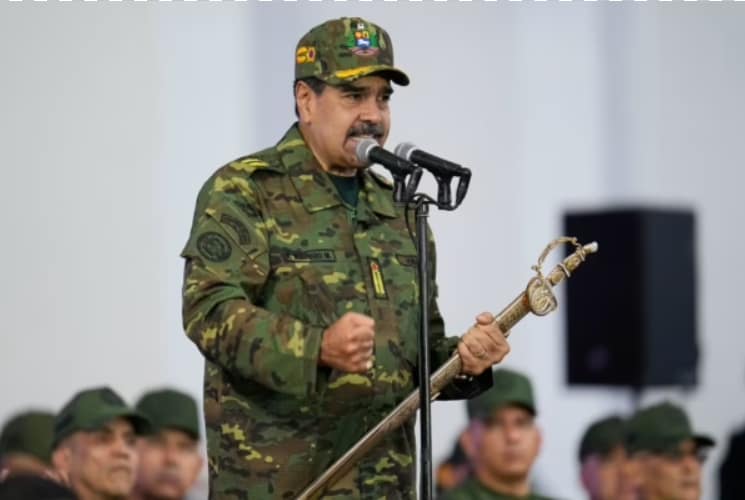
Venezuela is experiencing its most severe crackdown on dissent in years, according to human rights organizations monitoring the situation. The administration of President Nicolás Maduro has intensified targeted repression against political opponents as it confronts growing international isolation and increased U.S. military activity in the Caribbean region.
Human rights group Provea documented 54 detentions in October alone—the highest monthly figure since bilateral tensions began—with many victims linked to opposition leader María Corina Machado. Marino Alvarado, Provea’s coordinator, characterized these actions as “a policy designed to instill fear among Venezuelans,” noting deteriorating prison conditions, systemic overcrowding, and specialized punishments for political detainees.
The opposition movement Vente Venezuela reports a strategic shift in government tactics from mass crackdowns to precision targeting of leadership figures. According to Orlando Moreno, who leads the organization’s human rights committee, authorities are employing political kidnappings and selective detentions to “decapitate opposition leadership.” This approach aims to neutralize organizational capacity rather than simply imprison large numbers of people.
Statistical evidence reveals alarming patterns: Vente Venezuela documents one arbitrary detention every 32 hours in 2025, totaling 232 cases thus far—143 involving their movement members. This represents a significant reduction from 2024’s average of six daily arrests (totaling 2,500 annually), indicating more focused repression. Both monitoring groups concur that October marked the peak of suppression activities, coinciding with Machado’s Nobel Peace Prize recognition and intensified U.S. pressure on the Maduro government.
The case of the Hernández Castillo family exemplifies this repressive climate. On November 19, armed men—some identifying as Bolivarian National Police officers, others as Organized Crime Division members, and some without identification—forcibly entered the home of 16-year-old Samanta Sofía Hernández Castillo in western Caracas. After threatening her grandparents with firearms, they abducted the teenager without explanation. Her family remains unaware of her whereabouts or status.
This incident follows the earlier disappearance of the family’s uncle, agricultural producer Henry Castillo, taken on January 24 under unclear circumstances. Relatives consider him a victim of enforced disappearance.
In another concerning development, 65-year-old Dr. Marggie Orozco received a 30-year prison sentence—the maximum under Venezuelan law—on November 16 for charges of treason, incitement to hatred, and conspiracy. The prosecution stemmed from an audio message she shared encouraging participation in the 2024 presidential elections. Her son, Walter Ruiz, maintains his mother simply wanted to “achieve change in the country.” Provea characterizes such sentences as “disproportionate” demonstrations of the justice system’s weaponization against political targets.
Despite brief respites in early November—possibly signaling governmental attempts to appear open to dialogue with Washington—rights monitors note these lulls remain temporary. The Venezuelan government has consistently dismissed international reports on arbitrary detentions as “interventionist” and allegations as “irresponsible, biased, and deeply polarized.”
As Venezuelans navigate simultaneous internal and external pressures, the nation faces profound uncertainty about its future direction amid escalating repression and international confrontation.