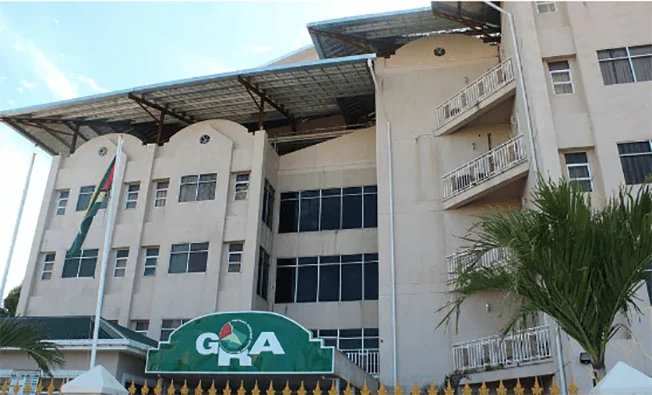
The Guyana Revenue Authority (GRA) has reported a significant 4.9% decline in income tax revenue during the first half of 2025, collecting 123.4 billion Guyanese dollars compared to the same period in 2024. This downturn occurs against the backdrop of substantial tax exemptions granted to major oil corporations operating in the country’s lucrative Stabroek Block under a contentious Production Sharing Agreement (PSA).
Financial documents reveal that Guyana effectively waived approximately GYD 493 billion (equivalent to USD 2.3 billion) in income taxes for the three primary operators—ExxonMobil Guyana Limited, Hess Guyana Exploration Ltd., and China’s CNOOC—during 2024 alone. The contractual framework requires the Guyanese government to pay these corporations’ taxes from its own profit share, creating a paradoxical situation where recorded tax revenues never actually enter state coffers.
The PSA structure allocates 75% of oil production to cost recovery, with the remaining 25% designated as profit oil—split equally between Guyana and the consortium. While companies pay a mere 2% royalty on their share, the government must subsequently cover their tax obligations from its 12.5% portion. This arrangement has drawn widespread international and domestic criticism for effectively granting tax immunity to energy giants.
Despite President Irfaan Ali’s administration defending the agreement’s sanctity, specific clauses explicitly exempt ExxonMobil and its subsidiaries from various taxes related to petroleum activities. Article 15.4 further mandates that the petroleum minister pays amounts equivalent to due taxes to GRA, with ExxonMobil even receiving tax certificates to avoid double taxation in the United States.
Paradoxically, overall government revenue streams—excluding funds from the Natural Resource Fund and carbon credit sales—increased by 3.6% to GYD 235.4 billion, driven by a 2.3% rise in total tax collections to GYD 221 billion. This growth was supported by favorable economic fundamentals in both non-oil and oil sectors, though income tax declines were primarily attributed to reduced personal income taxes (down 14.8% to GYD 33.6 billion) and sharp decreases in withholding taxes (falling 21.7% to GYD 30.8 billion). Notably, taxes from private enterprises surged 17.1% to GYD 57.1 billion, partially offsetting declines from state-owned enterprises, which dropped 12.4% to GYD 1.8 billion.