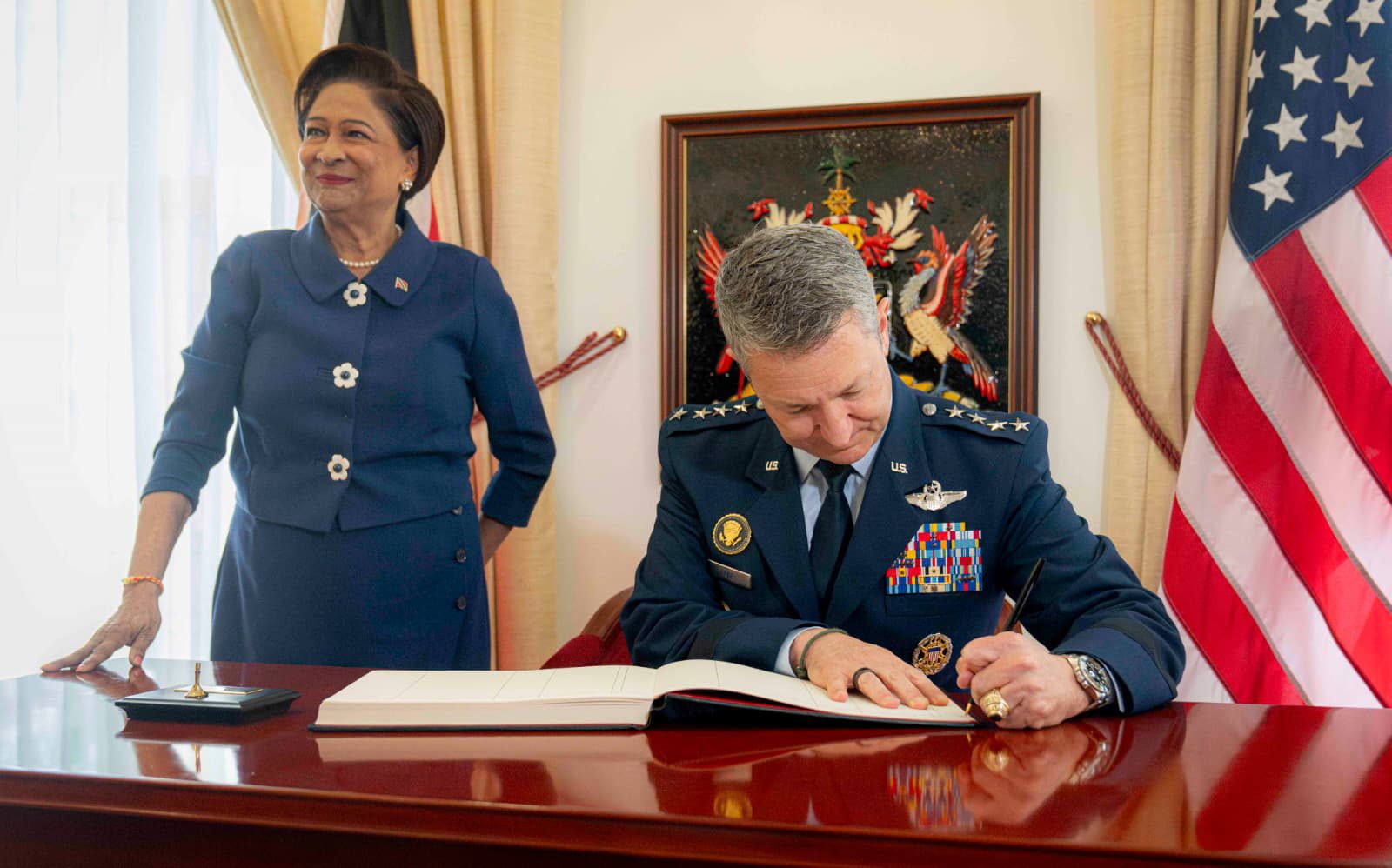
Amid escalating regional tensions, Trinidad and Tobago’s Prime Minister Kamla Persad-Bissessar finds herself at the center of a complex geopolitical balancing act involving the United States and Venezuela. The diplomatic landscape has intensified following the recent visit of General Dan Caine, Chairman of the US Joint Chiefs of Staff, to the Diplomatic Centre in Port of Spain on November 25.
The core of the controversy stems from the Trump administration’s aggressive stance toward Venezuela, framed as a counter-narcotics operation but widely perceived as a politically motivated regime change initiative. Prime Minister Persad-Bissessar has drawn criticism for appearing to endorse the US position that President Nicolás Maduro’s removal is fundamentally about drug trafficking—a narrative most regional analysts consider disingenuous.
The situation reveals deeper complexities in Caribbean governance and security policy. Trinidad has maintained a nearly continuous state of emergency throughout the year, with authorities claiming success in reducing crime rates. However, this approach has normalized emergency governance while failing to address root causes of drug demand and supply.
The article presents a critical examination of the flawed ‘war on drugs’ paradigm, noting that despite decades of enforcement-focused policies since Nixon’s 1971 declaration, drug demand has actually increased. The commentary argues that targeting supply without addressing demand creates an endless cycle of violence and enforcement that ultimately proves ineffective.
Regional claims of the Caribbean being a ‘zone of peace’ are contrasted with stark realities: Jamaica’s historically high murder rates and Trinidad’s escalating violence until recent emergency measures. The persistence of large drug caches despite US ‘kinetic strikes’ on suspected trafficking vessels further undermines official narratives of success.