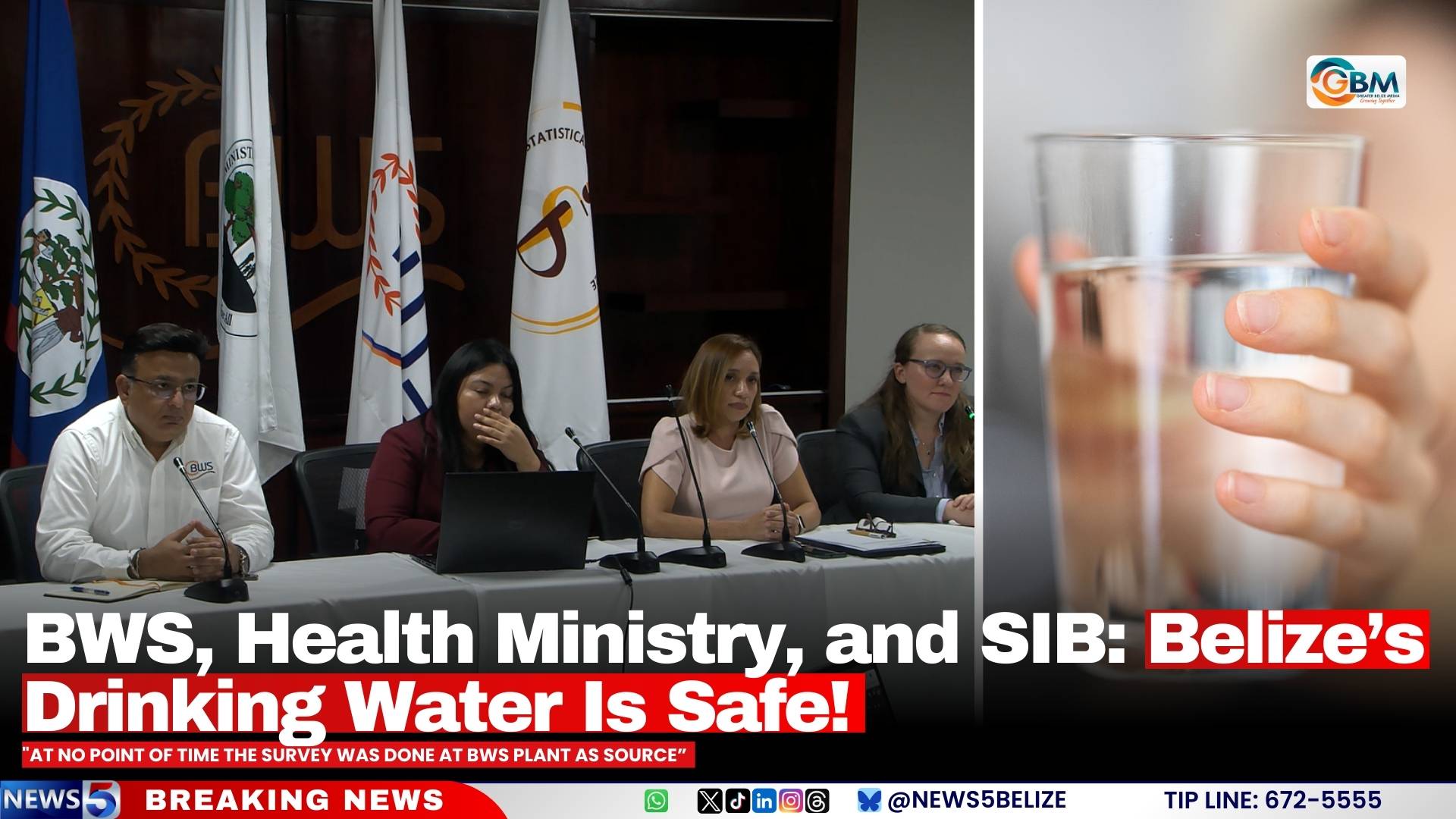
Belizean health and water authorities have issued a joint reassurance regarding the safety of the nation’s drinking water following recent concerns about bacterial contamination. The Statistical Institute of Belize (SIB) had reported that approximately 33.7% of the population faced potential contamination risks based on samples collected at household consumption points.
In a coordinated press conference, Belize Water Services (BWS), the Ministry of Health, and SIB clarified critical distinctions between water quality at treatment facilities versus point-of-use locations. Sanjay Keshwani, Chief Operations Officer at BWS, emphasized that the utility’s rigorous testing protocols exceed World Health Organization standards, targeting even stricter American Water Works Association and ISO benchmarks.
The contamination findings, authorities explained, originate not from the municipal water supply but from secondary handling within households. Diana Castillo-Trejo, SIB Director General, clarified that their survey specifically examined water at the point of consumption—including household tanks, taps, receptacles, and water coolers—rather than testing the treated water leaving BWS facilities.
Dr. Laura Friesen of the Ministry of Health provided crucial context, noting that while Escherichia coli was detected in some samples, this serves merely as an indicator of contamination during household handling rather than signaling imminent outbreak risks. The ministry consequently announced enhanced public education initiatives focusing on improved water handling practices in domestic, educational, and workplace environments to maintain water purity from source to consumption.