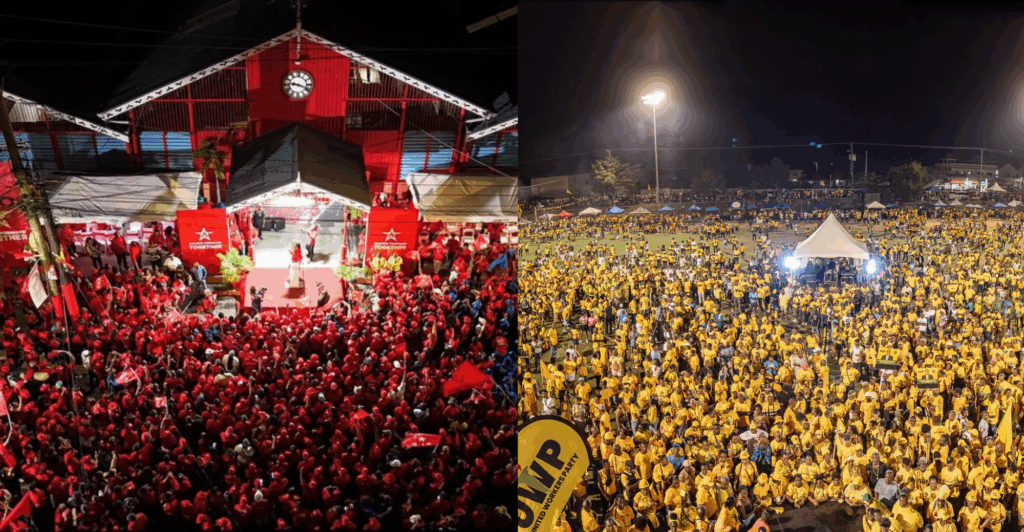
As Saint Lucia’s election campaign gains momentum, the debate over the significance of crowd sizes in determining electoral success has intensified. Political analysts and candidates alike are divided on whether large rallies translate into votes, with some dismissing them as irrelevant while others see them as a crucial indicator of popularity. This discourse highlights the complex interplay between perception and reality in electoral politics. On one side, politicians boast about their ability to draw massive crowds, while opponents argue that such gatherings do not guarantee victory. Meanwhile, many voters remain indifferent, believing that elections are decided at the ballot box, not at rallies. However, the truth lies somewhere in between. Crowd size does matter, but its impact depends on how it is interpreted within the broader context of a campaign. Elections are not just about votes; they are also about mobilizing support, generating enthusiasm, and shaping public perception. In Caribbean politics, where energy and excitement are vital, large crowds serve as a visible manifestation of a candidate’s ability to connect with voters. They create a sense of momentum and legitimacy, influencing both participants and observers. Behavioural science explains this phenomenon, noting that people are drawn to groups they perceive as successful. The ‘bandwagon effect’ plays a significant role, as individuals often align themselves with what appears to be the popular choice. Crowds also provide emotional validation and social cohesion for supporters, boosting campaign morale. However, relying solely on crowd size can be misleading, as history has shown that even massive rallies do not always translate into electoral victories. Ultimately, while crowd size shapes perception, it is the ballot box that determines the outcome. The challenge for politicians is to strike a balance between generating visible support and addressing the substantive issues that truly matter to voters.