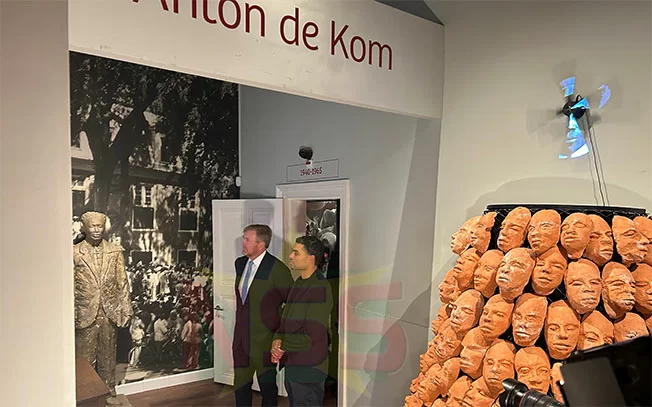
On Srefidensi Dey, King Willem-Alexander officially inaugurated the Surinamemuseum in Amsterdam, a project spearheaded by the Vereniging Ons Suriname. The event was attended by Amsterdam’s Mayor Femke Halsema, who praised the initiative, emphasizing the museum’s role in bridging the historical and cultural ties between the Netherlands and Suriname. “Understanding Amsterdam is impossible without acknowledging Suriname’s story,” Halsema remarked, pointing to landmarks like the Palace on the Dam and the warehouses of the West India Company as reminders of the city’s colonial past and its involvement in slavery. She highlighted the museum’s significance in providing a space for the history of enslaved Surinamese and their descendants, a narrative long overlooked in Dutch society.
King Willem-Alexander, who received a guided tour from museum director Jan Gerards, congratulated Suriname on its 50th anniversary of independence. He expressed his enthusiasm for an upcoming state visit to Suriname with Queen Máxima, stating, “We would have liked to visit much earlier, but now we can focus on building mature and equal bilateral relations rooted in our shared history.”
The Surinamemuseum, housed in the 19th-century Hugo Olijfveldhuis on Zeeburgerdijk, offers visitors an immersive experience. The entrance features a recreation of the Surinamese rainforest, complete with taxidermied birds, animals, and reptiles, while large screens showcase the country’s natural landscapes. Subsequent rooms delve into the history and culture of Suriname’s diverse population, with significant attention given to the era of slavery, including life on plantations and the struggles of freedom fighters like Boni and Anton de Kom. The latter is honored with a striking installation by artist Ken Doorson. The museum’s top floor provides an overview of Suriname’s past 50 years, covering its turbulent post-independence era and the enduring influence of Surinamese immigrants on Dutch music, art, and sports.