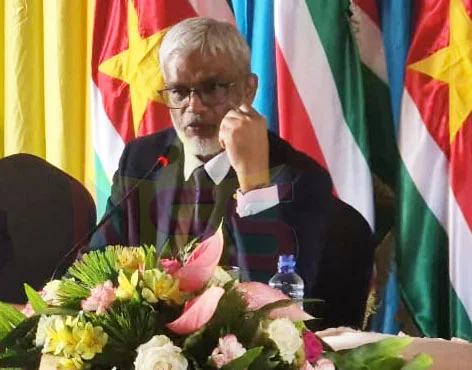
At a press conference hosted at Suriname’s Presidential Palace on November 27, Staatsolie CEO Annand Jagesar laid out a striking, intentionally controversial assessment of the nation’s energy sector trajectory: the projected revenue stream from the already advanced GranMorgu offshore oil project alone is more than sufficient to deliver dramatic, widespread improvements to Suriname’s population living standards, with the newly announced KrakaWi gas project acting as a high-value supplementary asset rather than a critical funding requirement.
Jagesar’s provocative framing of the KrakaWi project as “not necessary” for baseline national development goals was deliberately calibrated to shift public and policy focus away from celebrating the scale of new energy discoveries, and toward the far higher-stakes challenge of transparent, prudent public revenue management. “The ball is now fully in the government’s court,” Jagesar told assembled reporters, warning that without targeted, forward-thinking regulatory and fiscal policy, Suriname remains at severe risk of falling victim to the so-called “resource curse” — the well-documented paradox where nations rich in extractive natural resources face sustained stagnation, inflation, and widening inequality rather than shared prosperity.
A core priority outlined by Jagesar is preventing the coming energy boom from eroding affordability for ordinary Surinamese households, pushing low-income communities further into economic marginalization, and dismantling the nation’s fragile middle class. He specifically called for targeted policy measures to restore middle-class economic security for frontline public sector workers including teachers, nurses, and law enforcement personnel, a goal he emphasized is entirely achievable with the combined projected revenue from GranMorgu and KrakaWi — but only paired with robust institutional safeguards. The Staatsolie chief singled out a fully operational, independent Savings and Stabilization Fund as a non-negotiable guardrail: the fund would buffer national budgets against volatile global oil and gas price swings, and earmark a share of current extractive revenues to ensure future generations of Surinamese citizens can benefit from finite national natural resources, rather than allowing all near-term gains to be spent on short-term consumption.
Jagesar also confirmed that Staatsolie will continue advancing full offshore oil and gas exploration and development work, even as the scale of projected existing revenues outpaces immediate social spending needs. He explained that gas infrastructure development is a critical enabler for unlocking additional offshore oil reserves: many of Suriname’s newly discovered oil deposits hold large volumes of associated natural gas, and without dedicated pipeline and processing capacity to transport and commercialize that gas, operators will be forced to cap or restrict oil production to avoid unsafe flaring limits, delaying the development of dozens of future commercial oil fields.
Earlier that same day, Suriname President Jennifer Simons echoed Jagesar’s warnings about the social risks of unmanaged energy sector growth, flagging looming threats of runaway consumer price inflation, skyrocketing residential real estate costs, and widening wealth gaps if policy frameworks are not rapidly updated. The Simons administration has already outlined preliminary plans to allocate a large share of future oil and gas revenues to expand public education systems, upgrade national infrastructure, build affordable housing, strengthen public healthcare services, and reduce Suriname’s historic overreliance on extractive industries through broad economic diversification. With KrakaWi marking the second final investment decision (FID) for a major offshore energy project in less than two years, Jagesar emphasized that the window to finalize all legal and institutional frameworks for long-term revenue management is rapidly closing, requiring coordinated action between state energy firms and national policymakers in the coming months.