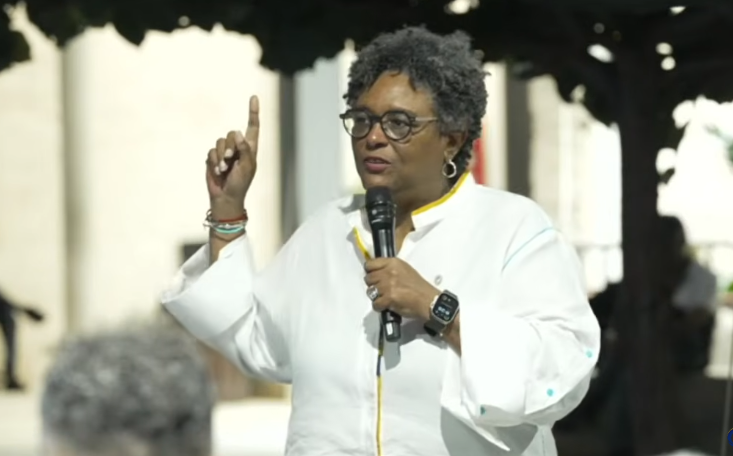
During the final Ideas Forum held at Golden Square in Bridgetown, Barbados, this past Wednesday, St Michael resident Barbara Layne brought two long-unaddressed gaps in national emblem adherence to the attention of Prime Minister Mia Mottley and senior government officials, sparking immediate actionable commitments from the administration. Layne, who vividly recalled the profound pride she felt marching in Barbados’ first 1966 Independence Day parade, opened her appeal by highlighting a pervasive, unregulated shift in the national flag’s color scheme: across public gatherings, community events and even some semi-official ceremonies, mass-produced flags bearing generic light blue, pale yellow and black hues have replaced the legally mandated ultramarine, gold and black design that was formalized at the island’s independence. She noted that dozens of the non-compliant flags were displayed at a recent national holiday lighting ceremony, and she even purchased one locally to demonstrate the stark visual difference to forum attendees, adding that she felt deep discomfort hearing popular local chants that incorrectly reference the altered “blue, yellow and black” color combination. Layne also flagged a second oversight during major sporting celebrations: after four Barbadian relay athletes secured a major international victory, the group was forced to share just two national flags, rather than each receiving their own to mark the historic achievement. She proposed that a portion of the $1 million annual budget allocated to the Barbados Olympic Association be earmarked for purchasing standardized, official national flags to prevent similar moments of national pride from being undermined by logistical gaps. Attorney General Wilfred Abrahams, who chairs the national Independence planning committee, immediately validated Layne’s concerns, praising her decades-long dedication to preserving Barbadian cultural heritage and national values. He clarified that the non-compliant flags circulating across the island are not procured by any government body, but are instead imported independently by private event contractors with no formal oversight of their design specifications. While noting that the government cannot legally restrict private imports of decorative flags, Abrahams pledged to issue a widespread public reminder directly to known flag importers ahead of 2025’s Independence celebrations, requiring all orders for public event use to strictly adhere to the official color and design guidelines. He also announced he would personally donate four full-sized, officially certified national flags to the Barbados Olympic Association, and invited Layne to attend the formal handover to confirm the donation is completed. Prime Minister Mottley formally endorsed all the commitments outlined at the forum, and announced she has directed the Cabinet Office to compile and publish the full, exact technical specifications for all of Barbados’ national symbols in an easily accessible public format, to eliminate confusion for manufacturers, event organizers and ordinary citizens. She also revealed that Cabinet is currently reviewing a comprehensive national symbols and honours report led by former Cabinet Secretary Cecile Humphrey, which includes a range of proposed updates, such as recommendations for additional public holidays. Mottley noted that the government will carefully weigh any proposed new public holiday against Barbados’ economic competitiveness metrics, to avoid unintended operational disruptions or public pushback before finalizing any policy changes.