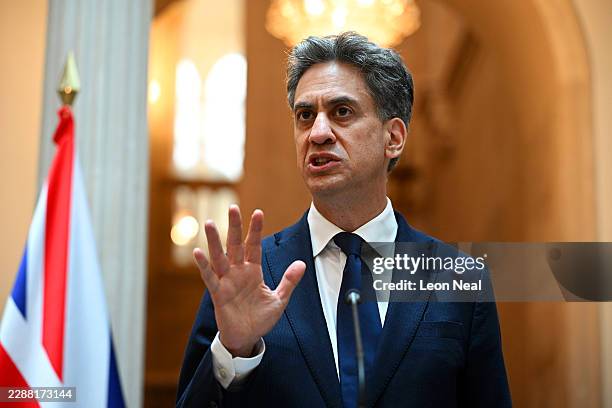
In a landmark shift from decades of official evasion, senior UK political figures have publicly acknowledged the necessity of addressing the nation’s historical role in the transatlantic slave trade, with formal discussions over a potential official apology unfolding on the sidelines of this month’s Commonwealth Heads of Government Meeting hosted by Antigua and Barbuda. The first formal public confirmation of this policy shift came from British Foreign Secretary Ed Miliband, who laid out the government’s stance during a November 4 appearance on the BBC’s flagship Newscast podcast. Miliband explicitly condemned successive prior UK administrations for deliberately sidestepping the long-term, intergenerational harms inflicted by centuries of state-sanctioned slave trading across the Atlantic, framing the choice to confront this painful chapter of British history as a moral and political imperative. While endorsing upcoming dialogue with impacted Commonwealth nations to explore the terms of a potential formal state apology, Miliband pushed back on immediate demands for direct financial reparations, stating that such a fiscal commitment was not practically viable for the UK at the current juncture. The foreign secretary’s comments aligned with earlier statements from Prime Minister Andy Burnham, who had signaled his openness to formal apology negotiations in the lead-up to the Antigua and Barbuda summit, noting that the design, wording and scope of any official apology must be co-developed in full partnership with the nations and descendant communities that bore the brunt of the transatlantic slave system. Regional leaders across the Caribbean have greeted the UK’s new stance as a long-overdue breakthrough. Antigua and Barbuda Prime Minister Gaston Browne hailed Burnham’s pre-summit announcement as a highly encouraging development, while emphasizing that the Caribbean Community (CARICOM) bloc’s longstanding campaign for full reparatory justice for slavery remains unchanged. CARICOM official statements have categorized a formal, unreserved official apology from the UK as the non-negotiable foundational first step toward meaningful reconciliation and redress for centuries of systemic exploitation.