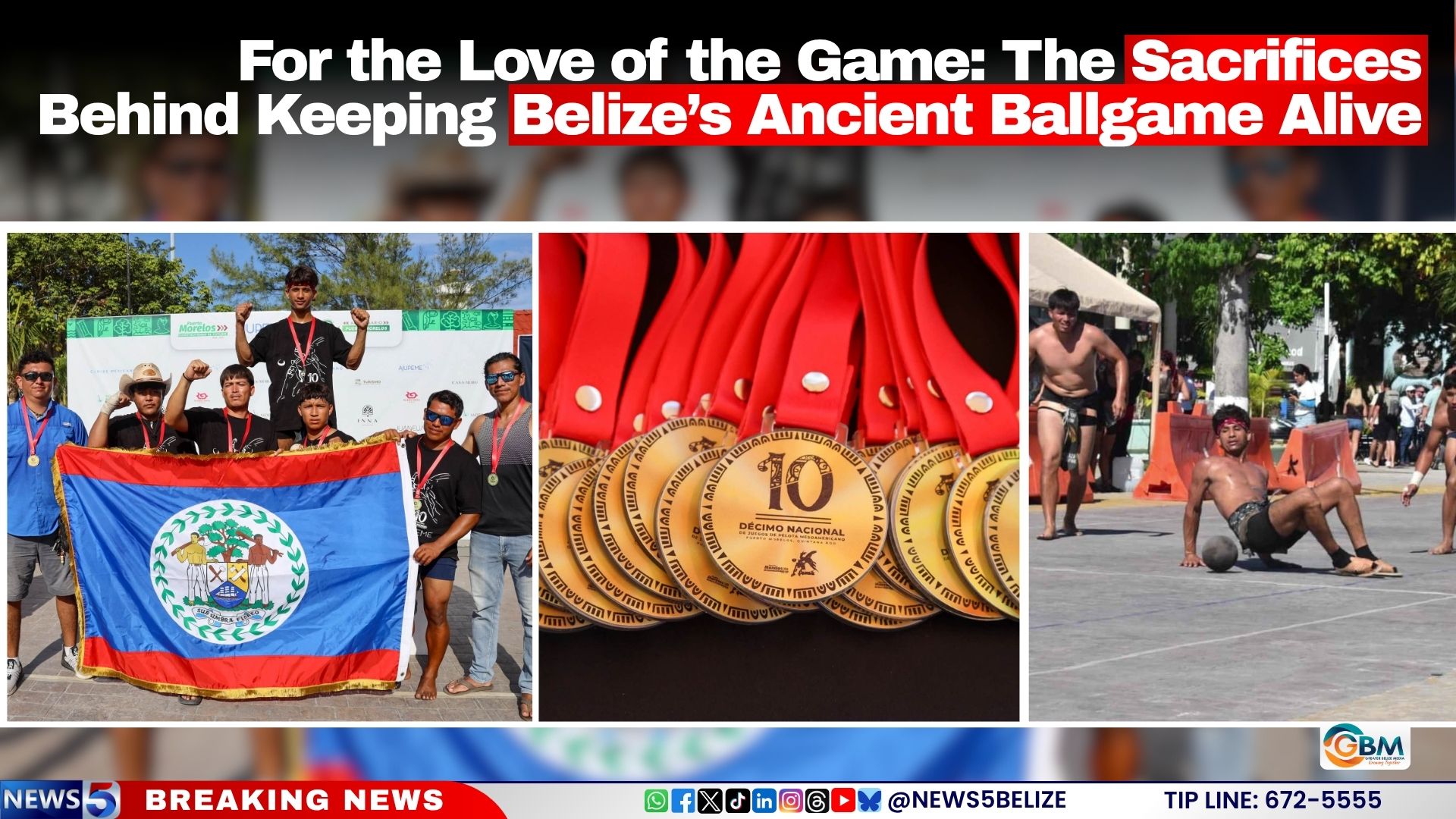
Deep in Orange Walk District, Belize, a tight-knit cohort of young athletes is defying centuries of erasure and significant personal sacrifice to safeguard one of Mesoamerica’s oldest living cultural and sporting legacies: the pre-Hispanic hipball game with roots stretching back more than 3,000 years. Long suppressed by colonial authorities across the Maya world, the sport once boasted over 2,000 dedicated stone courts across the Americas, according to Belize Hipball Association President Eric Cal, who notes the game could have evolved into the hemisphere’s most popular athletic pastime had colonial prohibitions not interrupted its millennia-long lineage.
Composed largely of construction laborers logging full, physically demanding shifts across Orange Walk, the Sak Xikim team squeezes in 3 hours of training sessions each weeknight between 6 and 9 PM, often making do with a dimly lit local basketball court where their 7-pound solid rubber match balls are easily lost in the shadows. The sport’s two primary variants, Pok Ta Pok and the far more rigorous Ulama, require players to strike the heavy, unforgiving ball exclusively with their hips, leaving deep, lingering bruises across their torsos even for seasoned competitors. For most of the team, the recent 10th Mesoamerican Ballgame National Championship hosted in Mexico marked their very first foray into competitive Ulama play: only one of the six traveling athletes had prior tournament experience with the variant, which follows a completely distinct rule set from the more familiar Pok Ta Pok format the team had mastered in prior years.
Their months of grueling after-hours training culminated in a stunning, nail-biting final showdown against the host Mexican national team, where Sak Xikim eked out a narrow 11-10 victory to claim the Ulama division title. 24-year-old team captain Angel Suchite, who balances training, tournament travel, and full-time work to compete, called the win a lifelong dream, while 17-year-old rookie Erick Cawich, the youngest member of the squad, said he laces up for every practice out of devotion to his Maya cultural heritage and the tight bond he shares with his teammates. Team coach Nelson Blanco, a former competitive hipball player and vice president of the national association, noted he was stunned by the raw competitiveness of the new generation of young players, who defied all odds to outperform seasoned squads from Mexico and Guatemala.
The landmark victory came at significant personal cost for every team member. While Mexican tournament organizers covered basic on-site food and lodging, all other expenses were funded directly out of the athletes’ own paychecks. Repeated attempts to secure external local donations yielded only a small handful of small contributions, leading the group to opt to set aside small portions of their monthly wages to cover travel costs, custom team jerseys, and steep equipment fees. A single professional-grade rubber Ulama ball costs between 600 and 700 Belize dollars, while custom protective padded suits for each player run an additional 150 to 180 Belize dollars, costs that add up quickly for working-class athletes with no formal institutional funding.
Now back home in Orange Walk, the champion team is hoisting the Belize flag high to prove that small nations can compete on the regional stage against far larger, better-resourced opponents. Their long-term goal extends far beyond trophy wins: the group is actively recruiting local young people to join their training sessions, hoping to ensure that the ancient Mesoamerican ballgame does not fade into obscurity, and that generations of future Maya youth will get to carry the millennia-old tradition forward.