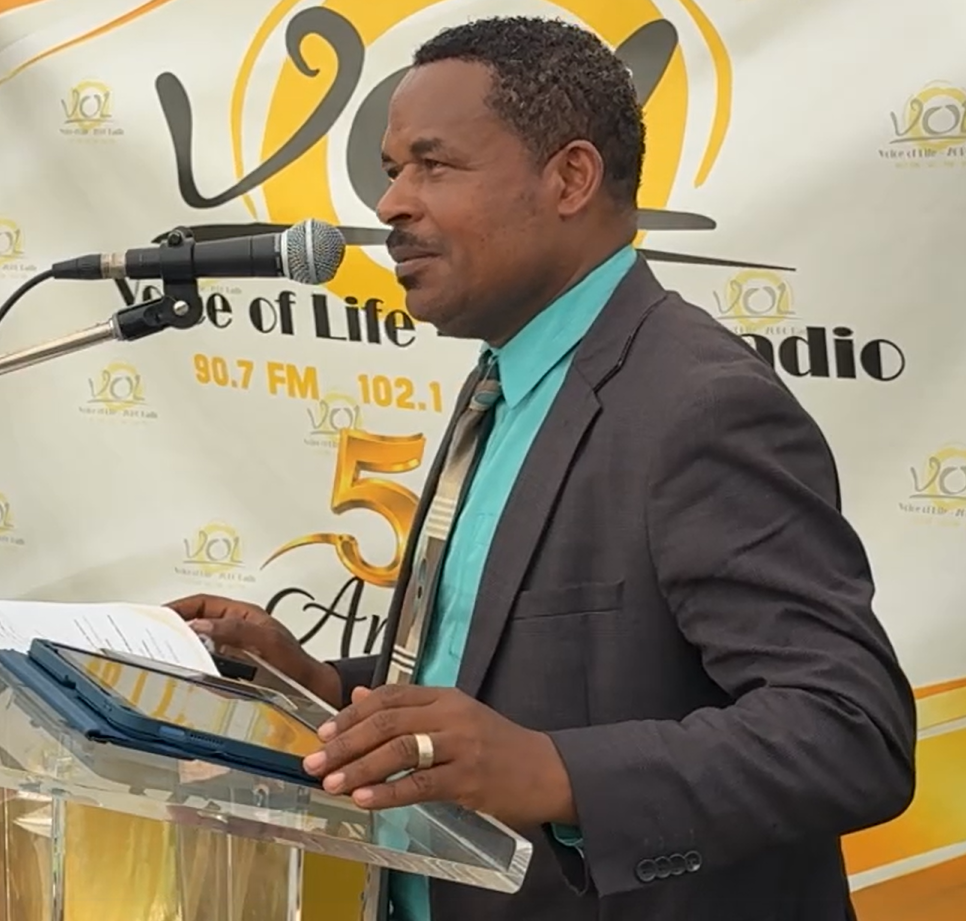
As Dominica counts down to its December 16, 2026, general election, the head of one of the nation’s leading Christian interdenominational bodies has issued a comprehensive public appeal to the wider faith community to prioritize social cohesion, moral integrity and non-partisan leadership in the heated lead-up to polls. Reverend Matthew Auguiste, President of the Dominica Association of Evangelical Churches (DAEC), delivered the formal weekend address to lay and clerical members across the country, framing the upcoming vote as far more than a routine administrative political process, but a critical inflection point that will test the nation’s collective spiritual, ethical and social commitments for years to come.
A core tenet of the DAEC’s official position, Auguiste clarified, is a formal rejection of partisan alignment with any political party or individual candidate contesting the election. Instead, the association is positioning the broader evangelical community as a consistent, independent anchor for national stability: a trusted voice of unvarnished truth, a bulwark of social calm, a custodian of long-held shared moral values, and an active force for de-escalation amid rising partisan friction.
Auguiste laid out three clear, actionable priorities for the church during the high-stakes electoral season, starting with a mandate to act as a unifying counterweight to deepening political polarization across the island. Citing the biblical verse Jeremiah 29:7, which urges believers to seek the peace of their communities, he warned that escalating partisan tensions must never be allowed to tear apart the interwoven bonds of family, friendship and congregational solidarity that have sustained Dominican communities for generations. “We have a sacred obligation to disagree on political policy and leadership choices without letting those differences create permanent, rifts in our spiritual fellowship,” he stated, while advising all church leaders to exercise deliberate care in all public remarks, social media posts and casual community conversations to avoid inflaming unnecessary division.
His second core priority calls on the faith community to preserve its longstanding prophetic voice, speaking out consistently and fearlessly on issues of social justice, public accountability, ethical governance and institutional integrity no matter which political party secures victory at the polls. “We cannot afford to become so cautious of offending partisan allies that we choose total moral silence when the public good is at stake,” he emphasized, pushing back against growing pressure on religious figures to pick sides in the electoral contest.
Third, Auguiste framed active, inclusive contribution to long-term national development as a non-negotiable duty for all Christians, drawing on 1 Timothy 2:1-2 to remind congregants of their scriptural obligation to pray for every elected and aspiring leader, regardless of their party affiliation. He noted that while national governments can build roads, pass regulatory frameworks and expand economic access for residents, no piece of legislation can mandate the genuine interpersonal love, radical forgiveness, personal integrity and responsible parenting that form the bedrock of a healthy, thriving society. Drawing on the familiar metaphor of a coastal lighthouse, he argued that the church must remain a steady, unwavering beacon of guidance for all citizens, unaffected by shifting political tides or temporary partisan gains. He issued a stark warning against trading decades of cross-community ministry partnerships and inter-personal relationships for fleeting political advantage, noting that “if we allow our unity to fracture during this election season, we will cripple our collective ability to serve the needs of our nation long after the final ballots are counted.”
Wrapping up his address, Auguiste called on all Dominican Christians to hold intentional, dedicated prayer sessions for the entire electoral process: for the safety and fairness of candidates, for the impartiality of electoral officials, for the welfare of all citizens, and for outcomes that advance the collective good of the island. Citing Matthew 5:14, which frames believers as “the light of the world,” he insisted that Dominica needs a faith community that refuses to be swayed by partisan fear or political intimidation. The upcoming election, he concluded, will not only serve as a benchmark for the maturity of Dominica’s democratic system, but also as a critical test of the moral backbone of its religious institutions. “We must never make the catastrophic mistake of sacrificing our lifelong, community-focused kingdom mission on the altar of a short-lived, divisive political contest,” he stated in his closing remarks.