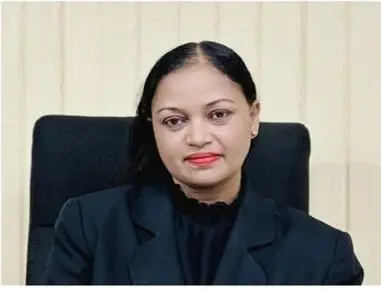
In official court documents reviewed by local news outlet Demerara Waves Online News, Guyana’s Chief Magistrate Judy Latchman has formally justified her recent ruling to reject a prosecution application to revoke the bail granted to prominent city businessman and newly installed Opposition Leader Azruddin Mohamed, who has been entangled in a year-long U.S.-led extradition proceeding. Latchman emphasized that the prosecution’s submissions failed to meet the strict evidentiary threshold outlined under Section 7(1)(c)(i) of Guyana’s Bail Act, noting that mere unprofiled pending criminal charges did not satisfy the legal standard required to justify stripping a person of their constitutionally protected right to personal liberty. She further clarified that after a full review of all materials presented to her bench, there was no credible evidence to confirm Mohamed had committed the specific offences cited by the prosecution to justify bail revocation. Represented by legal counsel Timothy Jonas, Latchman additionally argued that Director of Public Prosecutions Shalimar Ali-Hack, who filed the motion to revoke Mohamed’s GY$150,000 bail, held no legitimate legal standing to intervene in the U.S.-initiated extradition hearing. Under existing extradition legislation, she noted, authority to pursue such procedural motions rests exclusively with the foreign treaty jurisdiction that submitted the extradition request, following formal approval from Guyana’s responsible minister to proceed with the case. The long-running matter is scheduled for a hearing before Chief Justice Navindra Singh on the Monday following the ruling. While Latchman opted not to revoke the extradition-linked bail, Mohamed has remained in remand custody since October 30 over a separate cybercrime charge, where a prior judicial ruling found he posed a demonstrated pattern of risk to commit further non-fine-level offences, and that public safety interests outweighed his personal liberty claims. A High Court judge had already dismissed an earlier application from Mohamed in mid-October to quash the magistrate’s initial remand order and grant him full bail, though the ruling permitted him to reapply for bail before the magistrate’s bench. Should the upcoming High Court hearing rule in the DPP’s favour, Mohamed would remain in prison for the full duration of the extradition proceeding and any subsequent related appeals, unless Guyana’s highest appellate body, the Caribbean Court of Justice, issues a contrary ruling. Latchman traced the full timeline of the case back to October 31, 2025, when Mohamed and his father Nazar Mohamed were arrested on U.S. extradition grounds and first brought before her court, at which point she initially granted them bail. She noted that U.S. legal representatives had made multiple prior attempts to secure the revocation of Mohamed’s bail, floating unsubstantiated allegations of pending murder charges, a potential attempted coup plot, evidence tampering, and unspecified threats and verbal abuse directed at Police Intelligence Chief Senior Superintendent Prem Narine. None of these claims were supported with specific details, verified source documentation, or even the purported threatening social media photograph referenced in submissions, which was never formally presented to the court. The prosecution’s additional cited grounds for bail revocation included pending charges of illegal firearm possession, illegal ammunition possession, discharging a firearm to obstruct justice, and a cybercrime offence related to the unauthorized acquisition of national security surveillance footage of a shooting incident from a police command centre. Latchman emphasized that for any bail revocation to be legally valid, the prosecution was required to submit verifiable, on-the-record evidence to prove Mohamed was at clear risk of committing new offences, interfering with witnesses, tampering with evidence, or fleeing the jurisdiction. She noted that no such evidence was ever formally submitted: the prosecution attempted to play unvetted social media videos purporting to show threats against the police intelligence chief, but Latchman ruled these materials were inadmissible, as no witness had provided sworn testimony to confirm their source, authenticity, or unbroken chain of custody. She clarified that uncorroborated social media content was inherently unreliable, incomplete, and highly prejudicial, and had no place in formal court records. The chief magistrate repeatedly invited the prosecution team to submit sworn affidavits with concrete, verifiable evidence to support their claims, but no such formal documentation was ever filed. She further confirmed that there was no evidence on record to prove Mohamed was a flight risk, that he did not reside at the address he provided to the court, or that he had submitted a false residential address to judicial authorities, all factors that supported her decision to uphold the existing bail terms for the extradition case.
Chief Magistrate justifies decision not to revoke Mohamed’s bail in extradition case