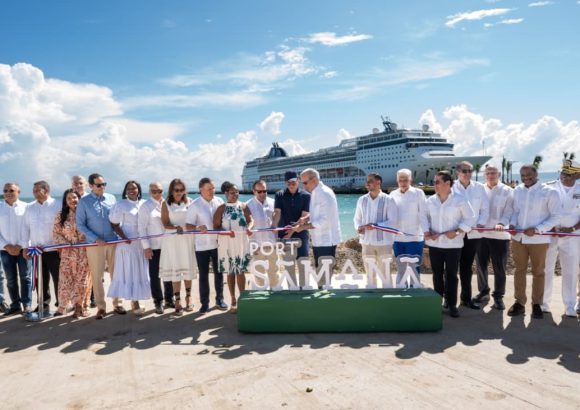
In a landmark ceremony held in Arroyo Barril, Samaná, Dominican President Luis Abinader officially cut the ribbon on the new Port Samaná cruise terminal on Tuesday, a transformative infrastructure project redeveloped from the historic Duarte Port via a public-private partnership (PPP) with global tourism infrastructure developer ITM Group. Backed by a total $90 million investment, the state-of-the-art facility is positioned to drive substantial job creation, with projections of roughly 1,000 direct full-time roles and over 3,000 indirect positions across local hospitality, transportation, and small business sectors, while supercharging cruise tourism and broader economic dynamism in the Samaná province. During the inauguration, President Abinader laid out clear passenger volume milestones for the new terminal: 250,000 cruise visitors are expected to step through its gates in 2027, rising sharply to 540,000 in 2028 before hitting the 1 million annual passenger mark by 2030. The head of state emphasized that the economic benefits of the project will ripple across three key local communities: Arroyo Barril, Sánchez, and Samaná proper, and underscored non-negotiable commitments to upholding strict environmental and social sustainability standards for the terminal’s long-term operation. He also mapped out the terminal’s unique value proposition as a gateway to Samaná’s world-famous attractions, including the iconic El Limón Waterfall, the newly renovated Samaná waterfront boardwalk, seasonal humpback whale-watching excursions, the vibrant coastal town of Las Terrenas, and the ecologically rich Los Haitises National Park. Mauricio Hamui, CEO of ITM Group, shared that the firm’s three Dominican cruise terminals — Taíno Bay, Cabo Rojo, and the newly launched Port Samaná — are on track to welcome a combined 2.7 million total passengers by 2028, with Port Samaná alone accounting for the 540,000 visitor target outlined by the president. David Collado, the country’s Minister of Tourism, framed the launch of Port Samaná as a key milestone in the Dominican Republic’s record-breaking tourism boom, noting that the nation is currently in its strongest-ever period for international visitor arrivals, with official projections forecasting 12.5 million total visitors by 2026. He also highlighted the explosive growth of the country’s cruise tourism segment, which has surged from just 986,000 total passengers in 2020 when the current administration took office to an expected 3 million+ cruise visitors for the current calendar year. The central government has poured more than RD$2 billion in targeted public infrastructure investment across the Samaná region in recent years, allocating RD$600 million to the Samaná boardwalk redevelopment, over RD$200 million to upgrades for Las Galeras beach, and RD$250 million to revitalize the coastal Pueblo de los Pescadores fishing community. Leonardo Aguilera, CEO of state-owned Banco de Reservas, confirmed that the institution provided $44.4 million in long-term project financing for Port Samaná, plus an additional $1 million dedicated working capital line to support the terminal’s launch and early operational phases. Notably, Port Samaná marks the very first PPP project completed under the Dominican Republic’s 2020 Law 47-20, a regulatory framework designed to streamline private sector collaboration on public infrastructure. The 33-year concession agreement stipulates that private partners cover all upfront capital costs for the terminal, while the Dominican state retains full permanent ownership of the underlying port asset. Port Samaná is now the Dominican Republic’s seventh operational cruise terminal, breathing new life into the historic Duarte Port site, which previously served as a bustling regional cruise and cargo hub in the 1970s before falling into disuse. The full redevelopment scope includes fully rehabilitated deep-water docking facilities, mixed-use commercial and recreational public spaces, and modernized guest services tailored to meet the needs of 21st-century cruise travelers. For ongoing coverage of tourism and infrastructure developments across the Dominican Republic’s North Coast, readers can access additional reports via DominicanScope.