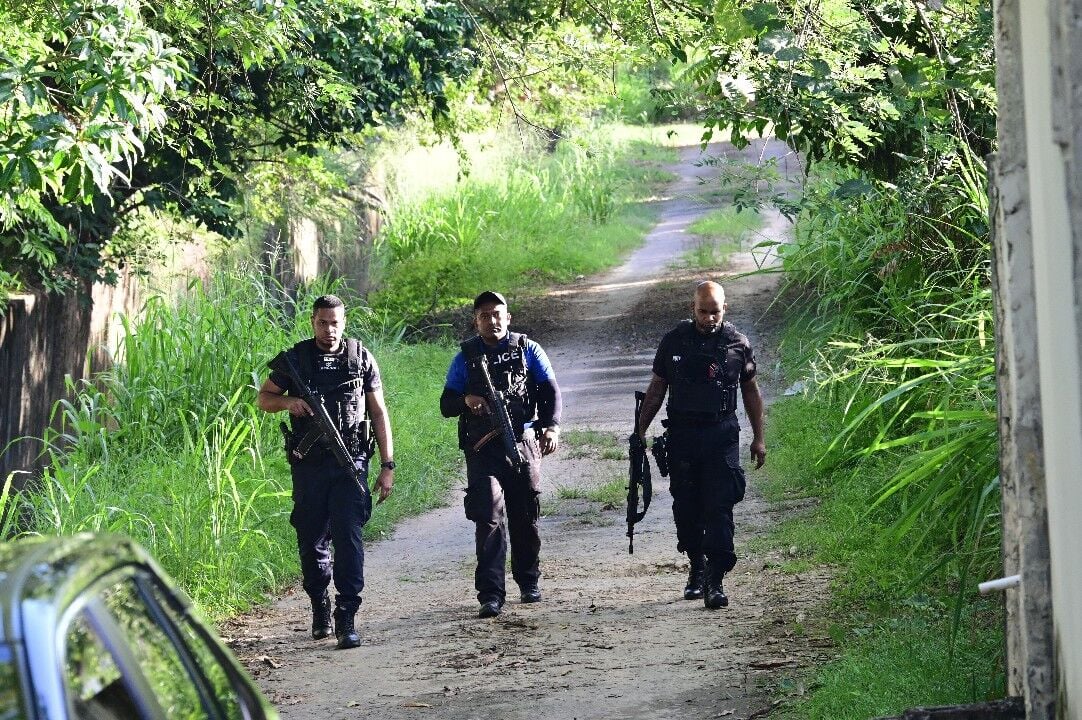
Trinidad and Tobago’s Attorney General John Jeremie has formally drawn a clear legal boundary between the executive branch of government and the national police service, firmly turning down demands for political interference in ongoing special security operations in the Maloney Buildings Housing Development. In a formal November 20 response to a pre-action legal letter submitted by attorneys representing Opposition Leader Pennelope Beckles, Jeremie emphasized that the constitutionally enshrined operational independence of the Police Commissioner explicitly prohibits the Cabinet and executive authorities from dictating how rank-and-file officers exercise their statutory powers under the 2026 Special Operations Act. “Your requests invite the Executive to trespass upon the sacred province of the Commissioner of Police, an invitation which is respectfully declined,” Jeremie wrote in correspondence addressed to attorney Shantelle Lake of the law firm Hove & Associates. The pending legal action names Beckles as the proposed claimant, with the Cabinet and Attorney General listed as the proposed defendants, challenging the legality of the closed area designation and curfew rules imposed on the Maloney residential complex. Jeremie went on to reject every specific undertaking requested by the opposition legal team, including demands for formal published rules for movement permits, written police guidance for residents and street vendors, targeted exemptions for vulnerable groups, and a public timeline and evaluation criteria for lifting the security restrictions. He stressed that none of these decisions fall under the purview of elected government officials, as Sections 123 and 123A of the national Constitution explicitly shield the operational autonomy of both the Police Commissioner and the Trinidad and Tobago Police Service (TTPS). “No undertakings will be given that have the effect of usurping the Commissioner’s function or dictate how he performs it,” Jeremie stated, noting that any powers granted to law enforcement under the Special Operations Act must be exercised entirely free from government interference unless explicitly permitted by separate legislative provisions. He further argued that upholding this legal separation between the executive and law enforcement was itself a core protection for the very civil rights the Opposition Leader’s intended legal claim seeks to defend. Addressing the specific requests point by point, Jeremie clarified that the decision to publish the criteria for issuing permits to enter, exit, or move within the closed area during curfew hours rests exclusively with the Police Commissioner and the Head of Special Operations for Policing District 2, not elected officials. He pushed back against the opposition’s assertion that failing to publicize these permit rules rendered the restrictions arbitrary and unlawful, noting that existing legal precedents and the text of the Special Operations Act do not mandate such publication, and that the government will elaborate on this position in a full substantive legal response at a later stage. Jeremie also refused to issue undertakings mandating that permit applications be accepted via telephone, email, or designated personal representatives, confirming that these administrative arrangements fall fully under the TTPS’s independent operational authority. For the opposition’s demand for formal written instructions barring police from confining residents to their homes or blocking vendors from operating outside of official curfew hours, Jeremie noted that such rules are already embedded within the text of the Special Operations Act, making any executive-issued guidance redundant, and that any requirements exceeding the scope of the existing law would be beyond the legal authority of the Cabinet or Attorney General to issue. On requests for special permit carve-outs for shift workers, care providers, people facing medical emergencies, and attendees at places of worship, Jeremie confirmed that decisions on these categorical exemptions are explicitly delegated to the Police Commissioner under Sections 12(3) and 14(7) of the 2026 legislation, leaving no room for executive direction. He similarly rejected demands to announce a fixed review date for the Maloney security orders or publish formal criteria for lifting the restrictions, noting that the Special Operations Act contains no legal requirement for the government to make these details public, and that the administration will continue to abide fully by all existing legal obligations related to reviewing and terminating public safety measures. In a robust defense of the decision to impose the special operations in the first place, Jeremie explained that Cabinet advised the President to sign the closed area and curfew orders only after the National Security Council received detailed classified briefings from national security agencies documenting rampant, gang-driven lawlessness across the Maloney Buildings community. The intelligence presented confirmed that rival criminal factions had seized effective control of multiple residential apartment blocks, with four major gangs — 8 Gang, 7 Gang, Kill Them All (KTA), and Oxley’s Gang — locked in a violent territorial conflict that had been exacerbated by an internal split within the 8 Gang. Law enforcement officials had identified at least 40 suspected gang members, associates, and high-priority persons of interest operating in the area, with security assessments warning of an imminent, elevated risk of additional shootings, targeted murders, and retaliatory attacks that left no viable alternative to immediate, large-scale intervention. The President formally declared the Maloney Buildings a closed area and imposed a nightly 9 p.m. to 5 a.m. curfew on November 10, 2026, two months after the Special Operations Act came into force on October 6 of that same year. The landmark legislation was drafted to establish dedicated specialized policing districts and grant security forces expanded targeted powers to crack down on entrenched criminal networks, including controlled restrictions on movement and access in designated high-risk areas, all with the explicit stated purpose of restoring public safety and protecting innocent residents who had been held hostage by violent criminal elements. Jeremie emphasized that the government remains fully committed to respecting both the constitutional mandates of the Police Commissioner and the statutory powers granted to the TTPS under the new public safety law, as part of its core fundamental duty to safeguard the lives and wellbeing of all Trinidad and Tobago citizens.