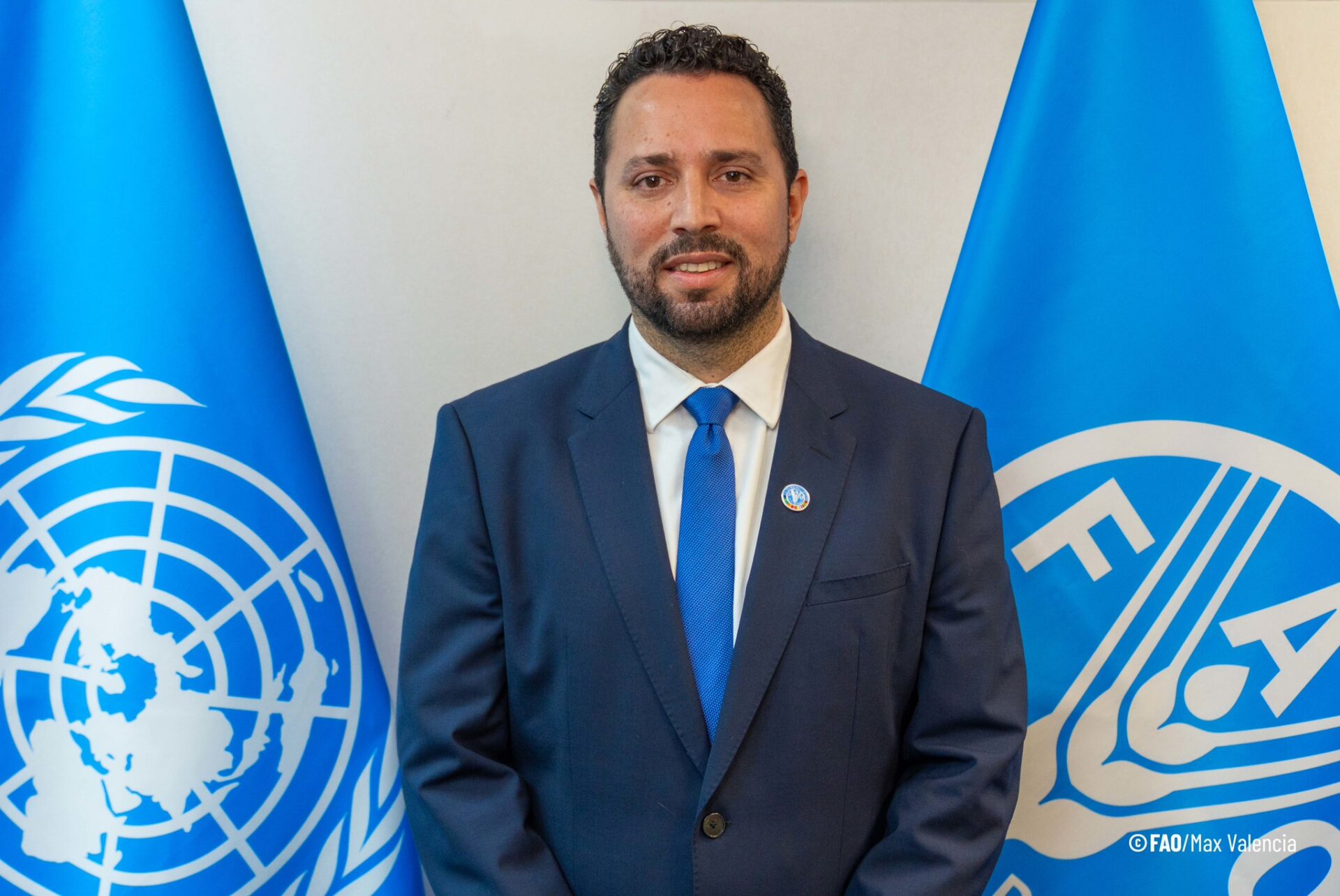
Authored by Javier Villanueva, the Food and Agriculture Organization’s (FAO) Senior Fisheries and Aquaculture Officer and Better Production Coordinator for Latin America and the Caribbean, this commentary marks the annual World Fisheries Day observed every 21 November, a global occasion dedicated to honoring the millions of small-scale fishers, processors and supply chain workers who harvest nourishment from the world’s oceans, rivers and lakes. For the Latin America and Caribbean (LAC) region, this year’s commemoration serves as both a tribute to the longstanding, intergenerational contributions of coastal and inland fishing communities to local food security, cultural heritage and grassroots economic vitality, and a renewed call to action to uphold sustainable stewardship of shared aquatic natural resources.
Beneath every fresh catch unloaded at shore and every seafood product that reaches household dining tables lies a tapestry of traditional ecological knowledge, grueling physical labor, and deep, reciprocal ties between fishing communities and their surrounding aquatic ecosystems. The sprawling value chain built by these workers connects remote coastal settlements, inland riparian villages and global consumer markets, with small-scale operators forming the unrecognized backbone of this entire system. Centering their contributions in regional policy frameworks, the author argues, is the critical first step to building a more equitable, ecologically balanced future for the sector.
Data pulled from FAO’s flagship 2026 *The State of World Fisheries and Aquaculture (SOFIA)* report quantifies the LAC region’s outsized global footprint in aquatic food production: in 2024, the region accounted for 16% of total global marine wild catches and 15% of all global exports of aquatic animal products, generating a robust $21 billion trade surplus. Peru ranks as the world’s fourth largest capture fisheries producer, landing 5.7 million tonnes of seafood annually, with its anchoveta fishery standing as the single largest wild catch fishery on the planet, while Chile and Ecuador lead the region in sustainable aquaculture output. Across the LAC region, more than 3 million people hold direct formal and informal jobs in the primary fisheries and aquaculture sector, sustaining livelihoods in remote coastal and inland communities that have few alternative economic opportunities.
Yet a striking, paradoxical gap undermines this impressive production track record: in 2023, the region’s per capita availability of aquatic animal foods stood at just 10.1 kilograms (measured in live weight equivalent), less than half the global average of 21.1 kilograms. This metric tracks the total volume of seafood accessible for human consumption across the region, rather than actual individual intake, highlighting a stark reality: the LAC region produces vast volumes of seafood to feed global markets, but has yet to leverage that production capacity to nourish its own resident populations effectively.
This underutilization of local production potential carries significant public health stakes. Aquatic foods are a nutrient-dense powerhouse, packed with highly bioavailable high-quality protein, essential omega-3 fatty acids, and a suite of micronutrients and vitamins that are difficult to access affordably from other common staple foods. For low-income households, Indigenous communities and other vulnerable demographic groups across the region, these nutrient-rich products represent a low-cost, high-impact solution to widespread diet-related malnutrition.
Three interconnected structural barriers stand in the way of closing this seafood access gap: prohibitive cost that puts nutritious aquatic foods out of reach for millions of low-income households, stark geographic disparities between coastal population centers and inland communities with limited distribution infrastructure, and fragmented domestic seafood supply chains that fail to connect local production hubs to regional consumer markets. The core policy challenge, the author notes, is to preserve the vital employment and foreign exchange benefits generated by seafood exports, while simultaneously building out systems that expand equitable access to affordable, nutrient-dense aquatic foods for all residents of the region.
Protecting the long-term viability of these aquatic food systems also requires urgent, coordinated action to stamp out illegal, unreported and unregulated (IUU) fishing, which erodes shared fish stocks, undercuts the livelihoods of law-abiding small-scale fishers, and distorts global seafood market prices. FAO emphasizes that inclusive, community-led fisheries management that gives both marine and inland fishing populations formal decision-making power is a non-negotiable prerequisite to safeguarding the livelihoods and long-term food security of families that depend on aquatic resources for survival.
Climate-related shocks add an extra layer of urgency to these efforts. The recurring El Niño weather phenomenon drives dramatic shifts in ocean temperatures and disrupts nutrient upwelling cycles across the Southeast Pacific, triggering sudden, localized drops in wild catch volumes that ripple out to reduce household incomes and restrict local seafood availability, with uneven impacts across different geographic zones and target species. Scaled-up early warning systems and flexible, adaptive fisheries management frameworks are critical to helping vulnerable fishing communities absorb these climate shocks without facing catastrophic losses of livelihoods or food access.
The fundamental challenge facing the LAC region, the author stresses, is not a lack of production potential, but overcoming the structural barriers that prevent its abundant aquatic natural wealth from being translated into widespread public health gains. Honoring the contributions of fishing communities on World Fisheries Day means moving beyond symbolic recognition to targeted policy action that expands equitable access to nutrient-dense aquatic foods, while strengthening the climate resilience of the small-scale producers who form the foundation of the sector.
This is the exact niche that FAO’s regional Blue Transformation initiative is designed to fill. The strategic program is tailored to maximize the contribution of regional aquatic food systems to delivering affordable, nutrient-rich diets for all residents, by integrating three core pillars: the ecologically sustainable expansion of responsible aquaculture, science-based, community-centered wild fisheries management, and targeted upgrades to fragmented regional seafood value chains, all underpinned by inclusive governance that protects both fragile aquatic ecosystems and the livelihoods of the communities that rely on them. The initiative’s core mandate is not simply to increase total production volumes, but to produce seafood more sustainably, cut rampant post-harvest food loss and waste across the supply chain, and eliminate systemic inequities that block marginalized groups from accessing affordable aquatic foods.
The LAC region already possesses all the core assets required to deliver on this vision: abundant aquatic natural resources, generations of accumulated traditional ecological knowledge, and decades of on-the-ground experience implementing successful sustainable fisheries projects. The remaining task is to turn this existing potential into tangible, on-the-ground action: formalizing the participation of fishing communities in all levels of sector decision-making, investing in cold chain and storage infrastructure to reduce post-harvest loss, and building out inclusive domestic distribution networks that connect producers directly to local consumers. When symbolic recognition of fishers’ contributions is paired with these concrete policy steps, the region can deliver both better economic opportunities for fishing communities and expanded access to nutritious food for millions of residents.
This World Fisheries Day, the FAO’s shared vision for the LAC region is to ensure that its unparalleled aquatic wealth translates into measurable improvements in public nutrition and secure, dignified livelihoods for all seafood sector workers, with no marginalized communities left behind. Turning that vision into reality will require coordinated, cross-sector collaboration between national governments, representative fishing community organizations, private seafood industry partners, international development agencies and civil society stakeholders across the region.