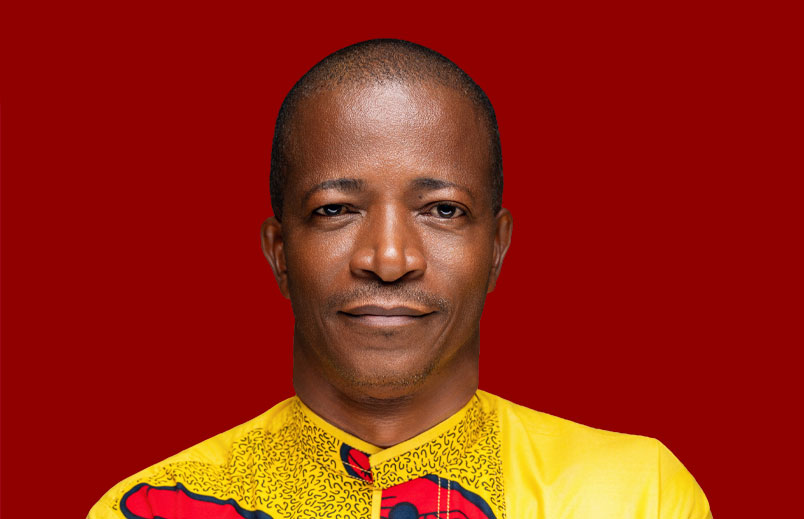
Following the recent swearing-in of Carl Andall as Grenada’s Cabinet Minister with portfolio responsibility for national sports, the country’s football governance ecosystem has come under unprecedented public scrutiny, as Andall retains his longstanding elected post as First Vice-President of the Grenada Football Association (GFA). The overlapping of these two senior, sector-focused roles has ignited widespread debate among local football stakeholders, administrative observers and community club leaders over potential conflicts of interest, the operational independence of the national football governing body, and compliance with global football regulator FIFA’s 2024 statutory requirements. A close review of both FIFA’s updated rulebook and the GFA’s internal governing documents reveals a notable regulatory gap: neither framework explicitly lists holding elected political or ministerial office as a formal disqualification for serving on the GFA’s governing Council, previously known as the Executive Committee. That said, FIFA’s 2024 Statutes lay out non-negotiable independence mandates for all national member associations: Article 14(1)(c) requires every member to run its internal affairs free from third-party interference, a principle reinforced in Article 15(c) which compels associations to embed formal good governance guardrails to block political meddling of any form. Article 19 further codifies this requirement, noting that failure to uphold full operational independence can trigger formal FIFA governance audits and potential disciplinary action. The GFA’s own internal rules mirror these global standards: Article 5(1) mandates full political and religious neutrality for the association and all its council members, while Article 5(2) explicitly prohibits all forms of undue political interference and enshrines the GFA’s right to manage its administrative, competitive and financial affairs without external third-party influence. Stakeholder concerns extend far beyond fears of direct, overt intervention in GFA decision-making. Many local club administrators have flagged tangible high-risk scenarios that could emerge from the dual mandate, including negotiations over government sports funding disbursements, national athletic resource allocation, cross-sector sports policy drafting, senior GFA staff appointments, and all formal liaison between the Ministry of Sports and the football association. Legal and governance experts note that FIFA’s rules are designed to pre-empt undue external influence rather than impose blanket bans on public officials serving in football leadership roles, meaning Andall’s concurrent holding of both positions does not on its own constitute an automatic regulatory breach. Even so, the overlapping roles create a clear, unmitigated potential for conflicts of interest that would require robust, publicly disclosed safeguards, full transparency around all decision-making processes, and formal separation of duties to ensure every GFA ruling prioritizes the best interests of local football rather than political priorities. As of press time, the GFA has not issued any public statement addressing the situation, nor has it responded to detailed requests for comment from independent local outlet NOW Grenada regarding the steps it plans to take to uphold its independence while Andall serves in both senior posts.