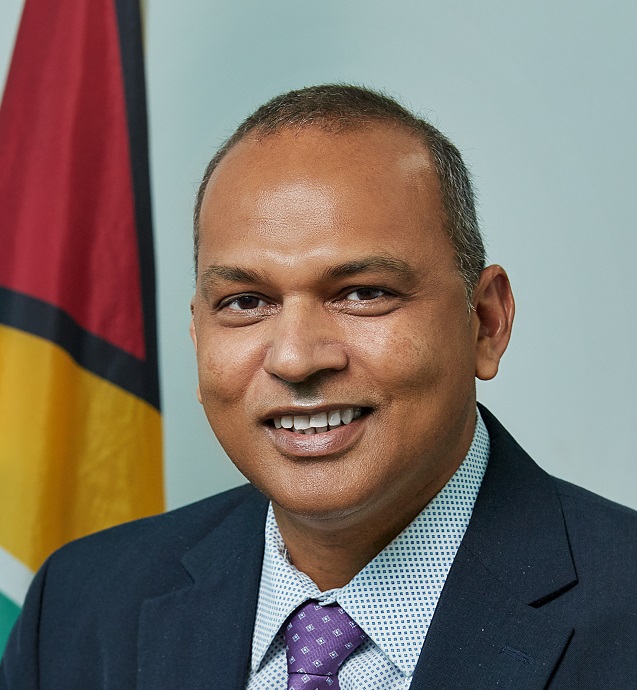
Georgetown, Guyana – November 19, 2026: The Republic of Guyana has notched a transformative public health landmark, as the World Health Organization formally granted official validation that the South American nation has eliminated mother-to-child transmission (EMTCT) of HIV and syphilis as public health problems, the country’s Ministry of Health announced in an official Thursday statement. The long-awaited recognition, conveyed in a November 16, 2026, correspondence from WHO Director-General Dr. Tedros Adhanom Ghebreyesus to Guyanese Health Minister Dr. Frank Anthony, follows a months-long rigorous multi-stage assessment coordinated by the Pan American Health Organization (PAHO) and finalized by the WHO Global Validation Advisory Committee during its November 5, 2026, review. In his formal letter, Dr. Tedros extended warm congratulations to the nation, noting that Guyana had fully satisfied all global eligibility benchmarks for the 2022–2025 evaluation period. “I commend the Government of Guyana for its sustained commitment to a robust EMTCT programme that prioritizes and safeguards the health of pregnant women and their infants across every community,” Dr. Tedros wrote. This designation places Guyana in an exclusive cohort of nations across Latin America and the Caribbean that have earned this prestigious WHO public health accreditation. The milestone is the culmination of years of deliberate, sustained policy action and targeted public investment under the administration of President Dr. Mohamed Irfaan Ali, which has centered healthcare system modernization as a core national priority. Over recent years, the government has channeled significant funding into expanding hospital infrastructure, upgrading primary care access nationwide, deploying state-of-the-art diagnostic equipment, upskilling the domestic healthcare workforce, and scaling up free routine HIV and syphilis screening for all expectant mothers. Additional targeted improvements have included expanded access to no-cost antiretroviral treatments for at-risk populations, upgraded laboratory testing networks, and strengthened real-time disease surveillance systems to identify potential transmission gaps before they escalate. Left unaddressed, mother-to-child transmission of HIV and syphilis can trigger devastating outcomes including permanent lifelong infection, stillbirth, and preventable neonatal death, all of which are almost entirely avoidable with consistent antenatal care, early diagnostic screening, and timely medical intervention. The WHO validation process was unusually thorough: it kicked off with a week-long virtual program review conducted June 1–5, 2026, followed by a 7-day in-country fact-finding mission led by PAHO’s Dr. Jodie Dionne and a team of international public health experts. The independent evaluation panel conducted on-the-ground audits of national program records, frontline healthcare service delivery, lab operational capacity, epidemiological trend data, community engagement strategies, and the integration of human rights and gender equity safeguards into maternal health programming. After an initial introductory meeting with Minister Anthony on June 8, the team shared its preliminary positive technical findings with Guyana’s national validation task force on June 12, paving the way for the final global WHO committee sign-off months later. Officials emphasized that the certification confirms these two vertical transmission pathways no longer pose a systemic public health burden for Guyana, rather than signifying full global eradication of HIV or syphilis entirely. During a public address marking the announcement, Minister Anthony framed the achievement as a defining turning point in Guyana’s public health trajectory. “This is far more than a framed international certificate on a wall: it represents thousands of lives protected, countless preventable new infections averted, and tens of thousands of Guyanese children given the healthy, thriving start in life every child deserves,” he stated. The Health Minister went on to pay tribute to the country’s frontline care teams — doctors, nurses, midwives, lab technicians, public health officers, and volunteer community health workers — whose consistent, on-the-ground dedication across remote rural and coastal communities turned policy targets into tangible results, while also recognizing critical technical and financial support from PAHO, WHO, and global development partners. Looking ahead, Guyana is now positioned to advance toward the WHO’s “triple elimination” target, which seeks to end mother-to-child transmission of HIV, syphilis, and hepatitis B as public health threats by 2030, aligned with PAHO’s regional 2030 Disease Elimination Initiative that aims to eliminate more than 30 preventable communicable disease conditions across the Americas. WHO will conduct a follow-up performance review in 2030 covering the 2026–2029 period to ensure Guyana sustains its low transmission rates and maintains program quality. In his closing remarks, Dr. Tedros reaffirmed WHO’s ongoing technical partnership with Guyana to support these future public health goals, noting that the country’s success stands as a powerful model for other emerging economies that targeted, sustained public investment in maternal and child health can deliver world-leading, internationally recognized health outcomes.
WHO validates Guyana’s elimination of HIV mother-to-child transmission, syphilis