Released on November 19 at 07:33, the latest climate policy development marks a landmark shift in global climate governance, as 25 sovereign states gathered at the UN Climate Change Conference COP31 hosted in Antalya, Turkey, formally signed the groundbreaking Wildlife for Climate Declaration, an initiative spearheaded by the International Fund for Animal Welfare (IFAW).
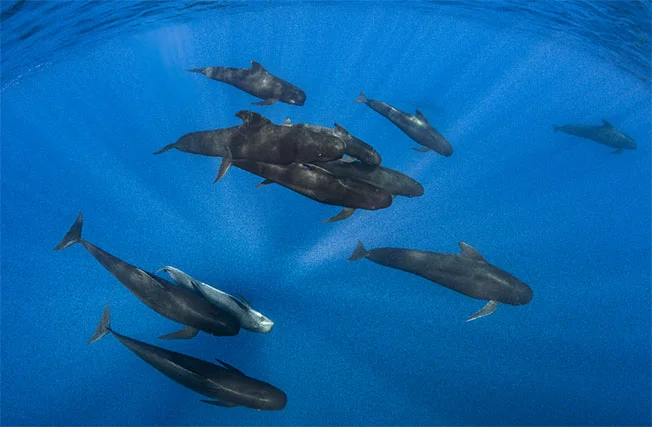
Prior to this joint commitment, mainstream global climate frameworks have largely centered on carbon sequestration metrics tied to vegetation and marine habitats, often overlooking the critical, underdocumented role of wild fauna in sustaining functional, carbon-rich ecosystems. As illustrated by the example of longfin pilot whales — a large dolphin species resembling small whales that roam the Mediterranean Sea and northern Atlantic Ocean — healthy wild animal populations support balanced marine food webs that underpin natural carbon cycling, boosting the ocean’s capacity to sequester and store atmospheric carbon long-term.
Signatory nations spanning multiple continents include Suriname, Brazil, Belize, Guatemala, Panama, Kenya, the Democratic Republic of the Congo, and Zimbabwe. The declaration, publicly unveiled by IFAW on a Tuesday, represents the first coordinated effort by a coalition of national governments at a UN climate summit to formally integrate wildlife conservation as a core, non-negotiable component of global climate policy, rather than framing it as a peripheral biodiversity concern.
Under the terms of the joint statement, participating governments commit to advocating for formal recognition of wild species’ regulatory roles within the UN Paris Agreement framework. This commitment extends far beyond basic species extinction prevention: it acknowledges that wildlife performs irreplaceable ecological functions including seed dispersal, vegetation structure modulation, nutrient cycling, and ecosystem resilience maintenance, all of which directly amplify natural systems’ ability to absorb and retain carbon. The declaration calls on all signatories to embed wildlife protection and habitat restoration targets into their national determined contributions (NDCs) and domestic biodiversity action plans, alongside commitments to expand peer-reviewed scientific research, long-term population monitoring programs, and cross-border collaborative conservation frameworks. Critically, the policy blueprint mandates that all implementation processes prioritize the legal rights and livelihood interests of Indigenous and local communities residing in and around protected natural areas, to ensure equitable, community-led conservation outcomes.
For Suriname, the declaration carries unique strategic weight: the South American nation hosts some of the world’s most intact, carbon-dense tropical rainforest ecosystems, and has long positioned itself as a global leader in forest-based climate action. The new commitment, however, poses tangible domestic implementation challenges, as Suriname must now reconcile its climate and biodiversity targets with ongoing pressures including illegal deforestation, unregulated artisanal gold mining, widespread habitat degradation, and the protection of fragile coastal and wetland ecosystems.
IFAW officials emphasize that the declaration is a shared policy statement of intent, not a binding legal mandate, and that its real-world impact will depend entirely on subsequent translation into actionable national climate plans, targeted public and private investment flows, and on-the-ground enforcement of habitat protection measures. Over the coming inter-sessional period leading up to future UN climate summits, the 25 signatory states will collaborate to push for formal, widespread recognition of wildlife’s climate regulatory value in global climate negotiation texts.
Suriname schaart zich achter internationale verklaring over natuur en klimaat