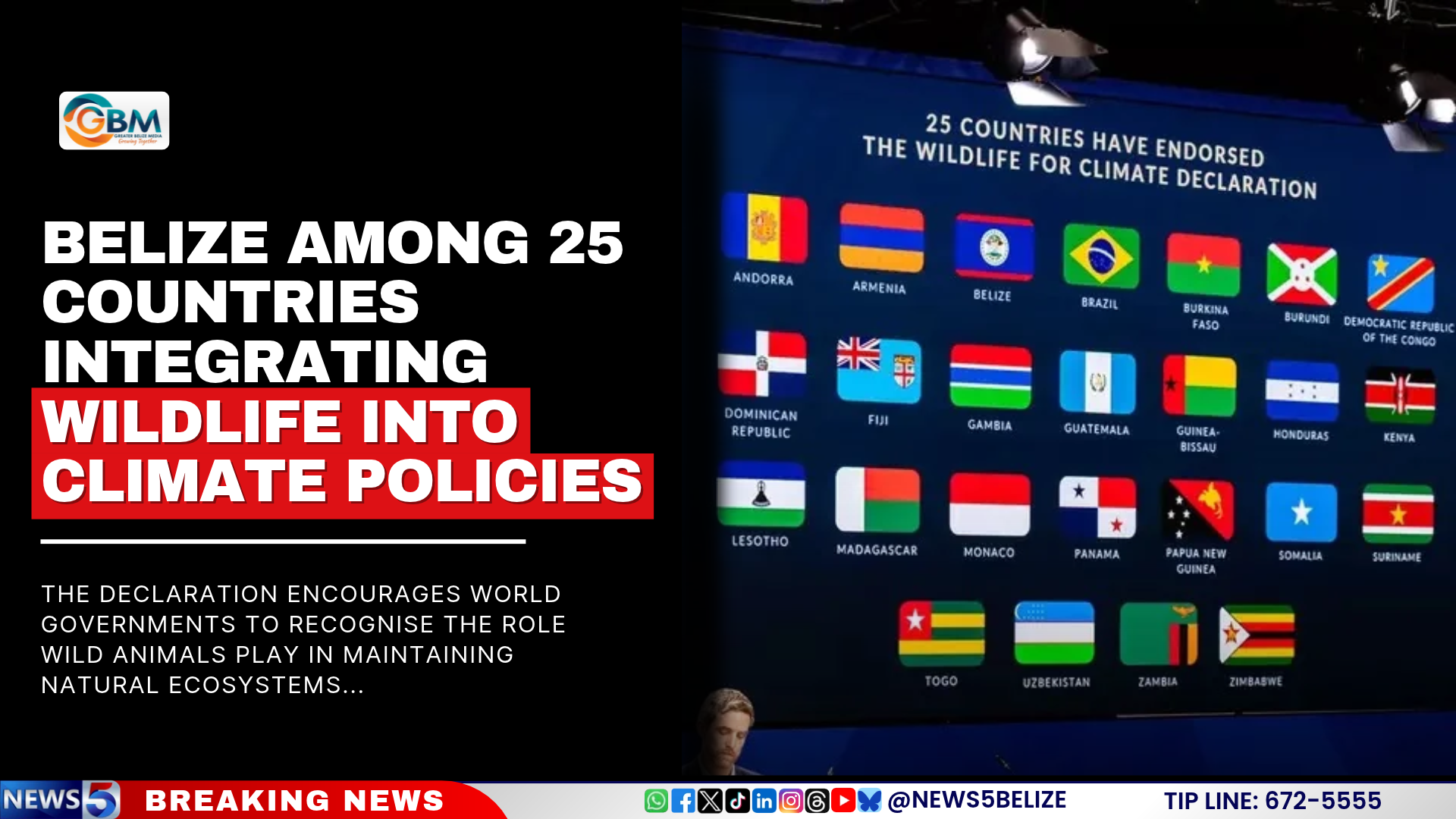
At the 2026 United Nations Climate Change Conference (COP31) hosted in Antalya, Türkiye, a landmark international declaration centered on linking wildlife conservation to formal climate policy was officially launched on November 17, with Belize joining 24 other nations as an early endorser of the framework. Dubbed the Wildlife for Climate Declaration, the voluntary non-binding agreement commits signatory states to embed the protection, conservation and large-scale restoration of wild animal populations and their natural habitats into core national climate mitigation and resilience building strategies. The cross-national initiative is co-led by Zimbabwe, with operational and advocacy backing from leading global conservation bodies including the International Fund for Animal Welfare (IFAW) and the World Federation for Animals (WFA). Its foundation rests on a broad scientific consensus signed by over 350 researchers across 47 countries, which has spent years documenting the underrecognized critical role of wildlife in upholding functional natural ecosystems. Orlando Habet, Belize’s Minister of Sustainable Development, represented the Central American nation at the official launch event, where he pushed back against the common narrative that frames wildlife solely as a vulnerable victim of rising global temperatures and extreme weather events. “Wildlife is not simply a victim of climate change. Wildlife is also an ally in addressing it. Our forests are not merely a collection of trees. They are living communities, sustained by relationships among plants, animals, soil and water,” Habet emphasized during his public address at the COP31 side event. The declaration lays out clear guidance for national governments to formally acknowledge wild species’ contributions to boosting long-term carbon sequestration, safeguarding critical watershed and coastal habitats, and enhancing the overall ability of ecosystems to withstand climate-related shocks. Though it imposes no new legally binding regulatory requirements on signatories, the framework is designed to push participating nations to move beyond surface-level alignment of climate and biodiversity agendas, and integrate wildlife conservation priorities as a core, actionable component of their existing national climate action plans and biodiversity protection policies.