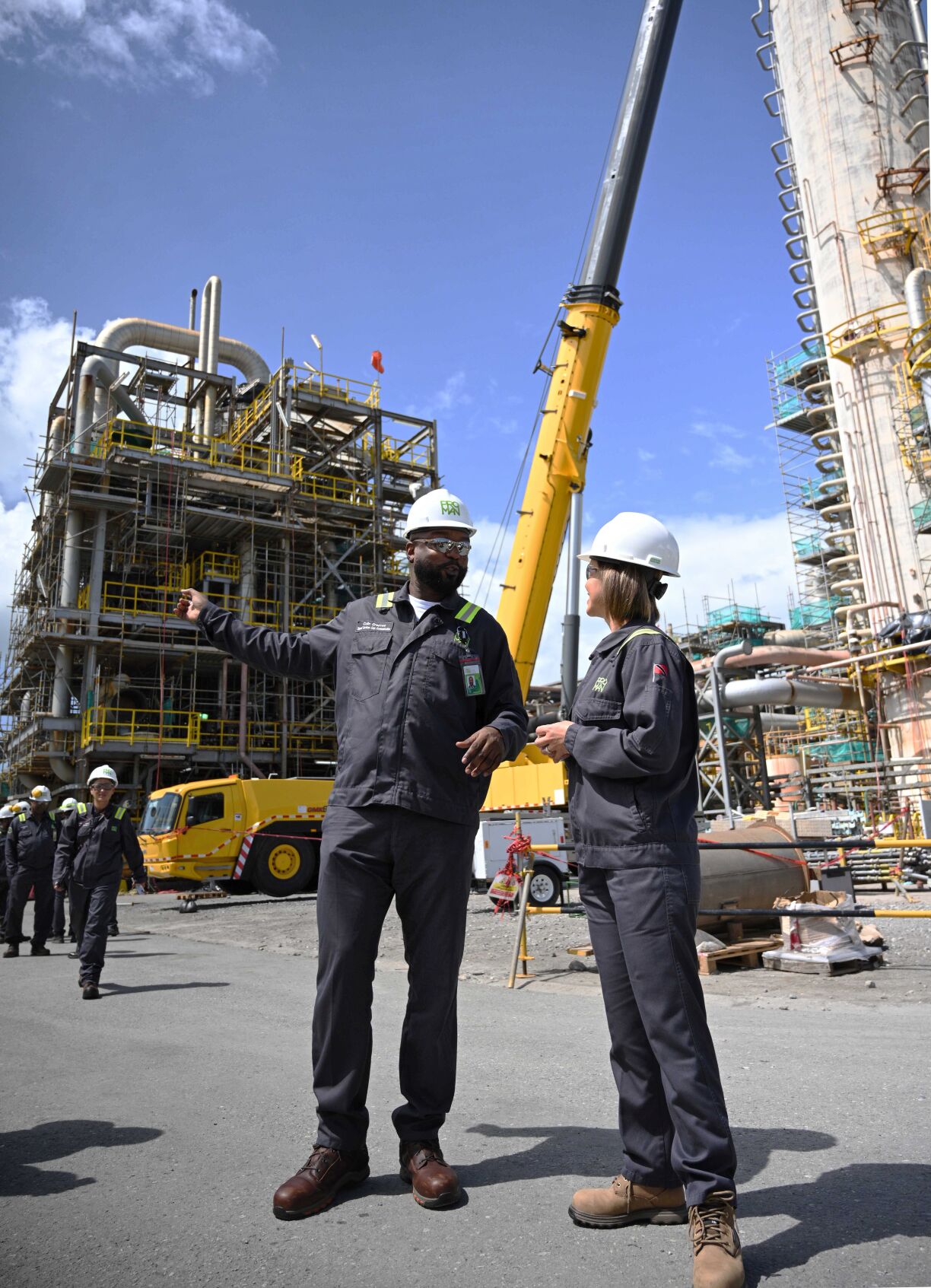
Trinidad and Tobago-based energy and petrochemical major Proman has unveiled a US$40 million (roughly TT$270 million) capital commitment to a full-scale operational turnaround of its Ammonia, Urea Ammonium Nitrate (UAN), and Melamine (AUM) downstream facility located at the Point Lisas Industrial Estate, positioning the asset to capture value as national natural gas supply conditions are projected to improve in the coming years. The 34-day scheduled maintenance initiative, now 13 days into execution, is engineered to reinforce the plant’s long-term safety protocols, boost operational reliability, and optimize energy efficiency, marking a critical targeted reinvestment in the firm’s local industrial footprint, according to Proman Deputy Managing Director Giselle Thompson, who addressed assembled media outlets directly from the active turnaround site this week. The large-scale maintenance project is acting as a major catalyst for local economic activity: more than 70 Trinidadian-owned enterprises have been contracted to deliver specialized services and skilled labor, with on-site headcount projected to peak at approximately 2,500 workers over the course of the work. A substantial share of these temporary roles has been allocated to residents of the residential communities that directly border the Point Lisas Industrial Estate, prioritizing inclusive economic spillover for populations most closely tied to the site’s operations. Thompson emphasized that the AUM facility produces nitrogen-based fertilizers that form a critical input to global food security supply chains, noting that the turnaround is designed to extend the asset’s usable operational lifespan, with the next scheduled full maintenance cycle not due until 2029. She clarified that the current $40 million investment is not directly contingent on the imminent arrival of new gas volumes from either cross-border Venezuelan sources or expanded local production, but rather a proactive measure to ensure the plant is operating at peak efficiency the moment additional supply becomes available to the Point Lisas industrial network. Proman is currently engaged in constructive, ongoing negotiations with Trinidad and Tobago’s National Gas Company (NGC) to finalize long-term future gas supply contracts, with leadership targeting a swift conclusion to those discussions. The company has also outlined plans for two additional plant turnarounds in 2027, though those projects are explicitly tied to securing formal, predictable gas supply agreements to provide multi-year operational certainty. The economic ripple effects of the current turnaround extend far beyond direct construction and maintenance crews: local food vendors, transportation providers, logistics operators, and small-scale service businesses are all seeing elevated revenue streams from the surge in on-site activity, Thompson noted. She also reaffirmed Proman’s unwavering long-term commitment to its Trinidad and Tobago operations, even amid broader industry headwinds that have seen competing petrochemical operators exit the Point Lisas ecosystem. The investment announcement comes against a challenging recent backdrop for the local industrial sector: in mid-2026, methanol producer Methanex Corporation idled its 860,000 tonne-per-year Titan methanol plant permanently after failing to secure a new gas supply contract, joining its already preserved Atlas facility at the site. Canadian fertilizer giant Nutrien Ltd also announced an indefinite permanent shutdown of its Trinidad Nitrogen operations in October 2026, after initially pausing activity in late 2025 due to persistent gas supply constraints and port access limitations. Proman itself has navigated recent operational pressures, implementing a 9% local workforce reduction of roughly 100 employees last month as part of a global organizational alignment process, per an internal memo shared by Proman Executive Director Anand Ragbir. Energy Minister Dr Roodal Moonilal framed Proman’s new investment as a highly encouraging signal for the sector, noting that downstream operators’ willingness to reinvest in their assets reflects growing confidence that the country’s ongoing cross-border gas infrastructure projects will resolve the inherited national gas supply deficit by 2027 and beyond.