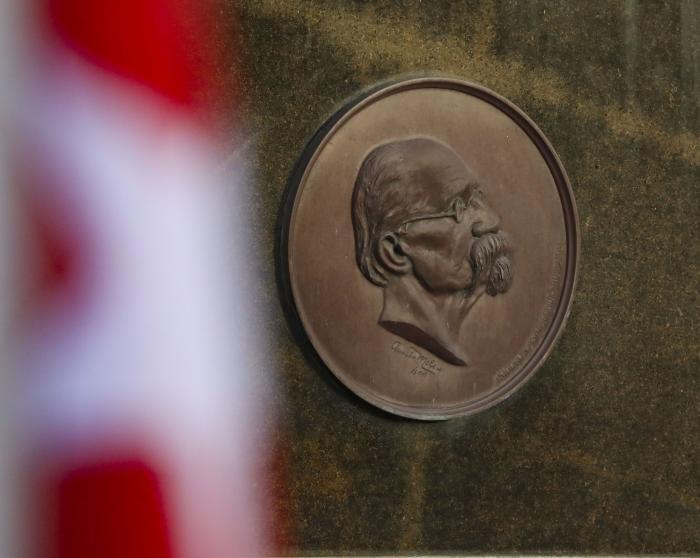
Marking the 190th birth anniversary of Máximo Gómez Báez, the iconic Dominican-born Commander-in-Chief of Cuba’s Liberation Army, the province of Ciego de Ávila stands as a living monument to the military genius whose strategic rigor and unwavering commitment redefined the trajectory of Cuba’s 19th-century independence struggle. Though Gómez was born in Baní, Dominican Republic, few Cuban territories are as inextricably woven to his legacy as the lands that now form Ciego de Ávila, where he forged the tactics, alliances, and fighting spirit that turned the tide against Spanish colonial rule.
Conservative historical tallies confirm Gómez set foot in more than 150 distinct locations across the province, with records placing him in the municipality of Majagua alone over 30 separate times. This repeated, immersive presence turned him into an unmatched expert on the region’s dense pastures, hidden trails, and geographic contours — a familiarity that became the bedrock of his legendary military effectiveness. As documented by local Ciego de Ávila historian Ángel Cabrera Sánchez, Gómez built extensive grassroots intelligence networks, partnered with trusted local commanders including José Gómez Cardoso, and transformed the province into a real-world testing ground for his unconventional irregular warfare framework.
The most consequential milestone of his tenure in the region unfolded on the sprawling pastures of Lázaro López, now Ciego de Ávila’s premier heritage site and one of the most sacred landmarks of Cuba’s independence movement. There, alongside fellow revolutionary icon Antonio Maceo, Gómez formalized the command structure of the Cuban Invading Army, a force designed to push the liberation campaign beyond the province’s borders and across the entire island. On November 30, 1895, as he finalized the invading army’s roster, Gómez uttered his enduring maxim: “The day that there is no combat will be a day lost or misused” — a concise distillation of his uncompromising war ethic and lifelong dedication to Cuban sovereignty.
Gómez’s most audacious military feat in Ciego de Ávila centered on the Júcaro to Morón military trail, the most heavily fortified colonial defensive system Spain ever constructed across its American territories. Widely dismissed by Spanish commanders as an impregnable barrier, the 70-plus-mile fortified line of trenches and watchtowers was breached twice by Gómez’s forces, first by his own 1,000-strong contingent on January 6, 1875, and later by Antonio Maceo’s column on November 29, 1895. During the La Reforma Campaign, waged from January 1897 through the first weeks of 1898, Gómez also established a robust, decentralized logistical network of small mambí (Cuban insurgent) units that safely ferried critical stockpiles of ammunition west of the military trail to sustain liberation operations across the rest of the island.
Crucially, Gómez’s victories were never the work of a lone visionary. A cohort of local Ciego de Ávila patriots formed the backbone of his operations, their contributions long etched into local historical records: Colonel Simón “The Eagle of the Military Trail” Reyes Hernández, who knew every cattle path in the Chambas region; Colonel Nicolás “El Tocayo” Hernández Moreno, who monitored Spanish troop movements out of Morón; the Cervantes family of Florencia, who took turns running ammunition across the fortified trail; and Majagua’s Emilia González Echemendía, who ran a hidden field hospital in the province’s remote wilderness to treat wounded insurgents. These fighters and dozens of other local volunteers turned Gómez’s strategic blueprints into tangible wins for the independence movement.
Gómez died in Havana in 1905, never formally holding Cuban citizenship, yet earning the irreplaceable, unassailable title of Generalísimo that no state decree could ever grant him. Today, 190 years after his birth, his legacy remains a moral compass for the Cuban people: a testament to the power of a foreign-born patriot who gave everything to a chosen homeland, a leader who rejected all pomp to fight side-by-side with his troops, and a thinker who taught that freedom requires daily effort, sacrifice, and vigilance. Scattered fragments of the old Júcaro-Morón military trail and the foundations of its long-abandoned watchtowers still dot Ciego de Ávila’s landscape, while local statues honoring Gómez stand surrounded by the names and memories of the local patriots who fought beside him — ensuring the Generalísimo’s lessons will be passed down to every new generation of the province’s residents.