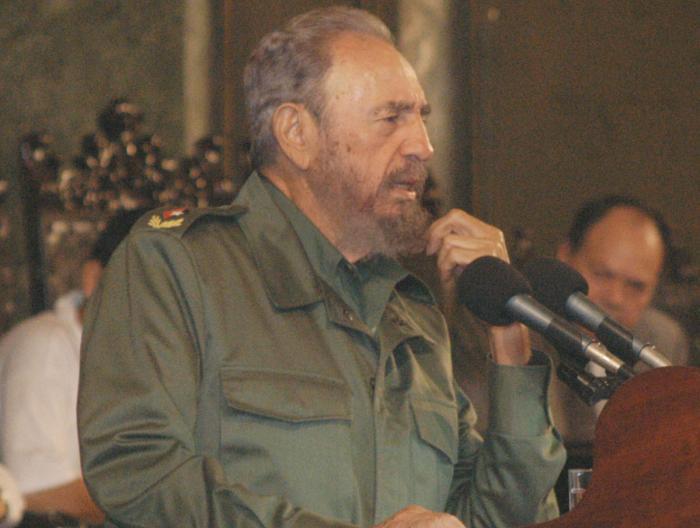
On November 17, 2026, Cuban state media outlet Granma published a full retrospective revisiting the landmark 2005 speech delivered by historic Cuban leader Fidel Castro, then Commander-in-Chief, at the University of Havana’s iconic Aula Magna Great Hall, marking exactly 21 years since the original address was first delivered to a packed audience of Cuban university students. Spanning more than 33,600 transcribed words, the 2005 address stands as one of the most sweeping, unvarnished public accounts ever delivered by a 21st-century statesman, weaving a cohesive narrative that moves seamlessly from global macro trends to the intimate, everyday realities of Cuban life. Delivered nearly 15 years after the collapse of the Soviet Union, an event that plunged Cuba into the brutal, years-long economic crisis known as the Special Period, the speech came at a moment when the island nation had defied decades of predictions from both allies and adversaries that its socialist system would collapse under external pressure. Rejecting narrow, policy-focused rhetoric, Castro opened the address with a provocative framing: “We are talking about life, because when we speak of universities, we are speaking of life.” Over the hours that followed, he guided his young audience through a sprawling, interconnected exploration of existential questions: What kind of world do we inhabit? What is the true nature of our Cuban homeland? What purpose do our universities serve? And what kind of people are we collectively choosing to become? His scope stretched far beyond national borders: he discussed the lifecycle of the sun, rising global temperatures, the millennia-long fight of the human species to avoid extinction, ongoing and looming global conflicts, and the cruel disparity that saw trillions poured into military budgets and corporate advertising while millions of vulnerable people were left teetering on the brink of disaster during natural catastrophes. Turning inward to the Cuban experience, he reflected on the decades of the Cuban Revolution, the creeping inequality that had emerged in the country during the economic upheaval of the 1990s, the urgent national push to root out systemic flaws, the critical role of frontline social workers as agents of national regeneration, and the thousands of Cuban medical professionals already deployed on international solidarity missions in the mountains of Kashmir and remote jungles of Guatemala. He touched on themes ranging from the power of ideas as a counter to nuclear annihilation, ongoing Cuban research into cancer treatments, the true economic cost of core staples including sugar, rice, oil, and electricity, and the universal right to free public education. In a blunt, unapologetic jab at the George W. Bush administration’s aggressive posturing toward Cuba in the mid-2000s, he declared: “Go to hell or wherever you want to go, idiots, you’re not going to scare anyone here!” Grounding his entire address in the philosophical framework of Cuban national hero José Martí, Castro articulated the core principle that the essence of a nation’s homeland is indistinguishable from the collective fate of all humanity. He rejected rigid dogma, acknowledging the diverse class backgrounds of the revolution’s founders, many of whom had deliberately acted against their own privileged class interests to advance the cause of collective liberation. He offered a frank, unflinching critique of Stalinist errors, and the decisions of mid-20th century Latin American communist movements to follow international orders to form alliances against fascism, including the controversial temporary alignment with the corrupt, authoritarian Batista regime in Cuba – even as he emphasized that the Cuban communists of that era remained the country’s most disciplined, honest, and self-sacrificing citizens. Expanding on the core values of revolutionary unity, he highlighted the legacy of ecumenical solidarity passed down by liberation theology, and the non-negotiable ethical principle that the end can never justify unethical means, paired with full, unreserved respect for the autonomy of other global revolutionary movements. He recalled that in the chaotic aftermath of the Soviet collapse, dozens of revolutionary movements across the world reached out to Cuba for guidance on whether to continue their armed struggle or negotiate with hostile opposing forces, a choice that would decide the lives of their own people. Castro refused to impose Cuba’s own experiences on them, telling the groups: “You can’t ask our opinion, it’s you who would go to fight, it’s you who would go to die, it’s not us. We know what we will do and what we are willing to do; but only you can decide that.” This stance, he emphasized, reflected Cuba’s total respect for the autonomy of other liberation struggles, rather than leveraging the global prestige of the Cuban Revolution to coerce other movements into following a pre-determined path. Returning repeatedly to the speech’s most searing, memorable core question, he asked the assembled students: “Are revolutions destined to collapse, or can human beings cause them to collapse? Can people—can society—prevent revolutions from collapsing, or not?” He pressed the audience to confront the question of whether Cuba’s own socialist process could ever face a collapse, prompting a resounding, unified cry of “No!” from the crowd. He balanced his note of confidence that Cuba remained militarily invulnerable to external attack, a reality well understood by the island’s adversaries, with a remarkably transparent accounting of internal flaws: he spoke openly of widespread cases of theft and embezzlement of public funds, the daily public grievances he encountered from ordinary Cubans, the hardships facing single mothers and elderly citizens living alone, even as he celebrated the island’s unprecedented universal access to free education, including university programs operating in working-class neighborhoods and even within prison facilities. He warned that rising corruption was siphoning critical public resources that should be used to improve national culture and living standards, dismissing widespread cynical claims that the Revolution could not fix its own internal flaws. “The people will fix this—the Revolution will fix this—and in a decisive way. Is it merely an ethical issue? Yes, first and foremost, it is an ethical issue; but, beyond that, it is a vital economic issue,” he told the crowd. The unprecedented public airing of these harsh internal critiques was never intended to sow division or undermine the revolution, but rather to unify the Cuban public to push forward together, to stand against both the predatory global forces of exploitation he described as “white-collar murderers” and the local corrupt actors siphoning public resources, whom he promised would be held fully accountable and publicly shamed for their crimes. He closed the hours-long address with a rousing, hopeful call to action: “It is entirely right to fight for this, and for this we must dedicate all our energy, all our efforts, all our time… so that we may say—in the voice of millions, or hundreds of millions, or billions—’It is worth having been born! It is worth having lived!’”