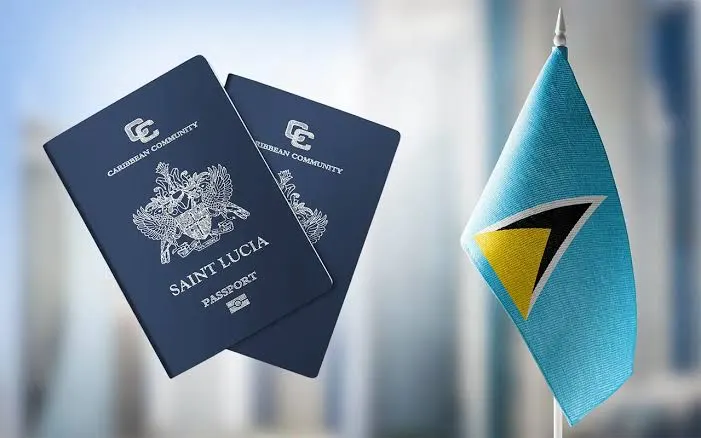
At a pre-Cabinet press briefing held earlier this week, local and international reporters arrived with widespread anticipation that Prime Minister Philip J. Pierre would finally unveil Saint Lucia’s official public stance on the future of its long-running Citizenship by Investment (CBI) Programme, following the expiration of a November 12 deadline imposed by the European Union. Just seven days prior to the briefing, Pierre had confirmed that the administration would share the full details of its formal response letter to Brussels as soon as EU authorities confirmed receipt of the document. However, when pressed for clarity during the public Q&A session, Pierre revealed that Saint Lucia was still waiting for an official, formal reply from EU representatives, meaning the nation’s final position on the high-stakes policy framework remained fully undisclosed to the public. “We have submitted our formal response to the EU, and we will not release the full contents of that correspondence to the public until we receive their official formal feedback,” Pierre told assembled journalists. As of the end of last week, this remained the official status of negotiations, even as a neighboring Caribbean nation moved to make its own CBI policy public. On November 13, the government of St Kitts and Nevis formally announced it would phase out its own CBI programme, with Prime Minister Terrance Drew noting that the exact timeline for the wind-down would be finalized through ongoing bilateral talks with EU officials. In a clear rebuke of assumptions that Caribbean nations would align on a unified regional position, Pierre emphasized that Saint Lucia would pursue a fully independent path for its CBI policy, rather than mirroring decisions made by neighboring states. “We do not govern other sovereign nations. We are responsible for running our own country in the best interests of our people,” he stated firmly, later adding, “We cannot speak for the governments of St Kitts and Nevis or Antigua and Barbuda. These are all independent sovereign states that have every right to develop and implement their own national policies.” Pierre went on to underline that Saint Lucia’s decision to extend negotiations with the EU stems directly from the significant socioeconomic value the CBI programme delivers to local communities. While he has repeatedly noted that Saint Lucia’s economy is far less reliant on CBI-derived revenue than several of its Eastern Caribbean peers, he reaffirmed during the briefing that the programme plays a critical role in both public sector revenue streams and local employment. Official data cited by the Prime Minister shows that more than 30 local workers hold direct full-time positions tied to CBI programme operations, and Pierre argued that any future policy adjustments must prioritize protecting those livelihoods, as well as the decades of public development gains funded by CBI-generated revenue. “Our core position as it relates to the CIP is that we will keep negotiating in good faith with the European Union, because this programme is deeply important to our national interests,” Pierre explained. “Our priority is twofold: we must safeguard the jobs of the local residents who work in this space, and we must preserve the reliable, critical revenue streams that the CIP brings to fund public services and national development projects.”