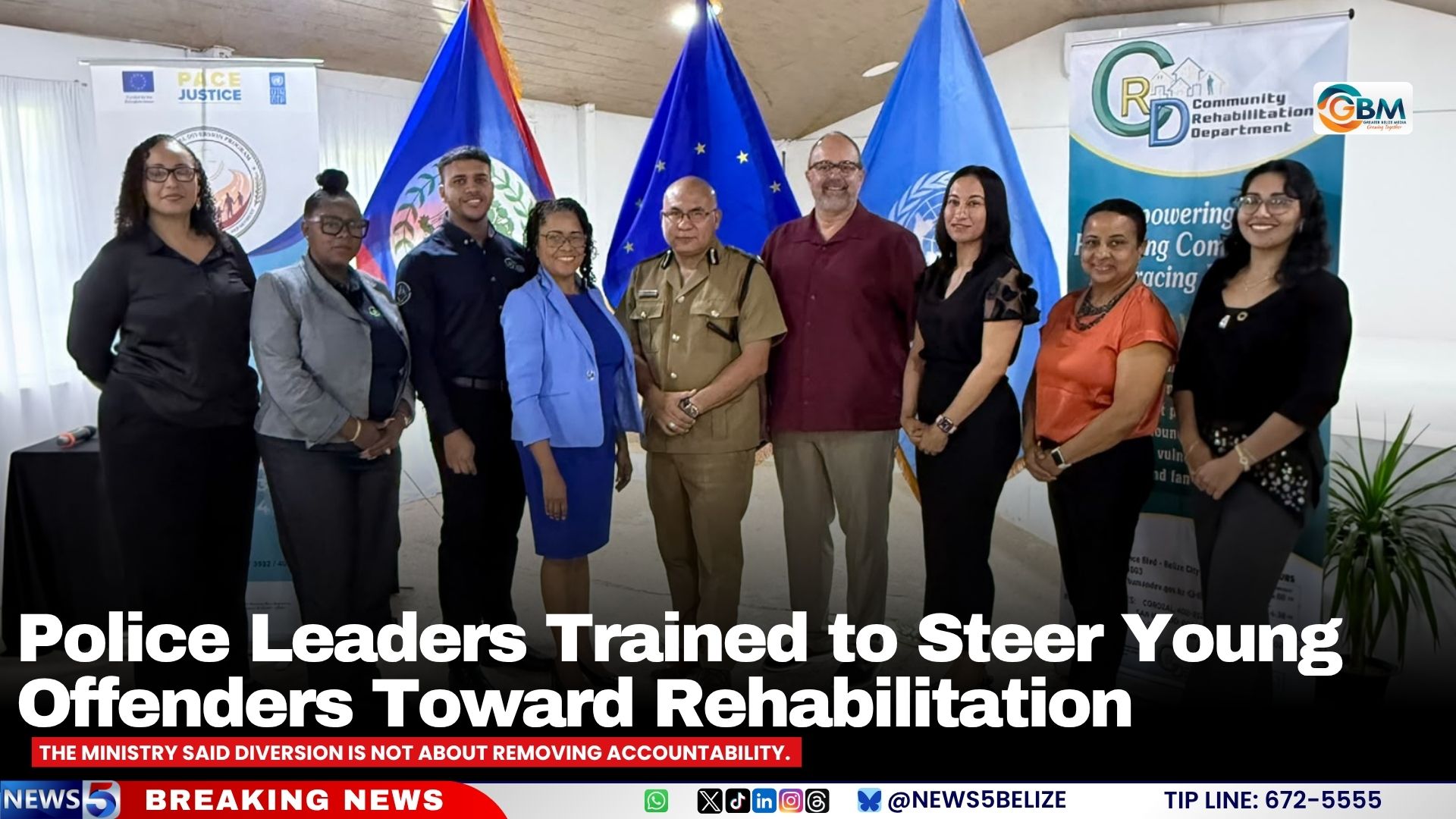
On November 15, 2026, a cohort of Belize Police Department senior leadership, including Commissioner of Police Dr. Richard Rosado, completed a specialized hands-on workshop designed to standardize implementation of the country’s youth diversion initiative, a policy that routes eligible underage people in conflict with the law to structured rehabilitation programs rather than formal criminal prosecution. The training event was co-organized by the Ministry’s Community Rehabilitation Department in partnership with the Belize Police Department, with technical and financial backing from the United Nations Development Programme via the European Union-funded PACE Justice Project. The core parameters of the diversion framework apply exclusively to youth under the age of 18, who are referred directly to the Community Rehabilitation Department for customized support pathways that run between three and six months, depending on the nature of their offense and individual needs. These tailored programs can include one-on-one therapeutic counselling, practical life skills workshops, long-term mentorship pairing, and targeted referrals to local community support organizations that address underlying triggers for offending behavior. Leading the workshop sessions was legal expert Attorney Diana Shaw, who walked attendees through the full legal architecture governing youth diversion, clear delineations of cross-agency institutional responsibilities, and pending updates to standard operating procedures for police and court diversion workflows. The event forms a key component of the broader Police Diversion Training Campaign under the national National Diversion Program, and comes on the heels of recent public and stakeholder consultations for the 2026 Revised National Diversion Protocol. Organizers emphasized that the core objective of the training is to eliminate inconsistent application of diversion eligibility criteria across police units, ensuring every qualifying young person is offered access to rehabilitative support rather than automatic formal charges. Officials from the overseeing Ministry explicitly pushed back against common public misconceptions that the policy reduces accountability for underage offenders, clarifying that the framework is structured to balance appropriate accountability with targeted guidance, wrap-around support, and second chances that allow young people to learn from missteps and make positive, law-abiding choices moving forward.