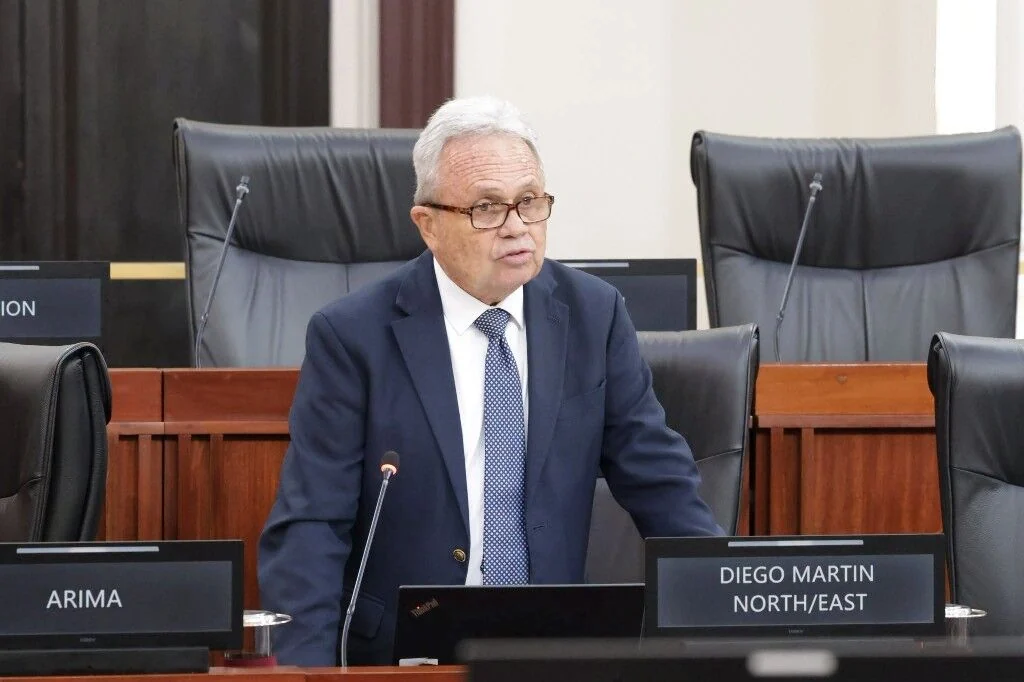
During a Friday House of Representatives debate centered on governance, transparency, and accountability for state-owned enterprises and state-controlled institutions, former Trinidad and Tobago finance minister Colm Imbert laid out a sweeping set of allegations against the sitting Kamla Persad-Bissessar administration, spanning misappropriated public funds, systemic political interference, and widespread breakdowns in corporate governance across the public sector.
The most explosive claim put forward by Imbert centers on a $1.3 billion loan facility arranged in early 2025, originally earmarked to clear crippling backlogs of unpaid invoices owed by state enterprises to local suppliers and contractors. Instead of disbursing the funds to entities including the National Gas Company (NGC) to settle these outstanding obligations, Imbert alleged the entire sum was diverted directly into the national Consolidated Fund to cover core government operating costs, including public sector salary payments. He argued the repurposing, which he described as a deliberate Cabinet-level decision rather than an isolated action by a single official, left state enterprises saddled with unaddressed arrears that continue to strain their operational capacity.
Imbert further drew attention to a separate set of red flags around a flawed $3.4 billion NGC procurement tender, noting widespread non-compliance with national public procurement rules, unaddressed conflicts of interest, and questionable conduct by public appointees involved in state enterprise contracting processes.
Beyond financial mismanagement, the former finance minister detailed a wave of personnel upheaval across state entities over the preceding 18 months, documenting 67 individuals at the board and senior executive level who had been dismissed, forced to resign, or placed on administrative leave. He emphasized that many of these personnel changes occurred with no formal completed investigations, no opportunity for the affected staff to respond to allegations, and no clear public rationale provided for their removal. Among the high-profile cases he cited were former Water and Sewerage Authority (WASA) acting CEO Jeevan Joseph, former NGC director Dr Ahmad Khan, former Point Lisas Industrial Port Development Corporation Ltd (Plipdeco) president Dr Curtis Dennie, former National Energy president Dr Vernon Paltoo, and multiple senior NGC executives. He noted that the first CEO appointed to lead NGC under the current administration had their appointment revoked within 30 days, while Dr Khan was removed from the NGC board on November 21, 2025, after he publicly refused to act as a “rubber stamp” for board decisions he viewed as improper.
Imbert criticized the administration for abandoning widely accepted corporate governance frameworks, including the OECD Guidelines on Corporate Governance of State-Owned Enterprises, the national Trinidad and Tobago Corporate Governance Code, and the Ministry of Finance’s own State Enterprises Performance Monitoring Manual. He noted that the government has carried out wholesale, blanket replacements of entire state enterprise boards regardless of their prior performance, often installing new members based on family ties or partisan political connections rather than demonstrated merit. This pattern of direct, hands-on political interference, he argued, violates the required arm’s-length relationship between the government as a shareholder and the independent boards tasked with overseeing day-to-day operations of state entities.
The former minister warned that extended periods where state enterprises operate under unconfirmed acting chief executives, with no formally appointed boards in place, create severe legal and operational risks. Under the national Companies Act, he pointed out, formal directors bear full legal liability for the entity’s conduct, a responsibility that cannot be properly fulfilled by temporary acting executives operating without board oversight. He added that the ongoing instability has also resulted in widespread failures by state enterprises to submit legally required audited financial statements, eroding public transparency around the use of public funds in these entities.