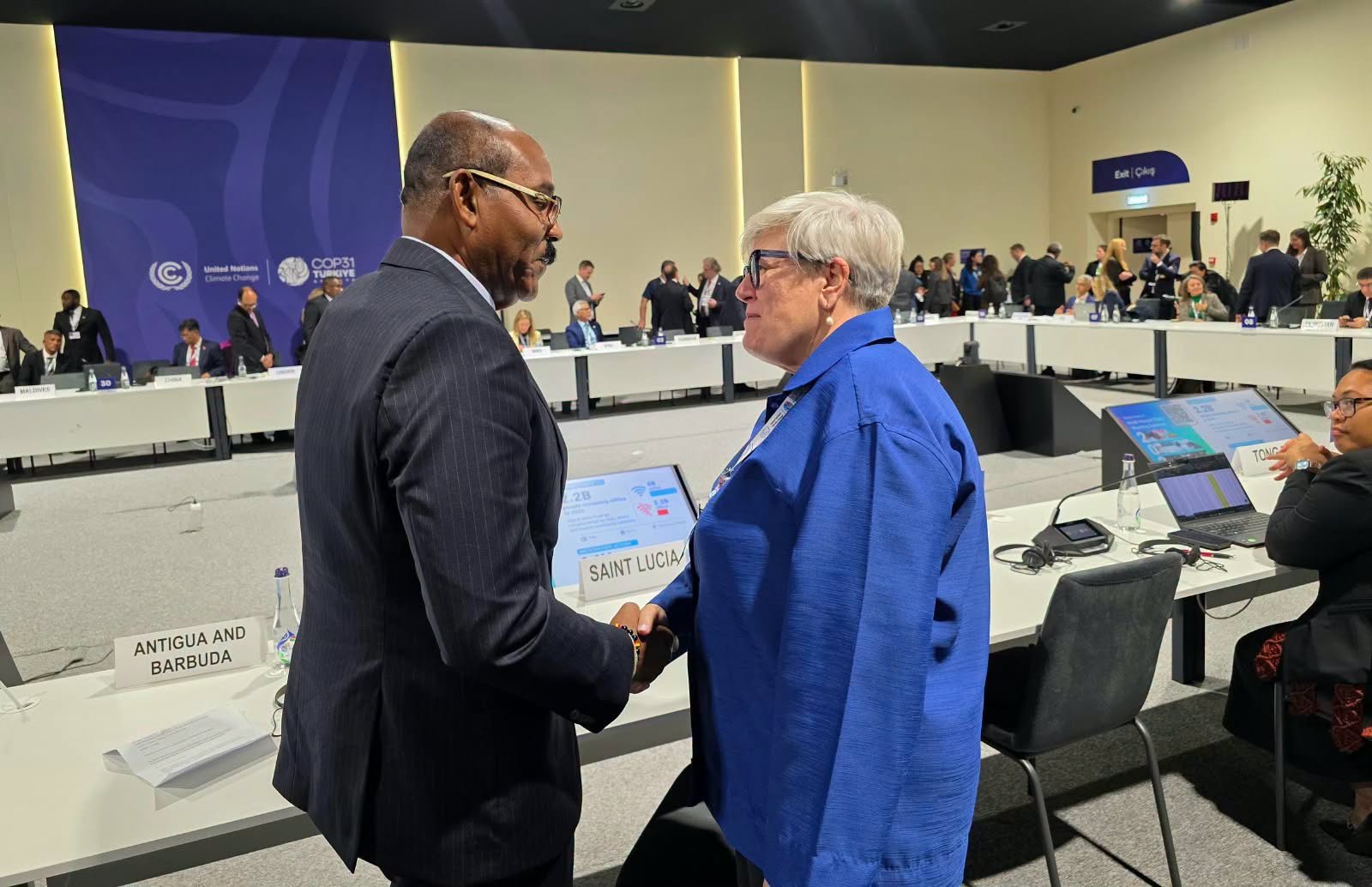
Speaking at a high-level side event for the United Nations “Early Warnings for All” initiative during the 31st UN Climate Change Conference (COP31) in Antalya, Turkey, the Right Honourable Gaston Browne, Prime Minister of Antigua and Barbuda, issued a sweeping call to the global community to ramp up dedicated, long-term investment in climate-related early warning infrastructure, peer-reviewed scientific research, and cross-border environmental monitoring networks to counter the escalating, increasingly unpredictable climate disaster risks threatening the very survival and long-term sustainable development of Small Island Developing States (SIDS).
Browne anchored his appeal in the brutal, lived trauma of Caribbean climate catastrophes, recalling that 2017’s back-to-back Hurricanes Irma and Maria flattened nearly all critical infrastructure across Barbuda, triggering the full evacuation of the island’s entire resident population. He also cited the widespread devastation wrought by 2025’s Hurricane Melissa across Jamaica and surrounding Caribbean territories as a stark, recent reminder that SIDS face disproportionate, accelerating exposure to extreme weather events, compounded by shifting El Niño and La Niña cycles that have thrown traditional historical weather pattern projections into disarray for vulnerable coastal nations.
While reaffirming Antigua and Barbuda’s full national commitment to meeting the UN Secretary-General’s 2027 target of delivering universal early warning coverage to every at-risk community on the planet, Browne pushed back against a narrow, equipment-focused framing of early warning system success. He noted that rolling out forecasting hardware and expanding public alert communication networks alone will not deliver meaningful resilience, pointing to pervasive, longstanding gaps in SIDS coastal and marine monitoring systems: critical long-term datasets tracking storm surges, accelerating sea level rise, chronic coastal erosion, and rapidly shifting ocean ecosystem conditions remain drastically underfunded and incomplete across almost all small island territories. “We cannot adequately prepare for risks that we are not consistently measuring,” Browne emphasized, arguing that functional, life-saving early warning frameworks can only be built on sustained, systematic scientific observation and standardized, open environmental data collection.
To close these critical information gaps, Browne highlighted the underutilized capacity of regional specialized institutions, including the University of the West Indies Centre of Excellence for Oceanography and the Blue Economy, and the SIDS Centre of Excellence and its associated Global Data Hub established under the Antigua and Barbuda Agenda for Small Island Developing States. He called on global development partners to direct targeted resources to these entities, including cutting-edge monitoring technology, embedded technical expertise, and stable, multi-year operational funding to strengthen regional data collection pipelines and local forecasting capacity.
Turning to longstanding inequities in global climate finance, Browne urged high-income developed nations to move beyond unfulfilled pledges and deliver concrete, measurable support tailored to SIDS’ unique constraints. He stressed that resilience and early warning financing must be predictable, low-bureaucracy, and overwhelmingly grant-based to avoid adding unsustainable debt burdens to small island economies already strained by repeated climate disaster recovery costs. Critically, he noted that funding must be disbursed proactively before extreme weather events hit, rather than being reserved exclusively for post-disaster reconstruction that drains decades of hard-won development gains. Browne also pushed back against framing the 2027 universal early warning target as a final endpoint, noting that these systems require ongoing maintenance, regular technological upgrades, and continuous institutional capacity building to remain effective as climate hazards grow more severe over time. He concluded by stressing that the only valid metric of success for the global initiative is tangible impact for frontline communities: ensuring timely, actionable alerts reach every remote and coastal resident to enable them to take life-protecting action before disasters strike. “Our success must be measured not by the promises we make, but by the warnings that reach our communities, the lives we save and the livelihoods we preserve,” he stated, reaffirming Antigua and Barbuda’s commitment to partnering with regional and global stakeholders to deliver inclusive, science-backed climate resilience for all frontline SIDS.