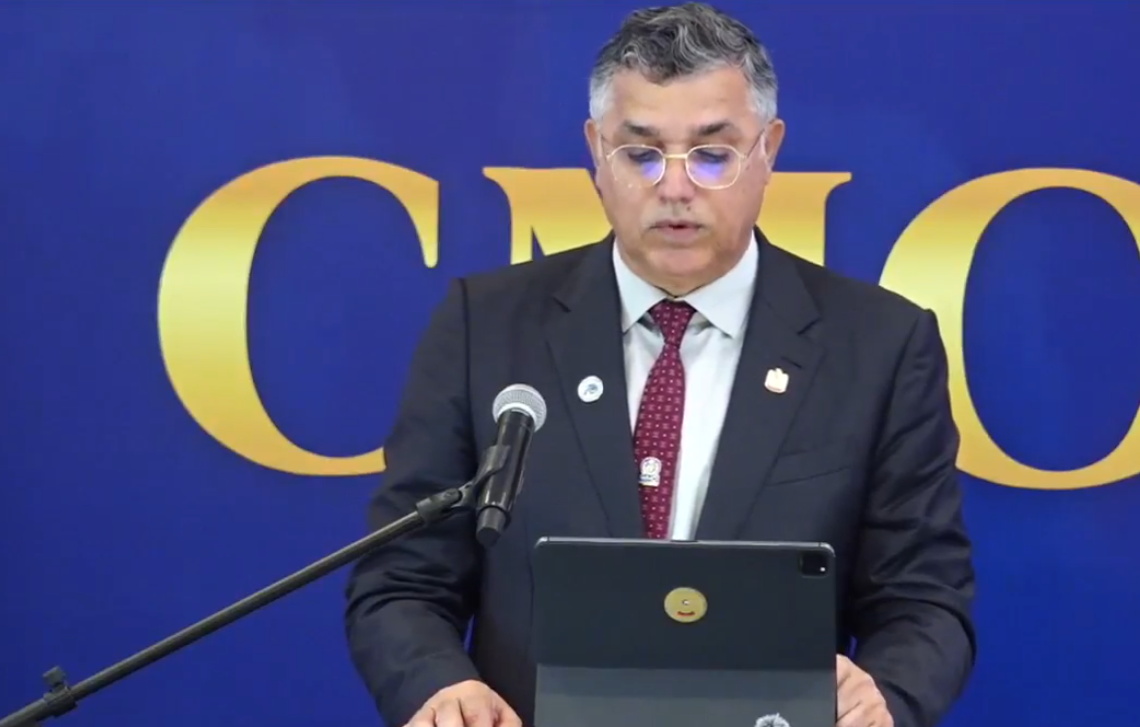
In a landmark first visit by a sitting World Meteorological Organisation (WMO) president to a Caribbean Meteorological Council (CMC) plenary, Dr Abdulla Al Mandous addressed delegates at the 70th session of the regional body, which concluded Friday in the Turks and Caicos Islands, to underscore that small island developing states (SIDS) across the Caribbean and Pacific bear the brunt of cascading weather, water and climate crises. Al Mandous noted he had recently returned from Tonga, where local leaders raised identical climate resilience priorities, emphasizing that SIDS across geographies are unified in their calls for targeted support, and that the WMO is prioritizing those collective demands.
The WMO chief lauded the Caribbean Meteorological Organisation (CMO) as a global model for coordinated regional action, pointing to its ministerial engagement framework that bridges technical meteorological expertise and high-level political decision-making, translating on-the-ground operational needs into sustained, long-term funding commitments. He emphasized that well-resourced national meteorological and hydrological services are the foundation of enhanced national disaster resilience, specifically recognizing the success of the Cruise Caribbean 2.0 initiative — a joint partnership between WMO and the United Nations Office for Disaster Risk Reduction (UNDRR) — that has turned regional aspirations for universal early warning coverage into tangible, functional systems.
Al Mandous also highlighted cross-agency collaborative efforts driving progress across the region: the Systematic Observations Financing Facility, which currently supports 16 Caribbean nations in partnership with the UN Development Programme, World Food Programme and Inter-American Development Bank; and a landmark $24 million project approved jointly by the Green Climate Fund and Caribbean Development Bank to scale hydrometeorological and multi-hazard early warning services across Belize and Trinidad and Tobago. He called on regional stakeholders to build on these existing partnerships to expand inclusive, resilient early warning infrastructure that leaves no community behind.
Outlining upcoming institutional milestones, Al Mandous noted that WMO member states are currently drafting the organization’s 2028–2031 strategic plan, with key global gatherings including the 81st session of the WMO Executive Council and the 20th World Meteorological Congress scheduled for 2027. He revealed that WMO leadership is exploring structural reforms informed by a recent United Nations Joint Inspection Unit blueprint, designed to make the global body more modern, agile, streamlined and accountable to all member states, and urged CMO members to channel their regional priorities through the WMO Regional Association forum and their Executive Council representatives to shape this transformative reform process.
Noting that 2025 marks the 75th anniversary of the CMO, Al Mandous framed the milestone not just as a historic celebration, but as a critical launchpad for accelerating regional resilience action, with targeted investments in artificial intelligence applications for climate forecasting and core hydrometeorological infrastructure upgrades as key priority areas. CMO Coordinating Director Dr Arlene Laing echoed the urgency of these efforts, noting that the Caribbean faces a persistent barrage of weather, climate and water-related hazards that make robust, well-funded meteorological services non-negotiable for protecting public safety and sustaining long-term economic development. The two-day CMC session drew cross-sector representation from the Barbados-based Caribbean Disaster and Emergency Management Agency, the University of the West Indies, the International Civil Aviation Organisation and UNDRR, uniting technical, governmental and humanitarian stakeholders to align on shared resilience goals.
World Meteorological Organisation president urges closer collaboration