Dated November 12, 2026, this field report from correspondent Shane Five of News Five documents an unprecedented ecological and economic crisis unfolding across Belize’s iconic Caribbean coastline, as record levels of drifting sargassum seaweed wash ashore to upend the country’s tourism-dependent coastal communities. For generations, postcard-perfect white sand beaches, crystal-clear turquoise waters, and unspoiled coastal experiences have formed the unshakable foundation of Belize’s $800 million annual tourism sector, supporting tens of thousands of small business owners, tour operators, and local families in hotspots stretching from San Pedro to Placencia. This year’s sargassum bloom, however, is the most severe on record, piling into mountainous, rotting heaps along shorelines that once drew global leisure travelers, releasing a pungent, sulfurous stench as it decomposes, disrupting snorkeling, diving, and boating activities, and triggering cascading harm far beyond aesthetic inconvenience.
Brice Dial, Vice Chair of the Placencia Village council and owner of the popular Barefoot Bar, outlined the devastating real-world fallout for local communities: widespread last-minute trip cancellations and abandoned new bookings as honest local business owners alert prospective visitors to the degraded state of the beaches, unexpected equipment damage as corrosive sargassum runoff burns out point-of-sale systems, televisions, and other coastal business appliances, and a sharp rise in reported respiratory ailments among residents and visitors alike, even among people with no prior history of breathing difficulties. “It’s not just a messy nuisance,” Dial emphasized. “It’s a beast that hits every part of our lives, from our paychecks to our health.”
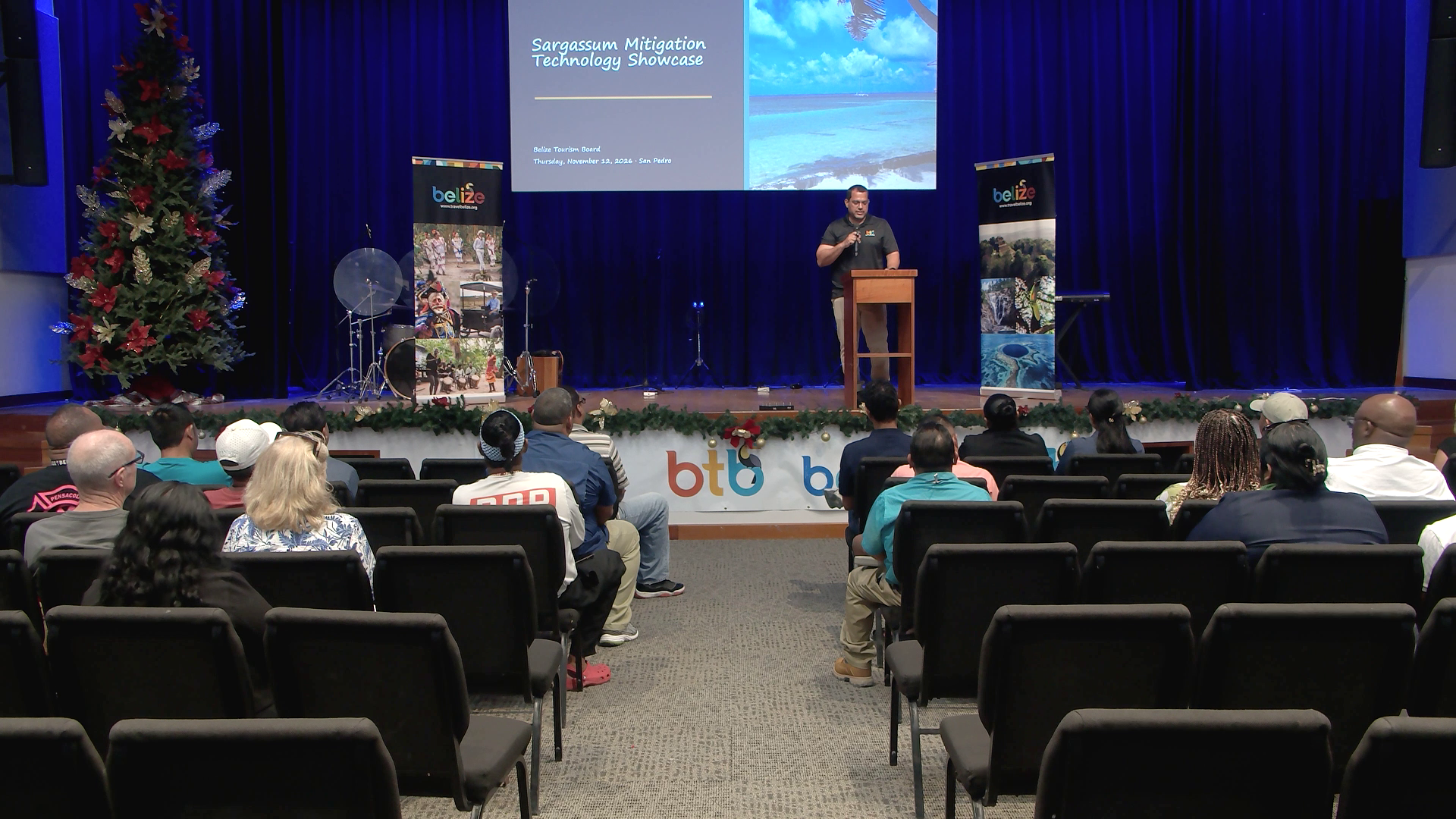
Facing this mounting crisis, the Belize Tourism Board (BTB) recently convened a cross-sector gathering of tourism operators, local government representatives, environmental officials, and technology partners to showcase a targeted new interception system designed to stop sargassum far offshore before it can ever reach the coastline, rather than relying on costly, inefficient manual cleanup of rotting piles once they wash onto beaches. Andrew Usher, BTB’s Director of Industry Development and Guest Experience, stressed that the technology is not a one-size-fits-all magic wand: Belize’s 6 distinct coastal tourism zones have wildly different current patterns, seabed topography, and shoreline layouts, so the modular barrier system is engineered to be adjusted and customized to match the unique conditions of each individual site, rather than deploying a uniform solution that would fail to perform across diverse locations.
Presented by DESMI Ro-Clean Director Orlando Chavez, the specialized sargassum diversion boom system is the product of 12 years of iterative research and field testing, boasting a 95% efficiency rate at deflecting floating sargassum mats to redirect them along prevailing currents far away from populated shorelines. Chavez explained that waiting to collect sargassum after it washes ashore is universally recognized as the least effective mitigation strategy, as floating booms deployed parallel to the shore often allow dense seaweed mats to slip underneath or accumulate until the barrier is overwhelmed; the new angled diversion design instead guides sargassum away from coastlines entirely to drift out into open ocean, eliminating the need for costly, labor-intensive on-beach cleanup.
Officials caution that no technology can deliver a permanent end to sargassum blooms, which are now a permanent, recurring feature of the regional marine ecosystem driven by warming ocean temperatures and nutrient runoff from broader Caribbean basin activities. Felicia Cruz, Chair of Belize’s national Sargassum Task Force, noted that the country is now prioritizing long-term, coordinated, sustainable management rather than chasing temporary quick fixes, and is currently pursuing a $20 million World Bank grant to roll out the customized interception system across high-priority coastal zones, with a framework that encourages private resorts and tourism businesses to co-invest in localized barrier deployments to share costs and strengthen coverage. For Belize’s coastal communities, the ongoing effort to stay ahead of annual sargassum surges is not just an environmental project: it is a fight to safeguard the livelihoods, public health, and long-term economic survival of entire populations built around the country’s world-famous coastal shores.