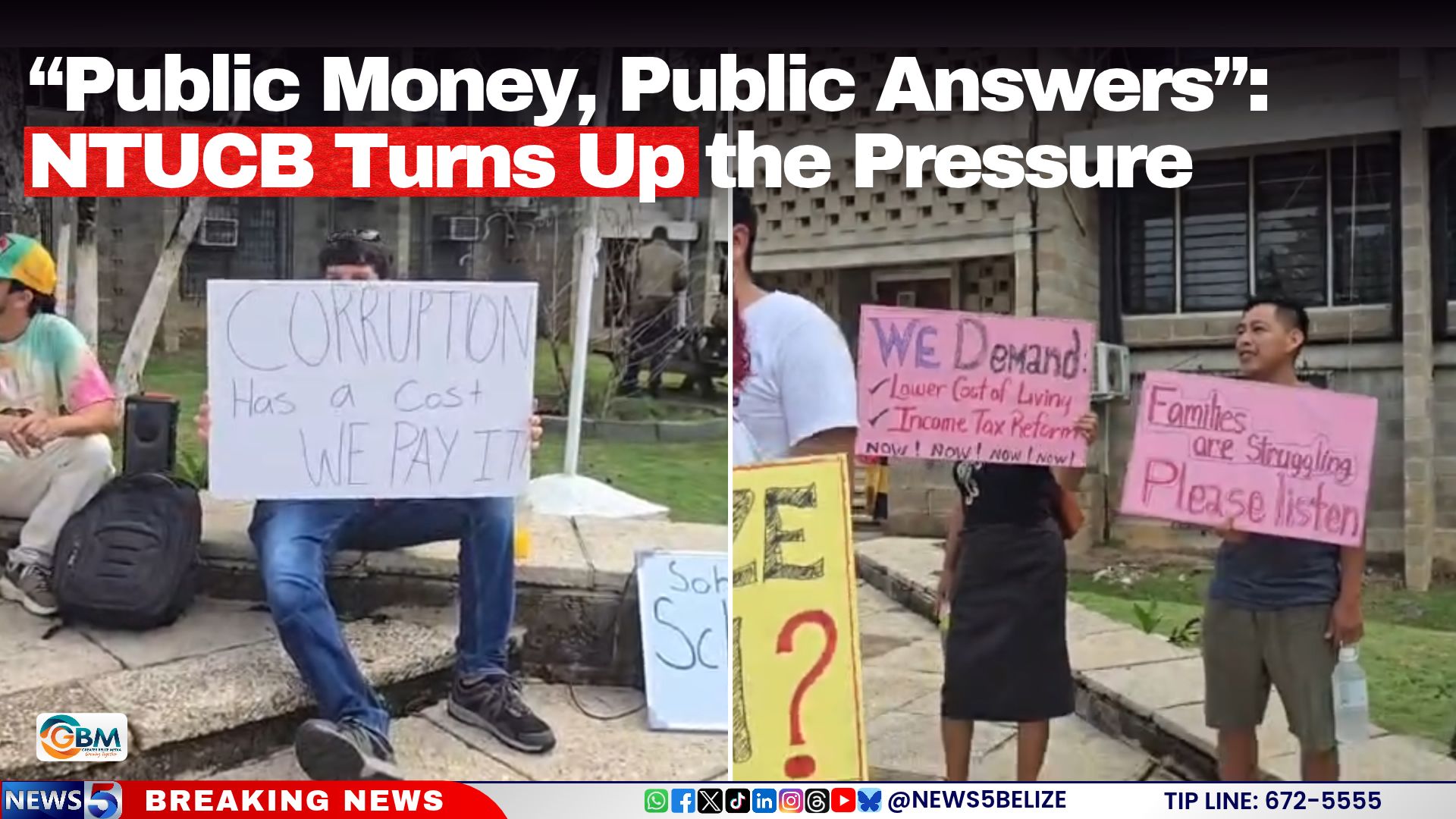
On the morning of November 13, 2026, a large, vocal demonstration assembled outside Belize’s National Assembly building in Belmopan, organized and led by the National Trade Union Congress of Belize (NTUCB) to escalate long-simmering public demands for systemic anti-corruption action and tangible governance improvements. Thousands of participating demonstrators carried sharply worded placards bearing slogans including “Corruption has a cost. We pay it,” “Our country is not your personal bank account,” and the core rallying cry “Public Money, Public Answers. No more cover-ups!” Many attendees also brought household pots and spoons, banging the makeshift instruments to amplify their collective voice and draw attention to the widespread financial strain facing ordinary households. Leading the protest, NTUCB team lead Marion Ramclam emphasized that the crowd represented a cross-section of Belizean residents who have grown exhausted of unaddressed systemic graft and deliberate government inaction on promised accountability measures. “We are deeply dissatisfied with the pervasive corruption embedded across our public institutions, and we are here today to ensure every cabinet minister and the prime minister hears our demands clearly,” Ramclam stated. “The burden of this mismanagement is falling directly on working families: sky-high cost of living pressures are no longer limited to fuel costs, they stretch to inflated grocery prices, exorbitant utility bills, and every basic necessity that households struggle to afford.” A central, long-unmet demand highlighted by the NTUCB is full domestic implementation of the United Nations Convention Against Corruption (UNCAC), which Belize first signed back in 2016. Ramclam publicly questioned the Briceño administration over nearly a decade of delays in transposing the UNCAC framework into enforceable local legislation, a step widely seen as critical to strengthening anti-corruption oversight. The full set of 11 targeted good governance reforms that formed the basis of the protest was formally submitted to the Briceño government back in August 2026, and union leaders are now demanding immediate, verifiable progress on each measure, with formal public accountability for any ongoing administrative delays.