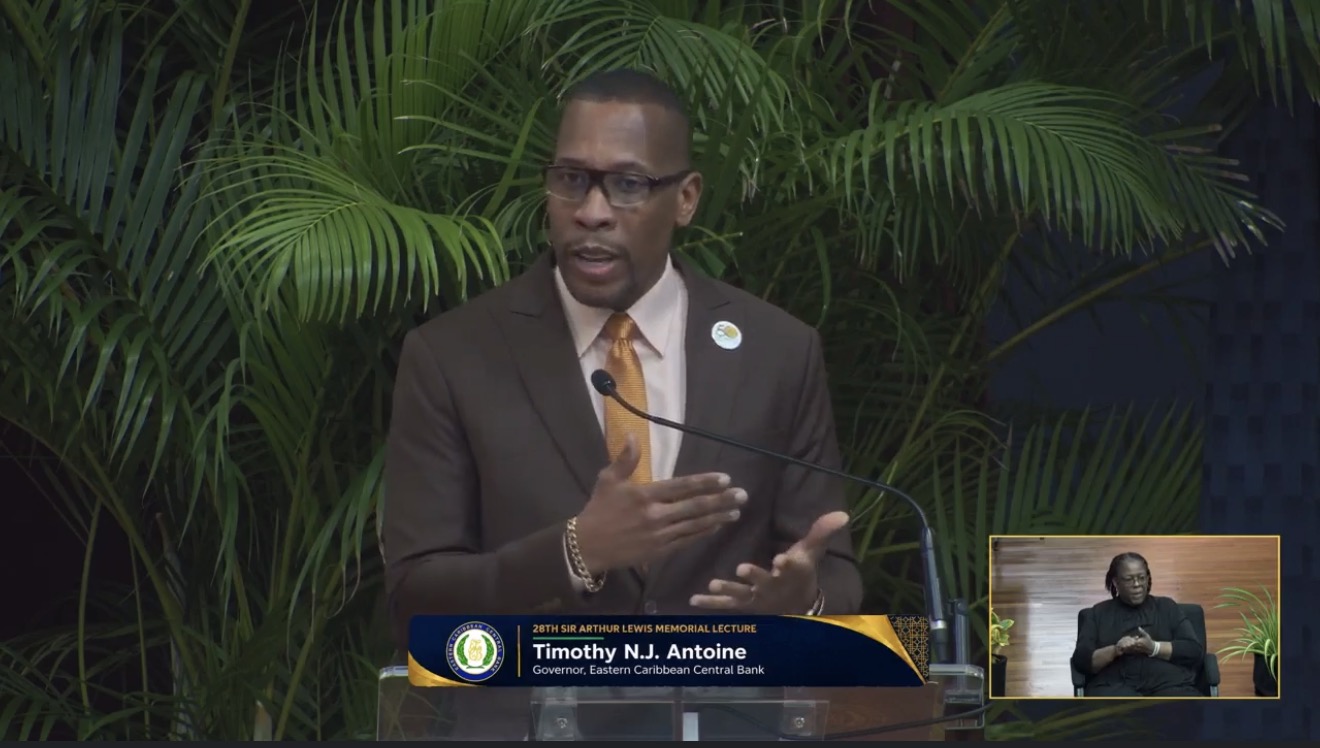
Delivering closing remarks at the 28th annual Sir Arthur Lewis Memorial Lecture, Eastern Caribbean Central Bank (ECCB) Governor Timothy Antoine laid out a targeted, multi-pronged strategy to alleviate crippling cost-of-living pressures across the Organisation of Eastern Caribbean States (OECS), anchored on a proven regional pharmaceutical procurement framework that has delivered decades of savings for member nations. Antoine drew direct parallels to the 40-year-old OECS Pharmaceutical Procurement Service, a long-running initiative that pools regional demand to source critical medications at far lower rates than individual territories could negotiate on their own, arguing the same collaborative model could be adapted for core food staples to deliver comparable consumer savings. Under his proposal, regional governments would partner closely with private sector stakeholders to curate a standardized basket of high-priority essential food goods, then issue global tenders to secure the most competitive pricing from suppliers anywhere in the world, rather than relying on longstanding, often costly traditional trade partnerships maintained solely for convenience. Antoine acknowledged that rolling out such a coordinated cross-border purchasing system would present operational and logistical hurdles, but emphasized it represented a tangible, actionable intervention to mitigate cost-of-living strains at a time when the region remains heavily import-dependent and highly exposed to global commodity price volatility and imported inflation. “We cannot afford to simply accept imported inflation as an unchangeable permanent reality — we have to ask ourselves what concrete steps we are taking to reshape that reality for our households,” Antoine told attendees. He pointed to independent research from the Caribbean Private Sector Organization, which calculates that diversifying regional import supply chains away from long-standing traditional vendors could generate as much as $261 million in annual savings across the OECS. Beyond collective food procurement, Antoine laid out complementary supporting measures to ease cost burdens: a mandatory weekly public transparency portal publishing full price data for a standardized basic food basket across all retail outlets, to empower consumers to compare costs and identify predatory excessive markups by vendors. He stressed that these immediate short-term relief measures would need to be paired with sustained long-term investments to expand local agricultural food production, boost regional productivity across key sectors, and scale up deployment of renewable energy to reduce the region’s exposure to volatile global fossil fuel pricing. At the lecture, which featured a keynote address from Professor Emeritus Andrew Downes focused on competition policy gaps and regulatory failures driving the Caribbean’s persistent cost-of-living crisis, Antoine framed the collective food procurement framework as a formal proposal for OECS member governments to evaluate, with no formal launch date or finalized binding regional program announced at the event.