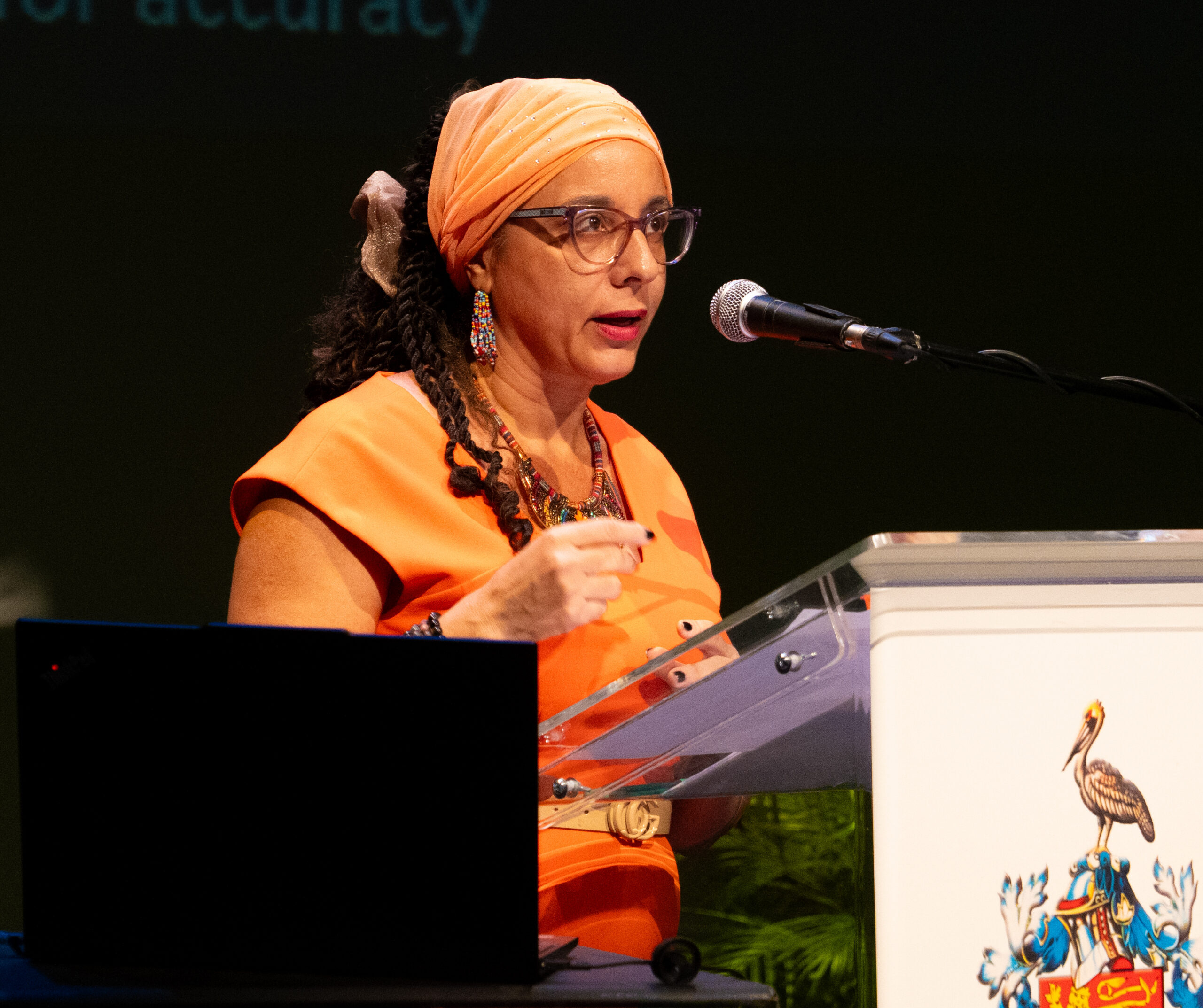
Delivering the 21st annual Patrick Emmanuel Memorial Lecture at The University of the West Indies (UWI) Cave Hill Campus last Thursday, prominent Cuba-born international relations scholar Dr. Jacqueline Laguardia-Martinez laid out a searing assessment of decades of asymmetric engagement between the United States and Caribbean sovereign states, alongside a actionable roadmap for the region to secure greater economic and political autonomy. A senior lecturer at UWI’s St Augustine Campus Institute of International Relations, Laguardia-Martinez opened her address — titled “The Shadow of the North, The Will of the Islands: US Engagement and the Shared Struggle for Caribbean Development” — by dismantling the long-held assumption that Caribbean governments’ historical acquiescence to Washington’s geopolitical demands would yield reciprocal meaningful concessions. For years, she noted, US administrations have pressured small Caribbean nations to accept non-citizen deportees, sever longstanding diplomatic and economic ties with Cuba, and enlist in US-led regional security frameworks such as the Americas Counter-Cartel Coalition, which counts The Bahamas, Belize and Jamaica as members. Washington has backed these demands with punitive leverage ranging from targeted tariff hikes, frozen development aid, exorbitant visa bond requirements and forward military deployments, tools that carry outsized weight for small island economies heavily dependent on tourism, remittance inflows and unfettered access to the US consumer market. Despite widespread regional compliance across geopolitical, security, economic and ideological policy domains, Laguardia-Martinez emphasized, the Caribbean has secured no tangible, reciprocal benefits from the US. She framed the current iteration of aggressive US hemispheric intervention as the “Donroe Doctrine”, a modern extension of Washington’s 200-year-old self-declared right to unilaterally shape political outcomes across the Western Hemisphere. The scholar turned a critical lens on the cascading humanitarian harm of decades of US sanctions on Cuba, noting that sweeping measures including a de facto oil blockade and sweeping secondary sanctions have triggered widespread public hardship: persistent multi-hour power outages, more than 100,000 patients stuck on surgical waiting lists, and a 37% year-over-year drop in international tourist arrivals over the first seven months of 2026, per official Cuban government data. Pushing back against narratives that frame Cuba’s domestic crisis as a product solely of internal mismanagement, Laguardia-Martinez attributed the overlapping economic and social strains to a toxic three-way mix of relentless US external pressure, domestic policy missteps, and the lingering economic fallout from the collapse of Soviet bloc support, adding that domestic political gridlock has stalled planned structural economic reforms dating back to 2011. She also highlighted growing rifts within the 14-nation Caribbean Community (CARICOM) over longstanding US efforts to isolate Cuba, pointing to the most recent UN General Assembly vote on the US Cuban embargo: while every CARICOM member backed the 2025 resolution condemning the unilateral blockade, the 2026 October vote saw Trinidad and Tobago become the first CARICOM state to vote against the measure, with several other members abstaining, skipping the vote entirely, or breaking from past commitments to end or restructure long-running Cuban medical cooperation programs. A planned CARICOM-Cuba summit originally scheduled for March in Havana was also indefinitely postponed earlier this year, she noted. Against this fraught backdrop, Laguardia-Martinez pointed to a narrow, time-sensitive political opening in Washington created by the Democratic majority in the newly seated US Congress, elected in this month’s midterm contests. She explained that expanded congressional oversight powers, including the ability to launch public hearings and formal investigations into US foreign policy decisions, would significantly raise the domestic political cost for the White House to pursue coercive, punitive actions against Caribbean nations. This temporary window, she argued, gives Caribbean governments a rare opportunity to strategically delay or water down the most corrosive, sovereignty-eroding alignment demands coming out of Washington. Crucially, she cautioned that this opening is extremely fragile: longstanding US hemispheric foreign policy rarely shifts direction rapidly, and it remains an unresolved open question whether former President Donald Trump’s administration would choose to push forward with aggressive unilateral demands or be constrained by congressional pushback. To turn this fleeting political opportunity into lasting, substantive policy autonomy for the region, Laguardia-Martinez rejected the path of passive, reactive diplomacy, calling instead for deliberate, coordinated regional action to build alternative global partnerships. She urged Caribbean nations to deepen collaborative ties with African nations, the Alliance of Small Island States, and progressive Latin American governments, including expanded cross-border university exchange programs to build long-term people-to-people ties. She also pushed back against widespread public complacency across Caribbean societies, noting that elected leaders are often reluctant to take bold diplomatic stances out of fear of electoral backlash, arguing that ordinary citizens have a critical role to play in advocating for bolder regional action. At the institutional level, she called on CARICOM to extend the model of unified, coordinated regional positions that have already delivered tangible progress on global negotiations around climate action, reparatory justice and the Bridgetown Initiative for global financial reform to the previously divisive domain of hemispheric security policy. “For CARICOM and Caribbean small states in general, regionalism is not a choice. It’s a need. It’s a necessity,” she told the assembled audience, which included former UWI Cave Hill Campus principal emerita Professor Eudine Barriteau. “Small states walking alone cannot walk that far.”