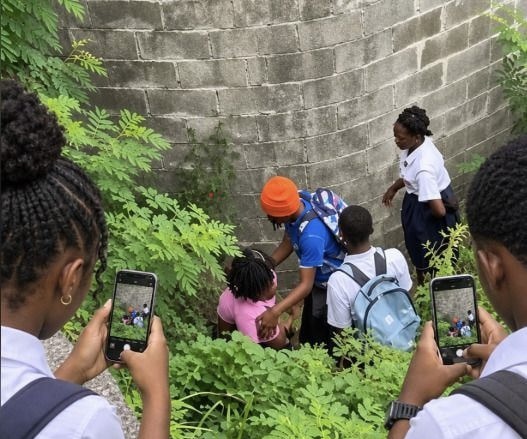
Following a widely circulated violent altercation between two female secondary school students that unfolded on November 10 at the half-completed multi-story parking facility adjacent to the East Bus Station, Antigua’s top law enforcement official has issued a public plea targeted at young people, parents, and school administrators to reverse a troubling rising trend. Speaking exclusively to the Antigua Observer the day after the recorded brawl went viral across local social media platforms, Police Commissioner Jeffers raised sharp alarm over the growing norm among teen bystanders of pulling out their smartphones to film violent clashes instead of stepping in to de-escalate the situation by reaching out to trusted adults or authorities. “Too many of our young bystanders now see a fight and immediately reach for their camera instead of their phone to call for help, and that passive, recording-focused response often does more than just fail to stop harm – it actively incentivizes more young people to initiate fights to chase clout and viral views,” Jeffers emphasized during the interview. The commissioner went on to outline the cascading harms of distributing these recorded altercations online: beyond spurring dangerous copycat violent incidents, the flood of fight clips shared across group chats and social feeds paints a deeply unfair, distorted portrait of the island’s youth population, the vast majority of whom are upstanding, law-abiding community members with no history of violent behavior. Instead of filming, Jeffers urged any student who learns of a planned physical confrontation ahead of time to flag the details to their classroom teacher, school administrator, local police officer, or another trusted responsible adult before tensions boil over into physical harm. Citing past local cases where delayed reporting of planned teen fights led to permanent, life-altering injuries, the commissioner stressed that early, proactive reporting can stop violent incidents before they start, prevent avoidable serious harm, and in extreme scenarios, save lives. The call to action extended beyond the student body to caregivers as well: Jeffers implored parents to take a more hands-on, proactive role in tracking their children’s social media activity, peer group dynamics, and behavioral shifts to spot early red flags that their child may be at risk of either participating in violence or being targeted by peers. He also encouraged all adult community members to connect at-risk young people with free local counselling services and targeted support resources before minor conflicts escalate into physical harm. The commissioner concluded by noting that sustainably reducing youth violence is not a responsibility that falls solely on law enforcement: it demands coordinated, collaborative action across every segment of the community, including families, school leadership, neighborhood groups, and local police.
‘Put Down the Phone’: Police Chief Urges Students to Report Fights After Schoolgirls Fall From Car Park