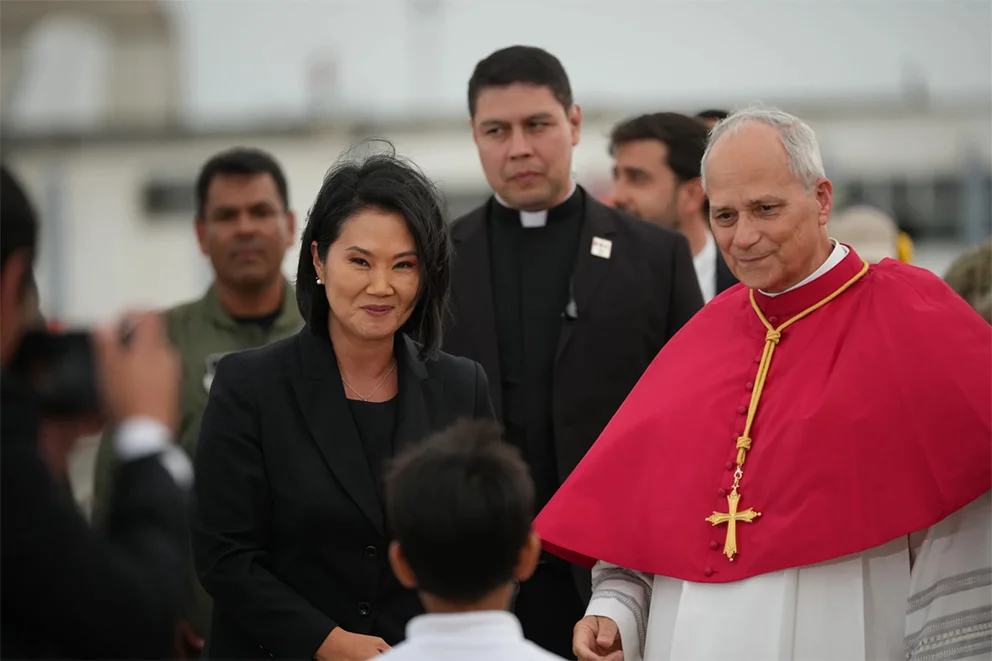
Lima, Peru – November 12, 2026: Pope Leo XIV touched down at the Callao Naval Air Base in Lima on Wednesday, November 11, marking the highly anticipated final leg of his 12-day apostolic tour across Uruguay, Argentina, and Peru. The 71-year-old pontiff, born Robert Francis Prevost in Chicago, was greeted by Peruanian President Keiko Fujimori and an estimated 3 million local residents, shattering previous attendance records for public papal appearances during his pontificate. For Leo XIV, the visit carries profound personal weight: he spent more than two decades serving as a missionary and clergyman in Peru, led the Diocese of Chiclayo as bishop from 2015 to 2023, and was granted Peruvian citizenship the same year he took up the Chiclayo post, referring to the nation openly as his “second homeland.”
Streets and public squares across the capital thronged with crowds waving Vatican and Peruvian flags, holding hand-painted banners, and carrying papal memorabilia to catch a glimpse of the visiting religious leader. Ahead of his arrival, local authorities in the coastal city of Callao unveiled a 14-meter-tall statue honoring the pontiff, while Lima’s small business stockpiled custom printed t-shirts, devotional items, and other themed souvenirs to meet expected demand from pilgrims and visitors. In his first public address on Peruvian soil, Leo XIV spoke with unmistakeable warmth about his decades of ties to the country, noting that a core chapter of his personal life story is inextricably woven into Peru’s national fabric.
During a formal audience with President Keiko Fujimori, government officials, civil society leaders, and members of the diplomatic corps, the pontiff delivered a deliberate call for national reconciliation and renewed public trust in democratic institutions. He acknowledged Peru’s turbulent, trauma-laden modern history, emphasizing that painful episodes from the past must be addressed with both rigorous justice and compassionate sensitivity, and that political and social divides should never block collective action for the common good. The address carries notable political resonance: Fujimori secured a narrow electoral victory earlier in 2026, and faces steep hurdles rebuilding public faith in state institutions, a challenge complicated by the enduringly controversial legacy of her father, former president Alberto Fujimori, who was convicted for human rights abuses tied to his 1990s campaign against the Maoist Shining Path guerrilla movement. As Bishop of Chiclayo in 2017, the then-Prevost publicly criticized the pardon granted to Alberto Fujimori, stating that true national reconciliation could never be achieved without the former president issuing a direct, personal apology to survivors of state violence. Beyond national reconciliation, the pope also highlighted the daily struggles facing ordinary Peruvians, including widespread insecurity, systemic poverty, gaps in healthcare access, high unemployment, and the urgent need to expand protections for marginalized and vulnerable groups, arguing that all public political service must prioritize the wellbeing of the general population above partisan interests.
The Peru stop follows an emotionally charged leg of the tour in Argentina, where the pontiff addressed a deeply politically polarized nation with calls for unity, forgiveness, and collective healing. On his final full day in the country, he visited Buenos Aires’ Devoto Federal Penitentiary, where he spoke with incarcerated people about the importance of repentance, inherent human dignity, and the possibility of meaningful personal redemption and second chances. He later led a large public mass at the Basilica of Our Lady of Luján, Argentina’s most revered Catholic pilgrimage site. During his time in Argentina, the pope also publicly raised concerns about the social impacts of President Javier Milei’s sweeping austerity policies, advocating for expanded social safety nets, protections for workers’ rights, and greater support for people living with disabilities. The departure ceremony at Buenos Aires’ international airport produced a viral, unscripted moment: President Milei, who personally saw the pontiff off for his flight to Peru, was visibly overcome with emotion, struggling to hold back tears even as the two leaders had openly clashed over policy priorities during the visit.
Pope Leo XIV will remain in Peru through November 16, with a packed schedule of public and private engagements. On November 12, he will meet with the Peruvian national conference of Catholic bishops to discuss challenges facing the local church, before leading a national evening prayer vigil for youth and students at Lima’s main national stadium. On November 13, he will travel to Chiclayo, where he will reunite with former colleagues and community members he served during his 8-year tenure as local bishop, celebrating an outdoor public mass near Pimentel, meeting with local clergy, and visiting a leading Peruvian Catholic university. Subsequent stops include visits to Santa Cruz de Succhabamba, Cusco, and Pucallpa, where he will meet with Amazonian indigenous community representatives and local missionaries. The tour will formally conclude on November 16 with a closing public mass at Las Palmas Air Base, after which the pontiff will return to the Vatican in Rome.
The successful completion of the full 12-day tour comes after a major health scare for the 71-year-old leader: on October 13, he underwent surgery to remove the lower lobe of his right lung, after medical tests identified a localized, non-metastatic form of lung cancer. The Vatican confirmed that no further cancer treatment is required, and a panel of attending physicians signed off that the pontiff had recovered sufficiently to complete the physically demanding, travel-heavy itinerary. Across his three-nation journey, Leo XIV has centered his public messaging on universal themes of peace, cross-community solidarity, the inherent dignity of all people, and rebuilding public trust in societies fractured by political division and economic uncertainty.