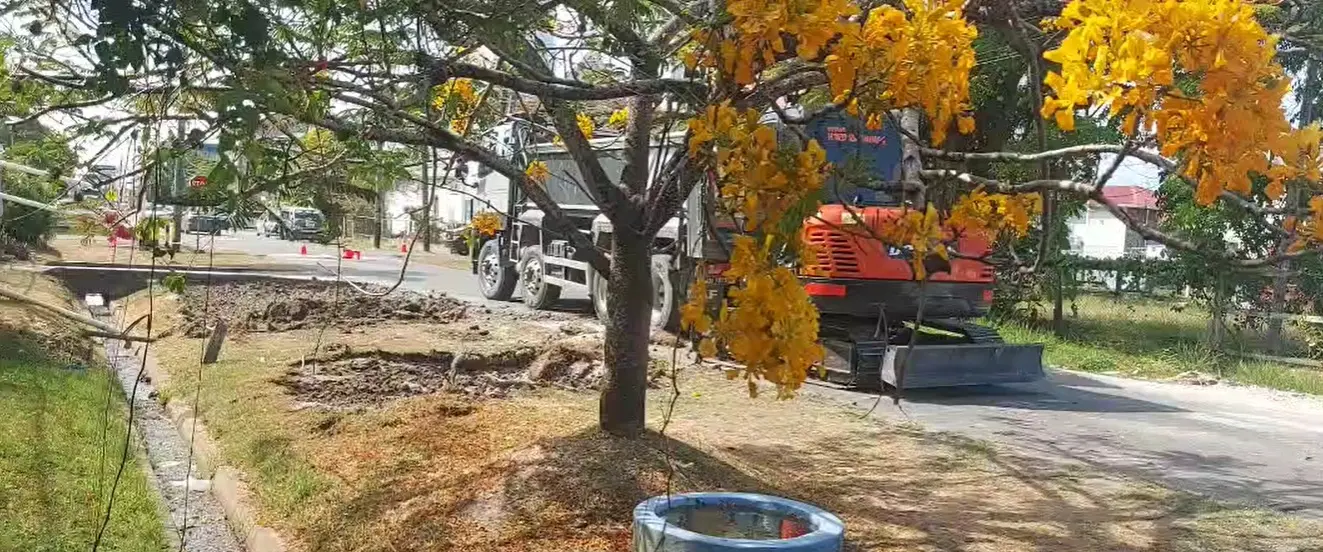
As of Wednesday, November 11, 2026, residents of Queenstown, a historic residential district in Georgetown, Guyana, are in a standoff with local public works authorities over ongoing parapet modification projects, with a formal letter and signed petition dispatched to Public Works Minister Juan Edghill that same day requesting an urgent meeting with the minister and his technical engineering teams, and a response expected no later than Friday of that week.
For generations, Queenstown’s grass-covered road parapets, mature native trees and landscaped green verges have defined the neighbourhood’s colonial-era residential character, but recent excavation works that strip away the vegetated topsoil to replace it with crusher run, a compacted mixture of crushed stone and stone dust, have sparked widespread alarm across the community. Local residents, many of whom gathered for a community meeting the prior Tuesday evening, have raised a cascade of evidence-backed concerns: the loose aggregate material is highly likely to be washed away during the region’s heavy seasonal rains, flowing directly into the district’s already overtaxed, poorly performing drainage network that regularly leaves Queenstown submerged, as the area sits in a natural low-lying basin that concentrates stormwater runoff.
The formal submission sent to Minister Edghill outlines a full scope of resident grievances: unconsulted large-scale excavation of established vegetation, unvetted use of non-porous aggregate materials, unassessed risks to buried underground utility lines, unaddressed pedestrian safety gaps, and the erasure of the community’s signature green public spaces that residents use for casual walking, socializing, and to complement the neighbourhood’s preserved heritage colonial homes. The community has made clear that they are not opposed to targeted public infrastructure upgrades, but are demanding an immediate full suspension of all ongoing parapet excavation and modification work to allow for an independent, multi-stakeholder technical review.
That mandatory review, residents argue, must rigorously assess the project’s impacts on stormwater drainage, long-term structural integrity of adjacent roadways, underground water and power utilities, local ecological health, and pedestrian accessibility. They are also pushing for the full restoration of all excavated grassy topsoil to the parapets, the retention of as many mature trees and existing landscaped zones as practically possible, full public disclosure of the project’s full design scope, official maintenance schedules for the modified verges, and formal, meaningful consultation with all affected property owners to co-develop alternative upgrade plans that balance infrastructure improvements with preservation of Queenstown’s unique residential identity.
Several anonymous local business owners who signed the petition emphasized that the ongoing works directly contradict the national biodiversity and sustainable healthy streets pledges repeatedly championed by President Irfaan Ali, noting that the rapid destruction of established local flora runs entirely counter to the government’s publicly stated sustainability goals. The community has not ruled out pursuing legal action to halt the works permanently if their requests are not met, warning that if the project proceeds unadjusted, many of Queenstown’s iconic, decades-old heritage trees will be felled, worsening the district’s existing chronic flood risk and erasing a core part of Georgetown’s historic residential landscape.
Parapet works in Queenstown will worsen drainage; court action likely