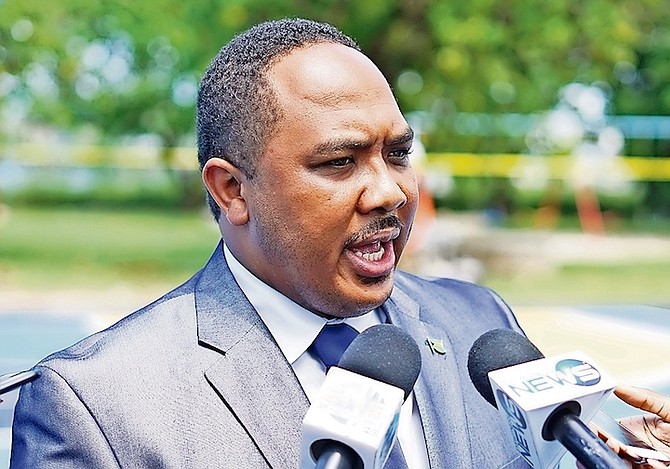
A high-profile political dispute has erupted in The Bahamas over public financial accountability, as Free National Movement (FNM) Deputy Leader Shanendon Cartwright publicly rebuked Urban Renewal Minister Lisa Rahming for remarks in which she claimed to have consigned unaccounted public funds paid to non-compliant home repair contractors to a “sea of forgetfulness.” During a media briefing at the Office of the Prime Minister last Thursday, Rahming addressed gaps in the government’s Small Home Repair Programme, explaining that some contractors who received upfront mobilization payments had vanished before completing assigned renovation work. Under the programme’s existing framework, pre-vetted contractors are issued 40 percent of their total contracted sum as an initial mobilization fee, with the remaining 60 percent only disbursed after independent inspectors sign off on finished work and participating homeowners confirm they are fully satisfied with the results. Rahming acknowledged that a cohort of contractors had collected the upfront payment and could no longer be reached by programme administrators, noting that a dedicated contractors’ workshop had been organized to address these operational gaps. When referencing previously documented losses of public funds tied to incomplete work, the minister stated, “I wipe away all the tears, all the money that been missing. I forget them in the sea of forgetfulness.” She also noted that plans to implement a formal blacklist of delinquent contractors were in progress, though no such list had been formally established or published as of her comments. Just one day after those remarks were made public, Cartwright released an official scathing statement challenging the minister’s framing, arguing that elected government officials bear zero authority to dismiss or disregard taxpayer funds through casual forgetfulness. He emphasized that public revenue is not equivalent to personal private assets, and cannot be casually distributed, poorly tracked, or conveniently discarded from institutional memory. Cartwright stressed that ministerial responsibilities extend far beyond signing off on contracts or authorizing initial payments, requiring ongoing rigorous oversight to ensure public resources are properly managed, all contractual obligations are met, and taxpayers receive full value for every dollar spent. Citing official ministry data submitted to the House of Assembly on November 4, the programme has allocated approximately $500,000 in total funding to date, covering 41 residential repair projects in New Providence and 22 in Grand Bahama. Rahming confirmed that only 20 of the 41 contracted repairs in New Providence had been fully completed, but declined to share the exact total sum of funds disbursed to contractors who abandoned their assigned projects. Cartwright outlined a series of formal demands for full transparency, including public disclosure of all programme contracts, full breakdowns of every payment issued, and a complete inventory of all outstanding unfinished work. He also called for independent third-party audits where warranted, and aggressive targeted action to recoup all improperly disbursed public funds from non-compliant contractors. He concluded his statement by emphasizing that failure to account for public spending is far more than a minor lapse of memory, but a fundamental breach of core ministerial duties, adding that Bahamian citizens deserve rigorous accountability from their elected officials, not deliberate administrative amnesia.