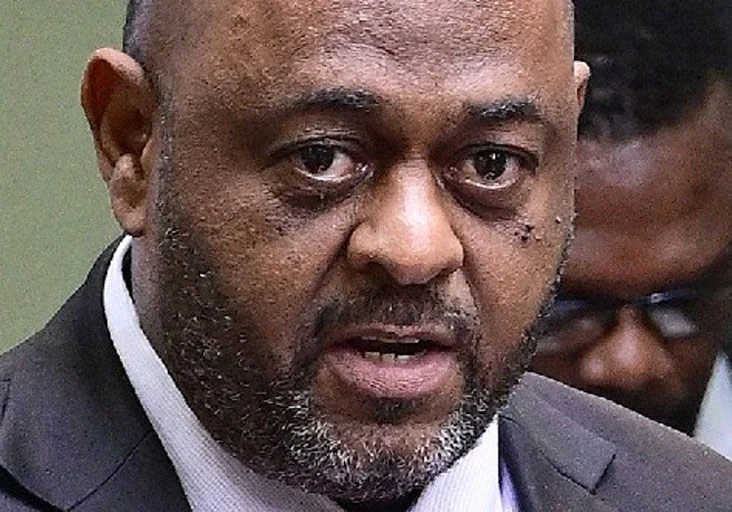
Trinidad and Tobago’s Defence Minister Wayne Sturge has pushed back firmly against allegations of government inaction following a tragic dual pleasure craft collision off Chaguaramas on Sunday, confirming that the Trinidad and Tobago Coast Guard launched its emergency response a mere four minutes after the incident was reported. The high-seas crash left five people unaccounted for at sea, including a 17-year-old girl, while six other survivors were rushed to the St James Medical Complex in critical condition, triggering a coordinated multi-agency search and rescue effort that drew personnel from the Coast Guard, the Trinidad and Tobago Police Service Coastal Unit, and the force’s Air Support Unit. In a press briefing responding to queries from the Express, Sturge described the fatal incident as “extremely unfortunate and entirely avoidable”, framing it as a stark reminder of the lethal risks posed by non-adherence to established maritime safety protocols. He noted that the government faced widespread backlash and heavy criticism on social media just weeks prior, when it issued targeted safety warnings to boat operators in Toco about collision risks and other perils of unregulated maritime operations. Sturge drew parallels to recent high-profile maritime disasters in a nearby Caribbean nation, noting that the public should already have been primed to exercise heightened caution when navigating local territorial waters. While he acknowledged that routine patrols to enforce vessel safety standards fall under the Coast Guard’s remit to a limited degree, Sturge emphasized that the agency’s core statutory mandate remains national border security, rather than full-time compliance monitoring for recreational craft. The defence minister stressed that comprehensive maritime safety legislation is already on the books to protect seafarers, arguing that the longstanding bottleneck is not a lack of rules, but widespread public pushback when authorities attempt to enforce existing safeguards. “When we move to uphold these regulations, the public immediately complains and pushes back,” Sturge explained. “At the end of the day, vessel operators bear the ultimate responsibility to respect these rules and understand their purpose.” Sturge declined to share further details about the specific circumstances of the Sunday collision, noting that the full incident is now the subject of an active criminal police investigation, and extensive public commentary at this stage could compromise the integrity of the probe. His remarks came in direct response to public criticism from environmental and maritime advocacy group Fishermen and Friends of the Sea (FFOS), whose corporate secretary Gary Aboud issued a statement Sunday calling on the government to immediately table long-delayed comprehensive fisheries management legislation that the organization has spent 30 years lobbying for. FFOS accused successive administrations of ignoring repeated warnings about gaps in vessel operation and safety frameworks that could have prevented the weekend tragedy. Sturge pushed back on the group’s critique, stating he did not expect Aboud to ever acknowledge or credit the government for any positive progress it has made on maritime safety to date, adding that the lessons from the Chaguaramas collision will be used to strengthen public outreach around existing rules to ensure all boat operators understand the rationale behind mandatory safety mandates.