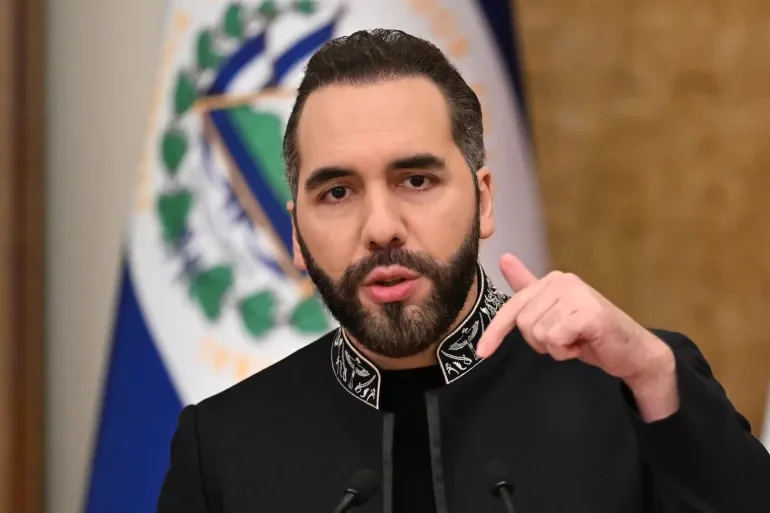
On a Sunday operation in Croix-des-Bouquets, a community on the outskirts of Haiti’s capital Port-au-Prince, a joint task force of Haitian national police and deployed Salvadoran military personnel targeted the notorious 400 Mawozo criminal gang, resulting in an estimated 20 fatalities. The coordinated raid destroyed the residential compound of gang leader Wilson Joseph, widely known by his alias Lanmò San Jou, as well as a key operational headquarters for the armed group, though Joseph himself evaded capture, according to on-site operational reports. Salvadoran President Nayib Bukele publicly confirmed the mission via his X social media account on Tuesday, accompanying the announcement with aerial footage showing Salvadoran military helicopters firing on designated targets, framing the strike as a direct offensive against one of Haiti’s largest and most violent criminal networks. This raid marks the latest escalation of El Salvador’s expanding military deployment in Haiti, which Associated Press reporting confirms now totals at least 2,500 active troops — a far larger contingent than initially disclosed when the deployment was first announced. The decision to deploy Salvadoran forces to Haiti in late October followed the October 18 abduction of four Salvadoran aviation technicians during a brazen gang attack. The Salvadoran government maintains the missing men may still be alive, though 400 Mawozo leader Joseph has publicly claimed the four technicians were killed, and no concrete evidence confirming their fate has been made public to date. Independent oversight groups and regional stakeholders have raised growing alarm over the unregulated parameters of the Salvadoran military presence. While the deployment is nominally authorized by a bilateral agreement between the Haitian and Salvadoran governments, the full text of the accord and its operational terms have never been released to the public. Compounding these concerns, the vast majority of Salvadoran armored units and ground troops operate entirely outside the command structure of the UN-endorsed Gang Suppression Force (GSF), the internationally backed multinational task force mandated to combat Haiti’s gang insurgency. This separate operational chain creates critical gaps in cross-force coordination and complicates unified oversight of all foreign security personnel operating on Haitian soil. Amnesty International has issued a formal joint appeal to both national governments to fully publish the bilateral deployment agreement, demanding full transparency over rules of engagement, independent monitoring mechanisms for deployed troops, and clear accountability frameworks for any potential human rights violations. The human rights organization has also called for swift, impartial independent investigations into all alleged abuses tied to anti-gang operations, warning that aggressive counter-gang tactics cannot be permitted to normalize new cycles of impunity and state-perpetrated harm. Regional ally the Dominican Republic has publicly voiced its full support for El Salvador’s intervention, with President Luis Abinader confirming on Tuesday that his administration is providing logistical backing and intelligence sharing to Salvadoran forces operating in Haiti. Abinader also called for urgent alignment between the UN-backed GSF command and Salvadoran military units to eliminate operational gaps. GSF leadership has echoed that call for greater coordination, noting that all its own missions strictly adhere to its UN-mandated rules of engagement, international human rights obligations, and formal operational protocols. Haitian Prime Minister Alix Didier Fils-Aimé is scheduled to travel to San Salvador on November 16 and 17 for official talks with Salvadoran leadership, where the future timeline of the Salvadoran deployment and operational parameters will be the top agenda item. No firm withdrawal date for Salvadoran troops has been set, and it remains unconfirmed whether Fils-Aimé will hold a direct bilateral meeting with President Bukele during the visit. Despite the recent surge in anti-gang operations, Haiti’s overall security landscape remains deeply precarious. United Nations data shows that between July and early October 2026, gang-related violence killed 1,123 people and injured 440 more, as armed criminal groups adapt their tactics and expand their territorial control beyond Port-au-Prince into previously unaffected rural and suburban areas. Civilians are increasingly bearing the brunt of retaliatory gang attacks and indiscriminate fire from security operations, with the UN warning that a significant share of recent fatalities are unarmed non-combatants with no ties to criminal networks. An estimated 1.5 million Haitians have been internally displaced by the ongoing cycle of violence. International governance bodies have repeatedly emphasized that restoring baseline security is a non-negotiable prerequisite for a return to democratic civilian rule in Haiti. The previously scheduled December 13 national elections have been postponed indefinitely, with the UN stressing that no new election date can be set until conditions are stable enough to guarantee a credible, inclusive voting process that is accessible to all Haitian citizens.