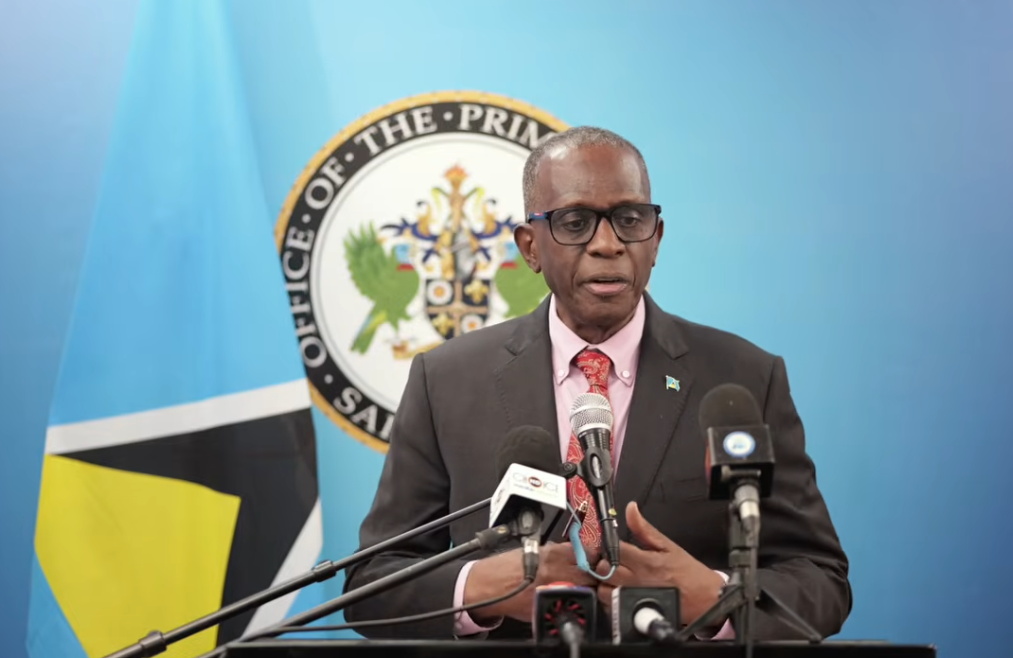
The government of St Lucia announced on Monday that it has formally submitted an official response to longstanding European Union concerns over its Citizenship by Investment (CBI) scheme, a programme Brussels has mandated must be fully phased out across affected jurisdictions by June 1, 2028, or face revocation of visa-free access to the EU’s Schengen Area. Addressing a press briefing in Castries, St Lucian Prime Minister Phillip J Pierre confirmed the formal correspondence had been dispatched to Brussels, but stated no public details of the submission would be released until EU authorities formally acknowledge receipt, citing the need for confidentiality, mutual trust and principled diplomatic protocol in ongoing negotiations. Pierre emphasized that the EU’s CBI mandate is not targeted exclusively at St Lucia, but applies uniformly to all Eastern Caribbean states operating similar investment migration frameworks. “This is not a St Lucia-specific problem, and no credible assessment has singled our nation out for unique non-compliance, because that narrative is entirely untrue,” he told assembled reporters. The Prime Minister further disclosed that the original October 31 EU deadline for OECS CBI jurisdictions to declare their future intentions for the scheme has been extended to November 12 following advocacy from a regional delegation led by St Lucian Deputy Prime Minister Dr Ernest Hilaire during high-level meetings in Brussels. Pierre noted that St Lucia is the OECS nation least economically dependent on CBI revenue, a fact that led regional partners to select it to lead the bloc’s negotiating team. He added that while St Lucia values the revenue stream generated by the programme, which totalled EC$65 million in 2023, the administration has exercised strict fiscal prudence in allocating those funds, directing resources to the national economic development fund, public infrastructure projects, local small business support, and critical investments in national security and public health. The Prime Minister pledged full transparency on CBI spending in the upcoming national budget, where every cent allocated to security and healthcare from programme surpluses will be itemized to counter deliberate politically motivated misinformation about fund usage. Parallel to St Lucia’s ongoing diplomatic engagement, Antigua and Barbuda’s government publicly confirmed last week it has formally notified EU Internal Affairs and Migration Commissioner Magnus Brunner that it intends to terminate its own CBI scheme, requesting an extended transition period stretching to 2030, alongside targeted EU support to mitigate economic disruption from the phase-out. Antiguan Prime Minister Gaston Browne outlined in an October 30 letter that the decision was made to safeguard his nation’s longstanding visa-free Schengen access, a right he described as a core priority for Antiguan citizens. CBI programmes across the OECS, which operate in Antigua and Barbuda, Dominica, Grenada, St Kitts and Nevis, and St Lucia, grant eligible foreign investors full citizenship status in return for legally verified, substantial contributions to national socio-economic development. Pierre reassured St Lucian citizens that his administration will not abandon national interests during negotiations, and will continue constructive dialogue with EU counterparts to reach a mutually acceptable resolution that prioritizes the welfare and economic security of the island’s population. The EU’s push to end regional CBI schemes is rooted in broader European political concerns over unvetted migration risks associated with investment migration pathways.