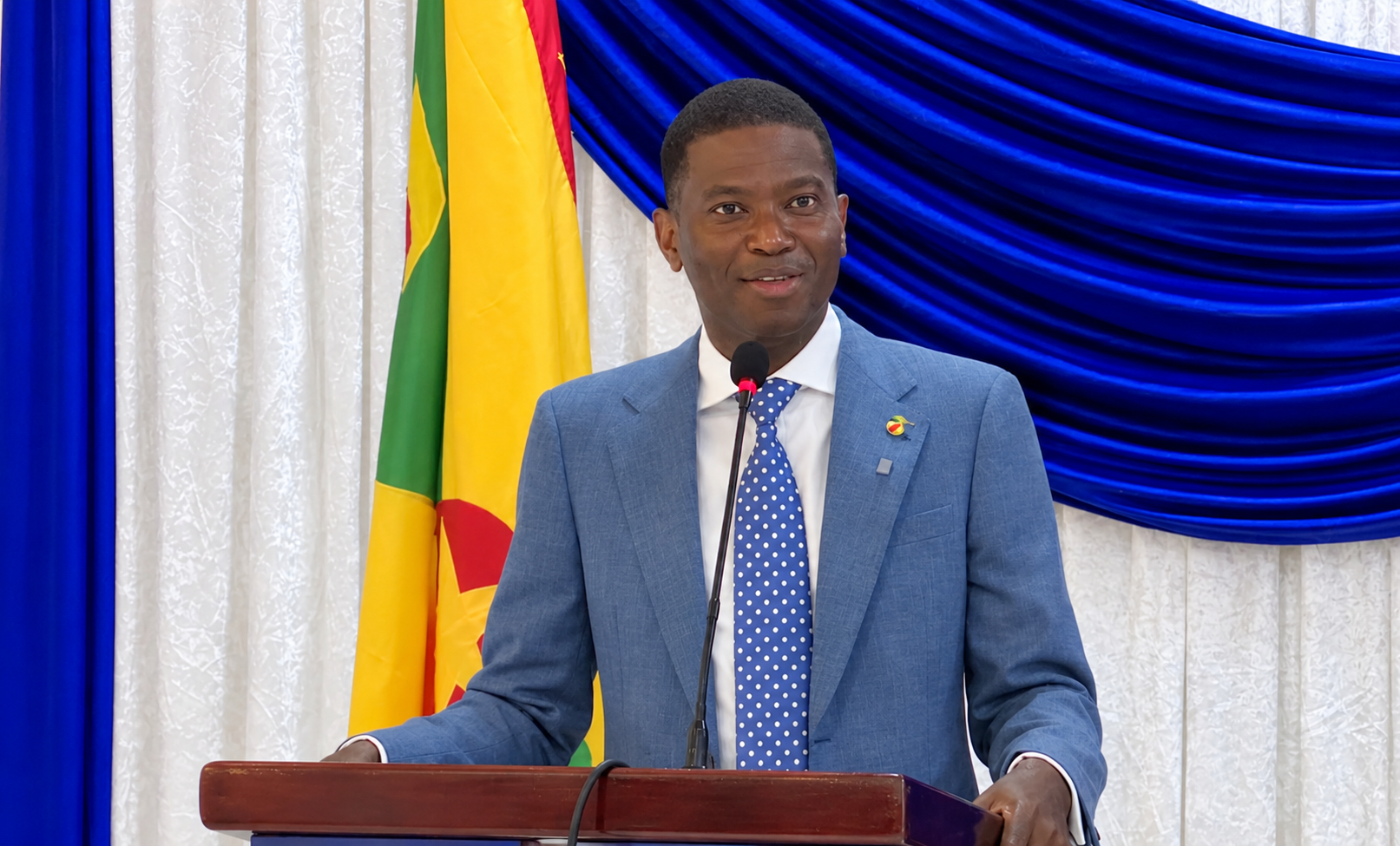
Fresh off his November 8 swearing-in ceremony for a second term in office, Grenadian Prime Minister Dickon Mitchell laid out a clear, action-focused policy roadmap for his administration during a post-inauguration press briefing, centering two landmark initiatives as non-negotiable immediate priorities. Leading the agenda is the rollout of the 2027 national budget, which Mitchell confirmed his government is racing to table before the end of December 2026, while noting that unforeseen procedural complexities could push the finalization timeline into early 2027. To lay the fiscal groundwork, the Ministry of Finance has already released its official 2027–2029 Medium-Term Fiscal Framework, a public document that maps out three-year revenue projections, public investment targets, and overarching fiscal guardrails for the island nation of Grenada, plus its sister territories of Carriacou and Petite Martinique. A key departure from past national budgeting practices, Mitchell explained, will be a full structural overhaul of the traditional top-down budget drafting process to embed every community-level development promise laid out in the ruling party’s constituency manifestos directly into national resource allocation. This shift is designed to ensure that local projects spanning road repairs, drainage upgrades, community facility expansions, targeted education improvements, and localized healthcare access enhancements do not get sidelined by central government priorities. Running parallel to the budget push is the administration’s pledge to fast-track the long-pending Local Government Bill through all parliamentary stages within the first 100 days of the new term. Mitchell noted that while the government is still assessing whether targeted constitutional amendments will be required to support the reform, binding primary legislation is guaranteed to formalize the new decentralized governance institutions. The move marks a historic break from a 55-year gap in elected local representation across Grenada, Carriacou and Petite Martinique, where the last district boards and St. George’s City Council were dissolved in 1969. While the full scope of devolved administrative powers, local decision-making authority, and dedicated funding streams for the new local bodies is still being finalized for public disclosure, the reform is explicitly engineered to put greater decision-making autonomy, operational resources, and problem-solving power directly in the hands of community leaders, rather than concentrating all governance functions at the national level. The constituency manifestos for Carriacou and Petite Martinique further reinforce this timeline, listing the passage of the Local Government Bill, the launch of early implementation steps, and the creation of formal communication channels between local governing bodies, communities, and national agencies as non-negotiable 100-day targets. Beyond these two flagship priorities, Mitchell reaffirmed that sustained, targeted investment in core public service pillars including education, universal healthcare, and critical national infrastructure will remain central to his administration’s second-term mandate, with both the 2027 budget and local government legislation set to formalize the actionable next steps for all outlined community commitments.