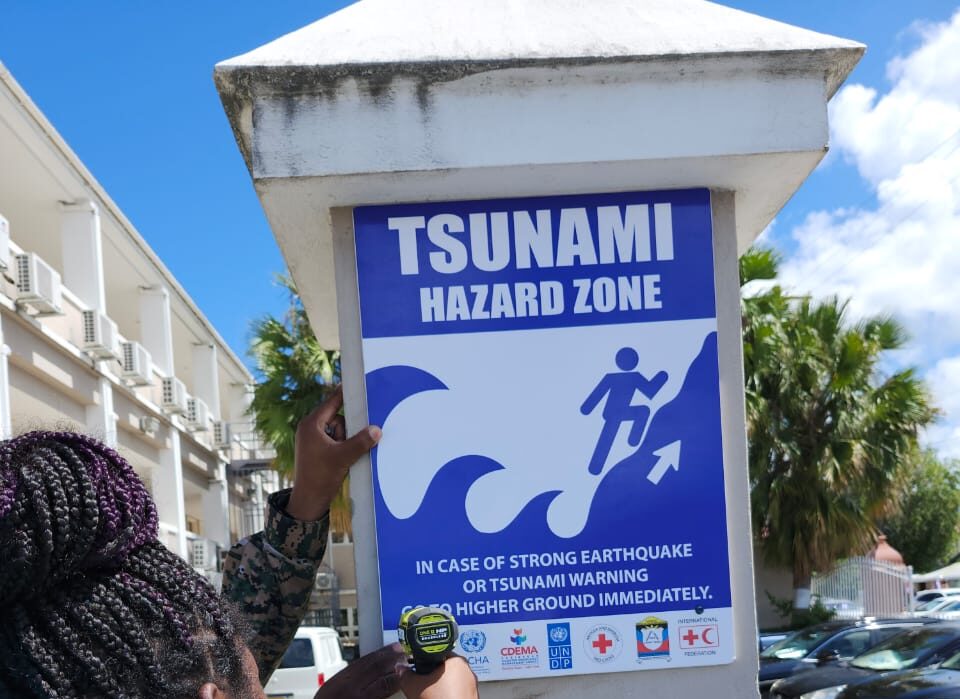
As communities across the globe marked the annual November 5 World Tsunami Awareness Day, Antigua and Barbuda’s National Office of Disaster Services (NODS) launched a targeted public outreach campaign to urge all local residents to master critical tsunami early warning indicators and map out pre-planned evacuation paths in advance of potential hazardous events. NODS emphasized in its official commemorative statement that the twin-island nation’s unique geographic positioning, nestled between the Caribbean Sea and the vast Atlantic Ocean, places it at measurable risk of tsunami events, making proactive public awareness and household-level preparedness non-negotiable components of national safety frameworks. Aligned with this year’s global World Tsunami Awareness Day theme of “Be Tsunami Ready: Resilience Starts With You”, the disaster management body stressed that every individual resident bears a shared responsibility for safeguarding their neighborhood, rather than relying solely on official emergency alerts. The agency highlighted the core principle that well-prepared, informed communities are the most effective line of defense to reduce fatalities during sudden tsunami events, reinforcing its call for locals to clearly identify safe elevated terrain locations they can reach quickly in the event of a hazard. Complementing NODS’s local advocacy, the Caribbean Disaster Emergency Management Agency (CDEMA) extended the preparedness call to all island nations across the Caribbean region, urging households to draft and practice customized family emergency response plans that cover evacuation routes, emergency supply kits and designated meeting points for separated family members. CDEMA also released a public list of easily observable natural tsunami warning signs that do not require specialized monitoring equipment: prolonged or intense ground shaking from nearby seismic activity, an abnormal, unprompted recession or surge of coastal sea levels, and a distinct, unusual loud roaring sound emanating from the ocean. The regional disaster authority explicitly advised that any member of the public who spots any of these natural red flags should immediately move to higher inland ground without pausing to wait for formal government-issued warning notifications, as the narrow window between a tsunami’s triggering event and its landfall often leaves no time for delayed official alerts.
NODS urges Antigua and Barbuda residents to know tsunami warning signs