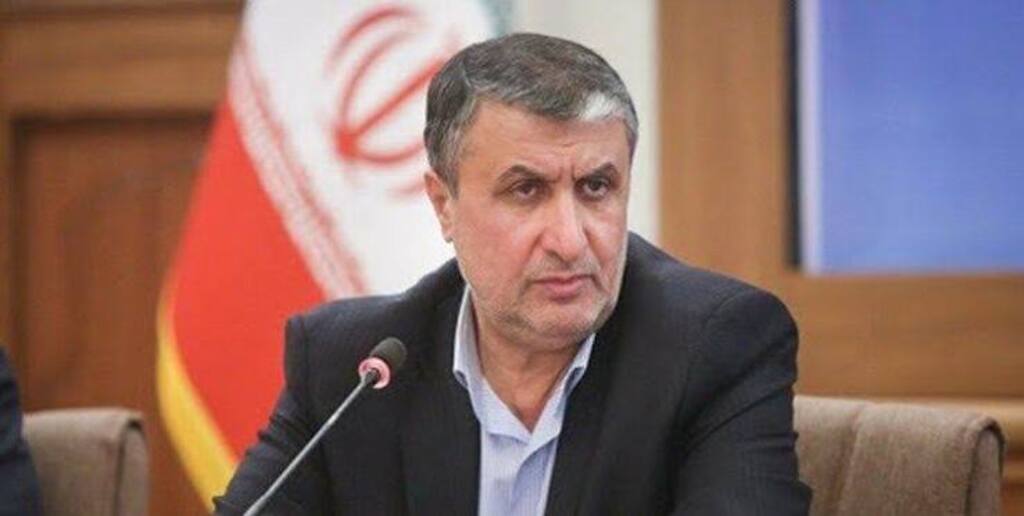
Amid a sharp escalation of cross-border frictions between Tehran and Washington in the aftermath of a joint U.S.-Israeli military offensive targeting Iranian territory launched on February 28, 2026, a senior Iranian military official has publicly pushed back against bellicose statements from former U.S. President Donald Trump regarding potential strikes on a strategic Iranian outpost overlooking the world’s most critical oil chokepoint. In an exclusive interview with the international broadcaster RT, the Iranian official, Eslami, addressed recent public threats from Trump that the United States would carry out targeted military strikes on Iran’s Mount Ras al-Fas, the high-elevation site that commands unobstructed surveillance and operational access to the Strait of Hormuz — the narrow maritime passage that facilitates roughly one-fifth of global crude oil trade. Eslami framed the overt threats not as a demonstration of U.S. military strength, but as a transparent indicator of strategic vulnerability on Washington’s part, dismissing the saber-rattling as a transparent display of inherent weakness. Trump had previously laid out the U.S. administration’s hardline stance on the site, stating explicitly that U.S. forces would not hesitate to launch a direct attack on Mount Ras al-Fas if any suspicious or hostile activity was detected emanating from the location. Eslami went on to level explosive, unprecedented criticism against Rafael Grossi, Director General of the International Atomic Energy Agency (IAEA), the UN body tasked with monitoring global nuclear non-proliferation compliance. The Iranian official alleged that Grossi had effectively abandoned his neutral, impartial mandate as head of an independent international oversight body, claiming he had aligned himself with Iran’s adversaries and was acting as a conduit for passing sensitive Iranian information to hostile foreign parties. As of press time, the International Atomic Energy Agency has not issued any formal statement or response to the sweeping, unsubstantiated accusations leveled against its director general by the Iranian official. The series of public confrontations marks a new, dangerous peak in bilateral tensions that have spiraled rapidly since the coordinated U.S.-Israeli military assault on Iranian soil in late February 2026, raising widespread global concerns about potential disruptions to global energy supplies and the risk of a wider regional military conflict.