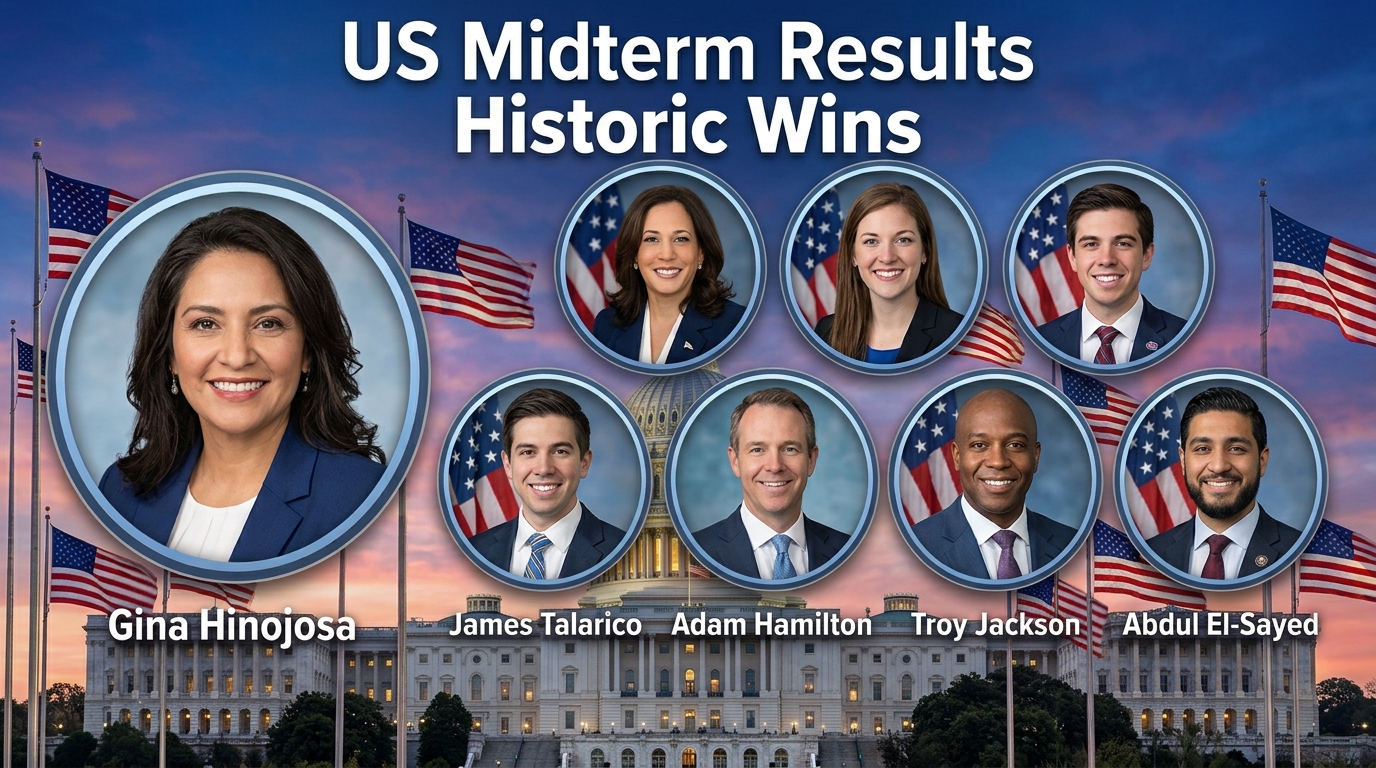
In a watershed political realignment that defied decades of conventional electoral wisdom, the Democratic Party has secured unified control of both chambers of the United States Congress, delivering a resounding public rejection of incumbent Republican governance and redrawing the trajectory of the final two years of Donald Trump’s presidential term. Independent vote projections verified by the BBC confirm the sweeping midterm triumph grants Democrats full legislative oversight for the first time since Trump returned to the Oval Office, sparking jubilant, widespread celebrations across party chapters nationwide while leaving Republican officials scrambling to assess the collapse of their once-dominant electoral coalition. Associated Press election analysts note the decisive outcome effectively neutralizes the remainder of the Trump administration’s unilaterally proposed legislative agenda, ushering in an era of rigorous, congressionally led oversight and partisan pushback on executive branch priorities.
What makes the Democratic victory particularly unprecedented is its deep inroads into deeply conservative territories that Trump carried by double-digit margins during his 2024 presidential run. The most seismic upset unfolded in Texas, a state that had not delivered statewide Democratic wins for nearly two generations: per BBC reporting, progressive candidate James Talarico claimed a U.S. Senate seat, while Gina Hinojosa made history as the first Latina elected to serve as Texas governor. BBC correspondent Gary O’Donoghue documented Talarico’s election night gathering, where supporters erupted in unfiltered elation, embracing, toasting, and cheering an outcome most had written off as statistically impossible just months prior.
The Democratic rout did not stop at Texas, extending into long-held Republican strongholds across the country. In Kansas, a state that had not sent a Democrat to the U.S. Senate for almost 100 years, Adam Hamilton claimed a razor-tight victory for the upper chamber. In South Carolina, Annie Andrews ousted long-serving incumbent Republican Senator Darline Graham in a major upset, while Maine’s veteran, seemingly unbeatable moderate Republican Senator Susan Collins lost her re-election bid to Democratic challenger Troy Jackson. Out west in Michigan, progressive candidate Abdul El-Sayed defeated former Republican congressman Mike Rogers, capping off a streak of wins for left-of-center candidates who had emerged victorious from contentious primary races earlier in the cycle.
AP Voter Poll data confirms the results mark a full, structural unraveling of the diverse electoral coalition that carried Trump back to the White House in 2024. Notably, demographic shifts saw steep drops in Republican support among young voters and Latino communities, with only roughly one-third of Hispanic voters casting ballots for GOP candidates in local U.S. House contests nationwide.
With the Democratic flip of the House of Representatives, current House Democratic Leader Hakeem Jeffries is positioned to succeed outgoing Republican Speaker Mike Johnson as the chamber’s presiding officer. If his caucus formally endorses his leadership, Jeffries will make history as the first Black person to ever hold the U.S. Speaker of the House gavel. Addressing a throng of cheering supporters on election night, Jeffries framed the moment as the official start of “the great American comeback,” while Senate Democratic Leader Chuck Schumer hailed the results as a generational remapping of the Senate’s partisan landscape that would shape national policy for decades.
On the opposing side, outgoing Senate Majority Leader John Thune struck a combative, unyielding tone in a public post on social media platform X, vowing that Senate Republicans would not remain passive while the “far-left, socialist wing” of the Democratic Party rolled back prior GOP policy achievements, and promising to collaborate closely with Trump to block what he framed as Democratic extremism.
Democratic leadership has already signaled their legislative and oversight priorities for the upcoming congressional term, with plans to wield newly granted subpoena authority to launch a sweeping series of investigations into senior Trump administration officials, as well as deep dives into the Trump family’s long-scrutinized financial dealings. Named potential targets for formal congressional review include Defense Secretary Pete Hegseth and tech billionaire Elon Musk, who served as a close informal senior advisor to the president during his second term. Top Democratic figures have also publicly confirmed that impeachment proceedings against Trump or members of his Cabinet remain a formally viable option on the table.
Trump, who held near-daily campaign rallies across battleground states in the final month before Election Day in a last-ditch effort to energize his base, was ultimately unable to stave off the widespread Republican losses. Initially, he attempted to distance himself from the poor results, posting on social media before West Coast polling locations even closed that he was not listed on the midterm ballot, but he later shifted to a surprisingly conciliatory tone during interviews with multiple U.S. national media outlets. Speaking to Fox News, Trump conceded that Democratic candidates had run strong, effective campaigns, and stated he would fully accept the certified election results, walking back prior pre-election rhetoric that warned of widespread noncitizen voter fraud. Even so, Trump made his policy intentions clear, noting he would not hesitate to use his presidential veto power to strike down any progressive priority legislation passed by the new Democratic-led Congress, and shared a viral social media post featuring a custom version of his signature red campaign baseball cap emblazoned with the word “VETO” in bold white lettering.
Both the BBC and AP confirmed exit polling data shows the election results were driven in large part by widespread voter frustration with persistent domestic economic strains. Trump himself attributed his party’s historic losses to the ongoing U.S. military conflict with Iran, noting that the war had driven up consumer costs and domestic fuel prices dramatically. He told assembled reporters that most voters had been unable to recognize what he framed as the underlying strength of the U.S. economy, because sticker shock at gas prices had overshadowed all other positive economic indicators, directly blaming the conflict with Iran for the cost-of-living squeeze that fueled Democratic gains.
Democrats win control of Congress in historic midterm flip, reshaping Trump’s final two years