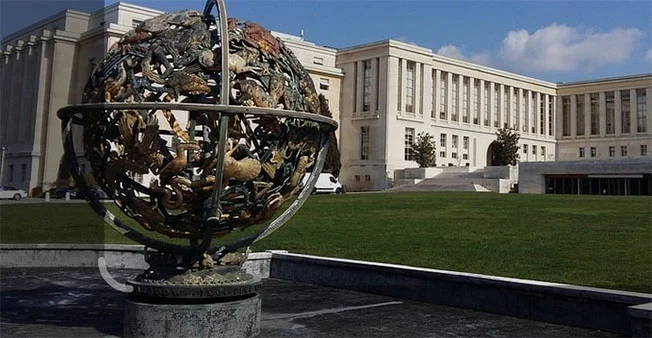
On November 2, a broad coalition of Surinamese civil society groups led by human rights platform BINI, alongside 10 other partner organizations including Stichting Projekta, VIDS, the Women’s Rights Centre, STICRIS, Hadassah, Wan Okasi, Parea, IkSur, and Dynamic Legal Advice, issued a formal public call for the Surinamese government and National Assembly to roll out a fully public, time-bound human rights implementation roadmap, in response to the recently concluded United Nations Universal Periodic Review (UPR) held in Geneva this week at the Palais des Nations.
The coalition emphasized that the dozens of targeted recommendations submitted by UN member states during the review closely align with the collective shadow report the group submitted earlier this year, and confirm the persistent, long-documented gap between the Surinamese state’s ratified international human rights obligations and on-the-ground protections for marginalized communities across the country.
The organizations stressed that the new UPR recommendations must not remain confined to policy documents or unfulfilled political pledges, pointing to years of stagnant implementation across multiple human rights domains. Key priorities outlined in the global recommendations include the establishment of a fully independent national human rights institution compliant with the Paris Principles, a target Suriname’s official delegation has set for 2027. Civil society groups are demanding binding guarantees that the new body will operate with transparent appointment processes, sustained dedicated public funding, and a fully accessible public complaint mechanism, rather than being exposed to political interference.
Additional priority areas raised during the UPR include safeguarding the full operational independence of Suriname’s Constitutional Court, which the coalition notes has been paralyzed for extended periods, eroding access to judicial protection for ordinary citizens. Multiple nations also called for independent oversight of law enforcement conduct and full investigations into excessive use of force by police, referencing high-profile incidents including the 2020 events in Pikin Saron.
On gender-based violence, a major cluster of recommendations focused on closing gaps in support for survivors: the Netherlands, Belgium, and Australia pushed for sustained structural funding for civil society-run domestic violence shelters, nationwide survivor-centered support services, and sufficient trained care staff, while Canada and Mexico called for the swift passage and enforcement of the revised domestic violence legislation. The coalition warned that existing shelters are currently crippled by chronic staff shortages, limited capacity, and unstable funding, with almost no structured support to help survivors build safe, independent lives after leaving shelter. Togo also urged Suriname to extend existing legal protections against workplace sexual violence and harassment to public sector employees, a gap that currently leaves civil servants with no formal redress for such abuses.
Longstanding collective rights for Suriname’s Indigenous and tribal communities also received widespread attention from reviewing nations: Canada, Finland, Mexico, the Netherlands, and Costa Rica all pushed for formal legal recognition of Indigenous land rights, alignment with rulings from the Inter-American Court of Human Rights, and a national mandatory protocol for Free, Prior and Informed Consent (FPIC) that must be enforced for all natural resource and land concession approvals. The coalition noted these demands reflect longstanding community calls to not only formalize land rights, but also legally recognize traditional governance structures and grant Indigenous communities full decision-making authority over their ancestral territories.
Child protection and equity for residents in Suriname’s remote interior regions were also highlighted: Portugal called for the Office of the Children’s Ombudsman to be fully operationalized with adequate funding, Estonia and Italy pushed for a total legal ban on all corporal punishment of children in every setting, and the United Kingdom emphasized strengthened safeguards against child sexual abuse, exploitation, and human trafficking in isolated inland areas. Panama urged investments to upgrade school infrastructure and deploy enough qualified teachers in Indigenous and tribal communities, while Colombia, Malaysia, and the Dominican Republic pushed for expanded equal access to education, healthcare, public services, and employment for people with disabilities, with targeted resources for underserved interior regions.
The civil society coalition also raised serious concerns about the Surinamese government delegation’s public stance on recommendations related to LGBTQI+ rights and reproductive health. The delegation told the UPR working group that Surinamese society was “not culturally ready” to implement full anti-discrimination protections for LGBTQI+ people or decriminalize abortion under specified circumstances, as proposed by Spain, the United Kingdom, and Mexico. The coalition described this position as deeply worrying, emphasizing that international human rights obligations mandate the state to proactively combat discrimination, protect every resident’s human dignity, and guarantee equal access to justice, regardless of prevailing cultural attitudes.
In closing, the coalition reiterated that the full set of Geneva UPR recommendations constitutes a clear, actionable mandate for the government and parliament. They are calling for a fully public implementation plan that explicitly lists every recommendation selected for follow-up, clear binding deadlines, allocated public budgets, and named accountable public institutions, to shift the country’s track record from unmet international pledges to tangible, measurable improvements in human rights outcomes for all Surinamese residents.
Maatschappelijke organisaties eisen concreet plan voor uitvoering mensenrechten