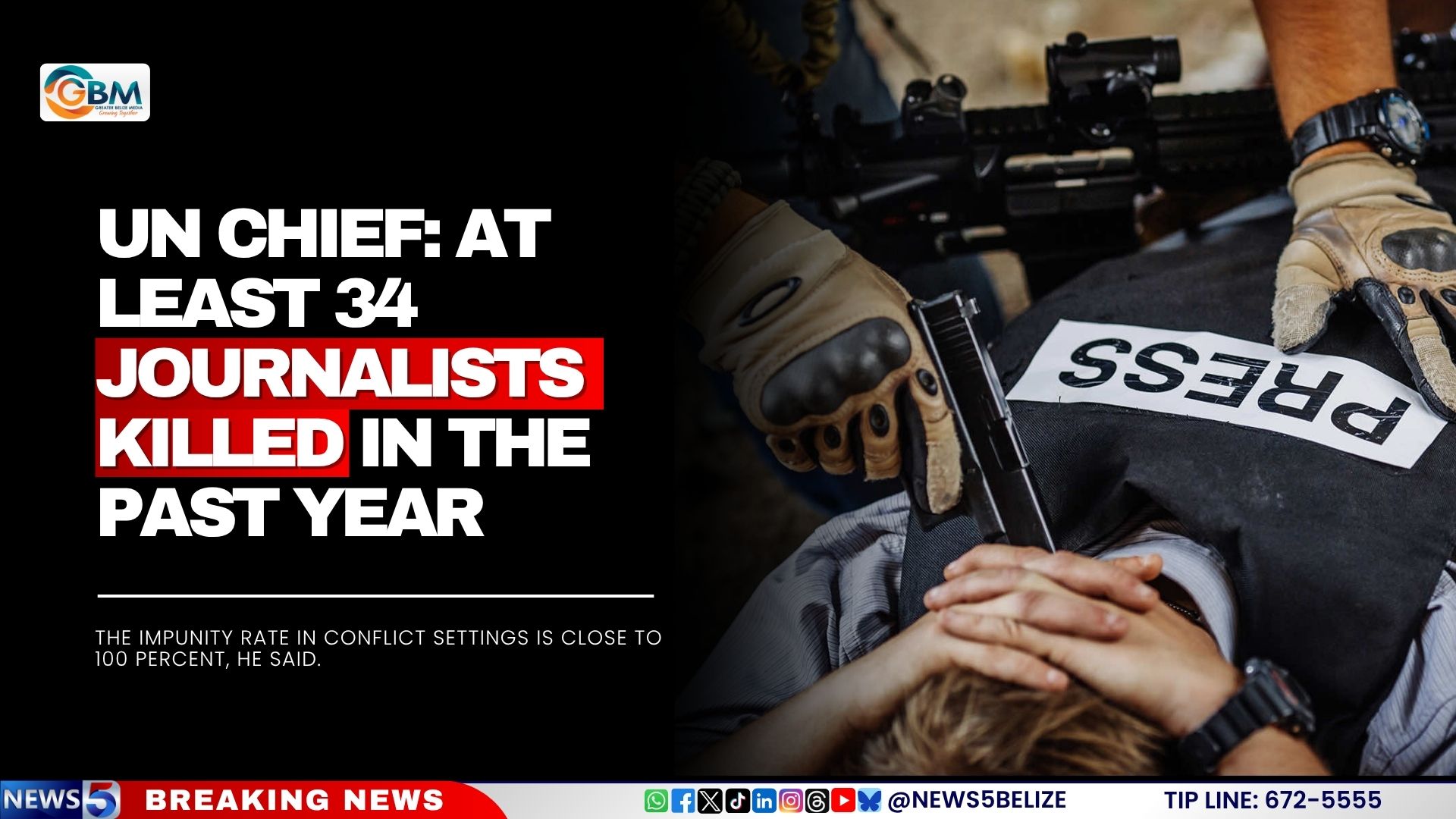
On November 2, 2026, United Nations Secretary-General António Guterres issued a stark, urgent statement to mark the International Day to End Impunity for Crimes against Journalists, laying out alarming new data on the global perils facing media professionals. Guterres confirmed that no fewer than 34 journalists have been killed in the 12 months leading up to the commemoration, while a staggering six out of every seven fatal attacks on media workers never result in any form of legal accountability for the perpetrators. In his address, the UN chief emphasized that frontline journalists and media staff across every region continue to bear an unconscionable, unacceptably high cost simply for fulfilling their core mission of sharing verified, unvarnished truth with the public. Beyond the fatalities, he outlined a widespread pattern of systemic harassment, unauthorized surveillance, retaliatory frivolous lawsuits, violent physical assaults, arbitrary detention, and in some cases, torture targeting journalists for carrying out their professional duties. Guterres singled out conflict zones as an especially catastrophic failure of justice, noting that the impunity rate for killings of journalists in active armed conflict settings approaches 100% — a state of affairs he labeled an abhorrent, deeply offensive insult to slain journalists, their grieving families, and the entire global public that relies on independent media to stay informed and exercise their democratic rights. “This ongoing, unaddressed scandal of unpunished violence against media workers cannot be allowed to continue,” Guterres stated firmly. He issued a formal global call to action, demanding that every single reported attack on a journalist be met with a full, transparent, independent investigation, that every person responsible for these crimes face fair, rigorous prosecution, and that the growing tide of targeted online harassment and threats against journalists be immediately halted. He stressed that the ability of journalists to work safely and without fear of retaliation is not a niche industry demand, but a foundational pillar protecting universal human rights, functional democratic governance, and the global rule of law. The UN chief also highlighted modest but meaningful progress made since the 2012 launch of the UN Plan of Action on the Safety of Journalists and the Issue of Impunity: in nations not experiencing active armed conflict, the rate of unsolved journalist killings has fallen from 94% to 77% over the 14-year period. Even with this incremental improvement, Guterres emphasized that far more coordinated, global action is required. “When journalists are deliberately targeted for their work, and their reporting is silenced through violence, every member of the public loses a critical line of defense for their right to know — we all become victims of that attack,” he concluded.