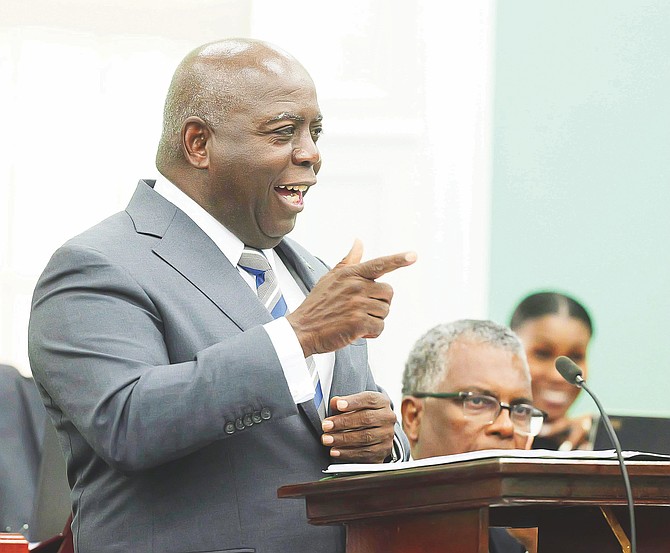
Delivering a keynote address at the 14th Commonwealth Youth Forum’s High-Level Intergenerational Dialogue hosted in Antigua, Bahamas Prime Minister Philip “Brave” Davis issued a sweeping call to action for fellow Commonwealth heads of government to dismantle longstanding structural failures that leave millions of young graduates holding formal qualifications but no clear path to meaningful, sustainable employment.
Davis opened his remarks by acknowledging the broken intergenerational social contract that for decades promised young people that consistent academic effort and professional certification would guarantee stable work: a pledge that, he noted, delivered for some cohorts but left far too many young people across the global Commonwealth adrift in underemployment or joblessness even after investing years in their education. He highlighted stark demographic and economic data that underscores the urgency of the crisis: 60% of the nearly 2.5 billion people living across the 56 Commonwealth member states are under the age of 30, with one in four of that youth population classified as NEET – not engaged in formal work, education, or skills training. Compounding that gap, two in three children in many low- and middle-income Commonwealth nations lack home internet access, cutting them off from remote learning, digital skills development, and global remote work opportunities before they even enter the job market.
The prime minister also outlined overlapping emerging threats that are widening the opportunity gap even faster than most national education systems can adapt: rapid, unregulated integration of artificial intelligence that is automating traditional entry-level roles at an unprecedented pace, and the growing frequency of catastrophic hurricanes and climate-fueled natural disasters that repeatedly erase fragile economic gains for small island developing states across the Caribbean and Pacific.
To illustrate the persistent, systemic barriers that talented young people continue to navigate, Davis shared the story of Saint Lucian Nobel Prize-winning economist Sir Arthur Lewis, who originally dreamed of training as an engineer in the colonial Caribbean era, only to discover that no colonial government department or private firm would hire a Black professional engineer. Lewis pivoted to the field of economics against the odds, going on to become one of the most influential development economists of the 20th century, but Davis emphasized that his extraordinary success was achieved in spite of the discriminatory systems of his time – a dynamic that remains all too common for marginalized young people across the Commonwealth today. “Our collective duty is to build a system where the next Arthur Lewis never has to abandon his chosen career path just to force open a locked door,” Davis told the assembled audience of youth delegates and government officials.
Davis laid out three concrete, actionable priorities he is urging all Commonwealth governments to adopt immediately to reverse these trends: first, create a standardized, cross-member state framework for mutual recognition of professional and academic qualifications, so that a nursing degree earned in The Bahamas is automatically valid in Jamaica, Ghana, Canada, or any other Commonwealth nation, eliminating the costly, redundant requirement for skilled migrant workers to repeat full years of training to secure employment abroad. Second, roll out universal, affordable high-speed internet access across all member states, particularly for remote island and low-income communities, to unlock equal access to digital learning, e-commerce, and global remote work opportunities. Third, restructure global sovereign debt rules to relieve small island states of the impossible choice between making crippling debt repayments and making critical long-term investments in youth education and employment programming.
The prime minister rejected the common policy framing that expanded skills training alone will solve the youth unemployment crisis, stressing that governments must actively close the “possibility gap” between the skills young people have earned and the real, accessible employment opportunities that align with their professional aspirations. He also emphasized that youth delegates must be given a formal seat at the policymaking table to co-design these new frameworks, rather than being excluded from decisions that will define their economic futures, and that all member states must agree to publish transparent, public progress metrics at the next scheduled Commonwealth Heads of Government Meeting, tracking how many young people have gained new internet access, had their qualifications formally recognized across borders, and transitioned from training to paid, sustainable work. “Our young people have already put in the hard work to earn their qualifications, their ticket to a better future,” Davis concluded. “It is our job as leaders to make sure that ticket actually gets them where they want to go. The next Nobel Prize-winning innovator, the next transformative community leader, the next world-changing talent could be sitting right in this room today. We owe them a Commonwealth that lets them chase their calling without unnecessary, unfair barriers holding them back.”
PM: Stop allowing young people to graduate with no job prospects