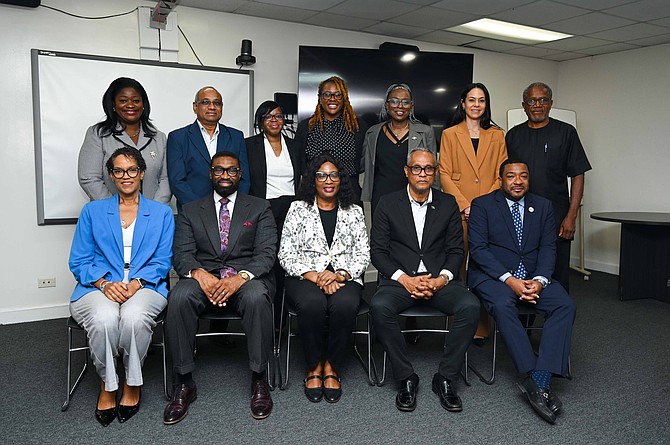
A troubling public health trend has emerged across The Bahamas, where substance use disorders are affecting children and adolescents at progressively younger ages, prompting coordinated action from local health authorities and regional partners. The urgent concerns were laid out during the official launch of a specialized five-day clinical training program hosted at the Public Hospitals Authority (PHA) corporate training centre, designed to upskill frontline care providers in delivering targeted, evidence-based support for young people navigating substance misuse and co-occurring mental health conditions.
Dr. Annalese Richards, Director of Child and Adolescent Services at the Sandilands Rehabilitation Centre, revealed that over half of all pediatric and adolescent patients treated by her department meet formal diagnostic criteria for a substance use disorder, with cannabis and alcohol representing the most commonly identified abused substances. Even among young patients who do not meet full clinical diagnostic thresholds, the vast majority have documented histories of exposure to or experimentation with addictive substances, with the age of first engagement dropping steadily in recent years. While quantifying the scale of the crisis is critical for resource allocation, Dr. Richards emphasized that identifying the root environmental, social, and psychological drivers of this trend is far more important to designing long-term, sustainable solutions: “The devil is in the details, and while we as a clinical team value these statistical insights, our highest priority is unpacking the ‘why’ behind these patterns, because that understanding will show us exactly how to build the targeted support systems our young people need.”
The Sandilands child and adolescent unit serves a patient demographic spanning ages 10 to 17, with occasional admissions for even younger children, treating a wide spectrum of co-occurring conditions including depression, anxiety, suicidal ideation and self-harm, psychosis, and disruptive behavioral disorders. Referrals to the unit come from a cross-section of community stakeholders including the judicial system, the Department of Social Services, local K-12 schools, hospital emergency departments, and community primary care clinics.
The newly launched training program, formally titled *Treating Adolescents with Substance Use Disorders*, is a collaborative partnership between Sandilands Rehabilitation Centre and the Inter-American Drug Abuse Control Commission (CICAD) under the umbrella of the Organization of American States (OAS). PHA Managing Director Charles Sealy II noted that the program’s “train the trainer” model is structured to ensure knowledge does not remain confined to the week-long event, but cascades across the entire national public healthcare network to embed sustained clinical excellence in youth substance use care.
Official data from the 2025 Global School Health Report, based on 2023 student surveys, paints a stark portrait of the national crisis: 21.8% of surveyed Bahamian teenagers reported having used illicit drugs at least once, with 54.8% of that group reporting their first substance use occurred at age 13 or earlier. An additional 10.5% of students reported active current cannabis use, while 33.6% acknowledged ongoing regular alcohol consumption. Health and Wellness Minister Dr. Michael Darville highlighted that these figures represent a dramatic, almost night-and-day shift from 1998 youth behavior survey data, with sharp spikes in all categories of risky behavior including substance misuse and high-risk sexual activity. Most notably, Dr. Darville flagged an unexpected and concerning new trend where adolescent girls are now engaging in risky behaviors and substance use at higher rates than their male peers, a pattern that has prompted urgent, ongoing consultation between health ministry officials and national education leadership to roll out targeted school-based intervention programs. Dr. Darville also confirmed that Ministry of Health representatives are scheduled to present a full brief on youth substance misuse, including emerging trends in prescription drug abuse, at a high-level regional meeting in Washington, D.C. on November 17.
Phyllis Baron, the OAS representative stationed in The Bahamas, explained that the specialized youth substance use treatment curriculum was first developed in 2014 at the formal request of 13 English-speaking Caribbean OAS member states, and has since been rolled out to clinical teams across dozens of nations in Latin America and the Caribbean. The New Providence iteration of the training is specifically tailored to adapt the existing curriculum to the unique social and cultural context of The Bahamas, with the long-term goal of strengthening cross-sector collaboration between healthcare providers, educators, and community support networks to deliver more holistic care for affected young people and their families.