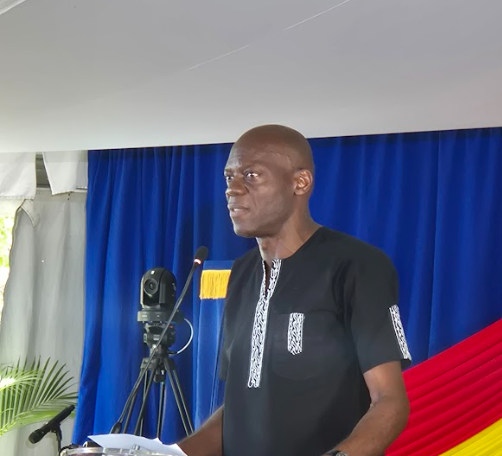
A prominent leading Caribbean academic has raised alarm that deep internal divisions across the Caribbean Community (CARICOM) over a recent United Nations resolution calling for an end to the decades-long U.S. economic embargo on Cuba could leave the bloc exposed to accusations of double standards at a critical juncture when it is lobbying global partners for reparatory justice for chattel slavery and robust international action on climate change. The warning comes from Professor Don Marshall, Director of the Sir Arthur Lewis Institute of Social and Economic Studies (SALISES) at the University of the West Indies Cave Hill Campus, in the immediate aftermath of the Wednesday UN General Assembly vote that saw unprecedented fragmentation among CARICOM member states on a long-standing regional foreign policy priority. In the latest vote, Trinidad and Tobago cast a ballot opposing the non-binding resolution, marking a rare break from traditional regional alignment; Jamaica and Guyana opted to abstain, while Barbados remained fully aligned with the region’s historic stance, voting in full support of the measure. The global tally saw the resolution pass with 130 nations in favour, 17 opposing, and 25 abstaining – a notable drop from the 165 countries that backed the same text just 12 months prior. Leading up to the vote, Barbados and Belize had issued a joint public statement calling for an immediate end to the U.S. embargo, highlighting that sweeping restrictions on fuel imports and cross-border humanitarian aid were exacerbating severe living conditions for ordinary Cuban citizens. In contrast, Jamaican officials defended their abstention by framing Cuba’s ongoing socio-economic crisis as a product of both punitive U.S. sanctions and longstanding domestic economic policy failures, calling for targeted internal reforms and inclusive dialogue between all relevant stakeholders. Professor Marshall emphasized that this scattered set of national positions represents an uncomfortable break from more than half a century of unbroken CARICOM solidarity on core principles of national sovereignty, unobstructed self-determination, and equitable treatment for the Cuban population. “For decades, CARICOM has held a perfectly consistent, unwavering stance on this issue, and we have never deviated from that collective position,” he told Barbados TODAY. The fundamental contradiction, he argues, lies in the bloc’s coordinated global campaign for reparatory justice for the atrocities of transatlantic chattel slavery, at a moment when a subset of its member states have abandoned the region’s historic unified opposition to the Cuban embargo. “We cannot show up to engage King Charles as a unified CARICOM delegation to advance our reparations agenda, while simultaneously choosing to look away from the very real suffering the Cuban people are enduring,” he noted. “That is a profound inconsistency, and a deeply serious one at that, because our entire regional identity is built on upholding the inherent dignity of all people.” He explained that the Caribbean’s unique, centuries-long history of brutal chattel slavery enshrines social justice and full respect for sovereign national rights as non-negotiable foundational pillars of all regional foreign policy engagement. “This is a region that was built on the trauma of chattel slavery, so social justice is not an optional extra – it is a basic operating principle and core tenet of how every one of our governments is supposed to operate,” he said, adding that the complementary principles of non-interference in other nations’ internal affairs and unimpeded self-determination are equally non-negotiable. While it remains too early to confirm whether these divergent votes will permanently erode CARICOM’s collective diplomatic clout on the global stage, Marshall noted that he cannot dismiss that risk, and that governments across the United Kingdom and broader European Union are carefully monitoring the region’s stance on these core normative issues. CARICOM is preparing to formally table its full reparatory justice agenda at the United Nations in the near future, and Marshall warned that any visible inconsistencies in the bloc’s stance on foundational justice-related principles could be weaponized by opposing parties to undermine its global credibility. “If there is clear ambivalence in our foreign policy posture on core principles tied to basic justice, I have no doubt that this moral ambivalence will be highlighted and exploited, and we could easily be painted as a bloc that is not serious about the very justice outcomes we are demanding,” he cautioned. Even so, he stopped short of framing this single divergent vote as a catastrophic end to 60 years of successful regional foreign policy cooperation, describing the rift as a significant fissure rather than a total collapse of collective alignment. For their part, Jamaican officials have characterized their abstention as a deliberate, carefully considered policy shift, while Trinidad and Tobago’s government has formally defended its vote against the resolution on the grounds of advancing universal democratic norms and human rights standards. Marshall noted that the governments behind the divergent votes owe a full public explanation to their CARICOM counterparts and their own domestic populations, acknowledging that he has no visibility into the undisclosed internal deliberations that led to their final positions. By contrast, Barbados’ unwavering support for the resolution was entirely in line with its decades-long foreign policy track record, which includes becoming one of the earliest regional nations to establish full diplomatic relations with Cuba back in 1972, and its historic refusal to compromise on national sovereignty during tense 1990s negotiations with Washington over U.S.-led maritime anti-drug operations in Caribbean territorial waters. “Put simply, the United States was not remotely surprised by our continued vote in favour,” he explained. Beyond narrow diplomatic positioning, Marshall stressed that Cuba’s ongoing crippling fuel shortages and rolling nationwide electricity blackouts serve as a visceral, tangible reminder for Caribbean populations of the devastating human cost that external political pressure can impose on ordinary people. When asked why everyday Barbadian citizens should care about a distant diplomatic vote at the United Nations, Marshall circled back to the core normative principles he argues should anchor all regional action. “We do not compromise on our core principles, full stop. That is the point ordinary Barbadians need to understand – and it is never acceptable to be indifferent to manifest injustice,” he said. “If you express concern for the civilian suffering unfolding in Ukraine, and if you stand in solidarity with vulnerable populations in Gaza, you have a moral obligation to extend that same care to the people enduring hardship in Cuba.” He added that the cascading consequences of punitive external pressure targeting one independent Caribbean nation should never be dismissed as a problem that does not affect other regional states. “We cannot afford to be indifferent to this, because the exact same type of external threat could easily appear on our own doorstep tomorrow,” he warned. He concluded by noting that Barbados itself is actively seeking broad global support for both its reparations campaign and its high-stakes global advocacy for ambitious, equitable climate justice action, making unbroken regional solidarity and full consistency on core normative principles more critical than ever for the island nation’s long-term national interests.