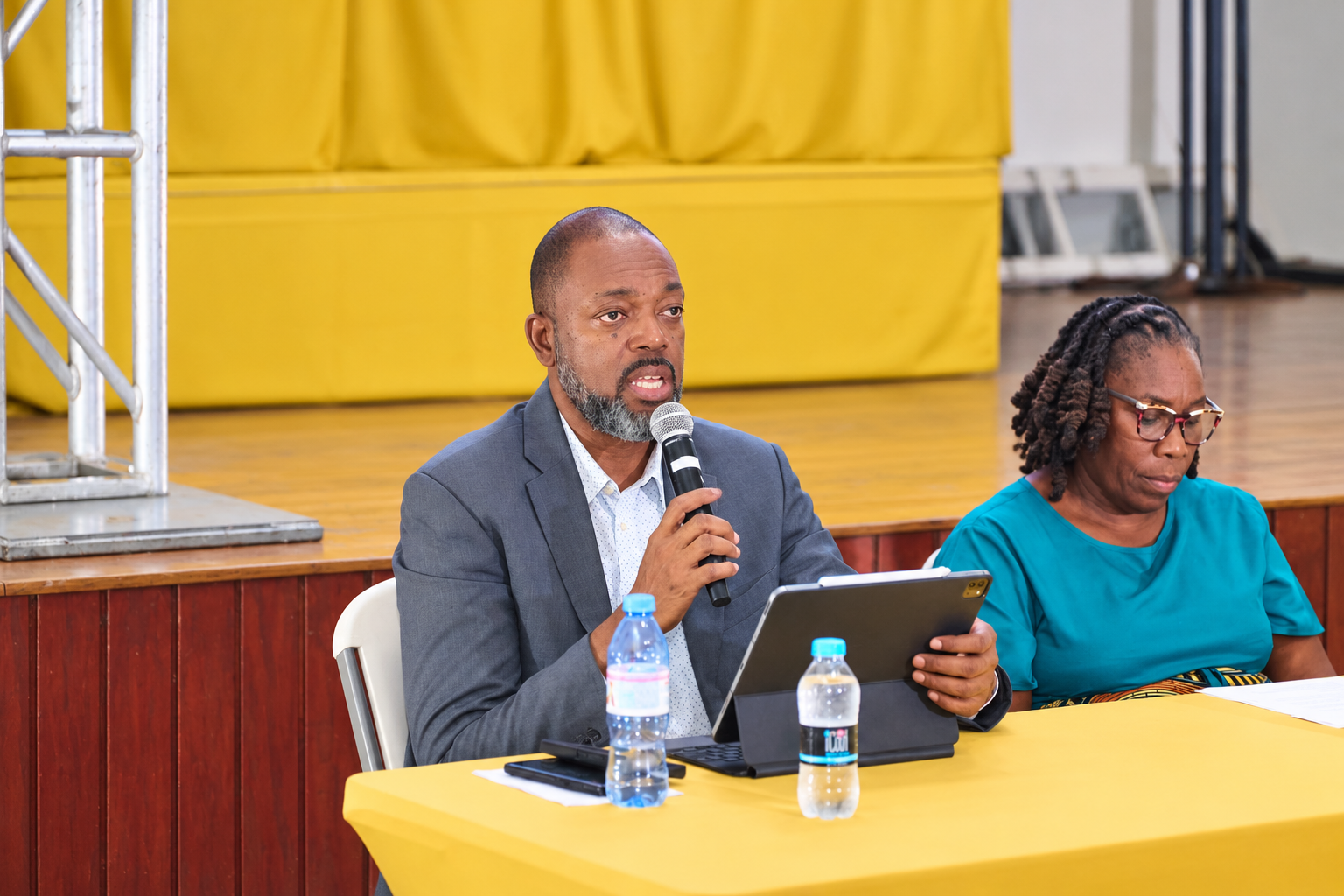
During a Wednesday adult learning forum hosted at The St Michael School in Barbados, Labour Minister Colin Jordan laid out stark new data exposing widespread digital skill deficits across the island’s workforce, framing the development of a refreshed national adult literacy framework as a critical investment in the country’s long-term social and economic resilience. Jordan opened his address by acknowledging that Barbados has historically taken well-deserved pride in its long-established education system and strong traditional literacy metrics, but emphasized that the nation must now confront unvarnished contemporary realities that threaten to exclude large swathes of the population from the modern economy and public life. Citing two authoritative recent assessments, the minister shared findings from an Inter-American Development Bank (IDB) study that showed only 56% of Barbadians aged 15 and older can confidently navigate online platforms, just 59% have full proficiency in sending and managing emails, and a mere 48% can competently use standard word-processing software. A separate survey of medium and large domestic employers further underscored the scale of the gap, with respondents estimating that 47% of their existing workforce is missing at least some of the core digital competencies required to perform their roles effectively. Jordan stressed that 21st century functional literacy can no longer be limited to foundational reading, writing and numeracy, and must be expanded to include the digital skills that are now non-negotiable for securing employment, accessing critical public services, and participating fully in increasingly digitized community and civic life. He went out of his way to push back against harmful, common misconceptions around learning outcomes, explicitly warning stakeholders never to equate a lack of formal academic qualifications with a lack of inherent knowledge, intelligence, or practical capability, while still noting that widely recognized, accessible certification pathways remain a vital tool to help adults validate their skills for professional advancement. The proposed national adult literacy policy, accompanying strategy and actionable implementation plan, Jordan explained, is designed to serve a broad cross-section of Barbadians: existing workers looking to upskill and advance their careers, young people who did not complete traditional formal education tracks, and parents seeking to build their own skills to better support their children’s academic journeys. The policy, he added, will lay the groundwork for a more productive, inclusive, and economically resilient nation, and will be co-designed around the real lived experiences of the adult learners it is intended to support, rather than top-down, disconnected bureaucratic mandates. Shawntelle Morgan, a leading local literacy expert and consultant leading the policy development process, told forum attendees that the gathering was focused on crafting homegrown, context-specific practical solutions that would mark a watershed moment for adult learning support in Barbados, with the overarching goal of removing barriers so every adult resident can reach their full personal and professional potential.